


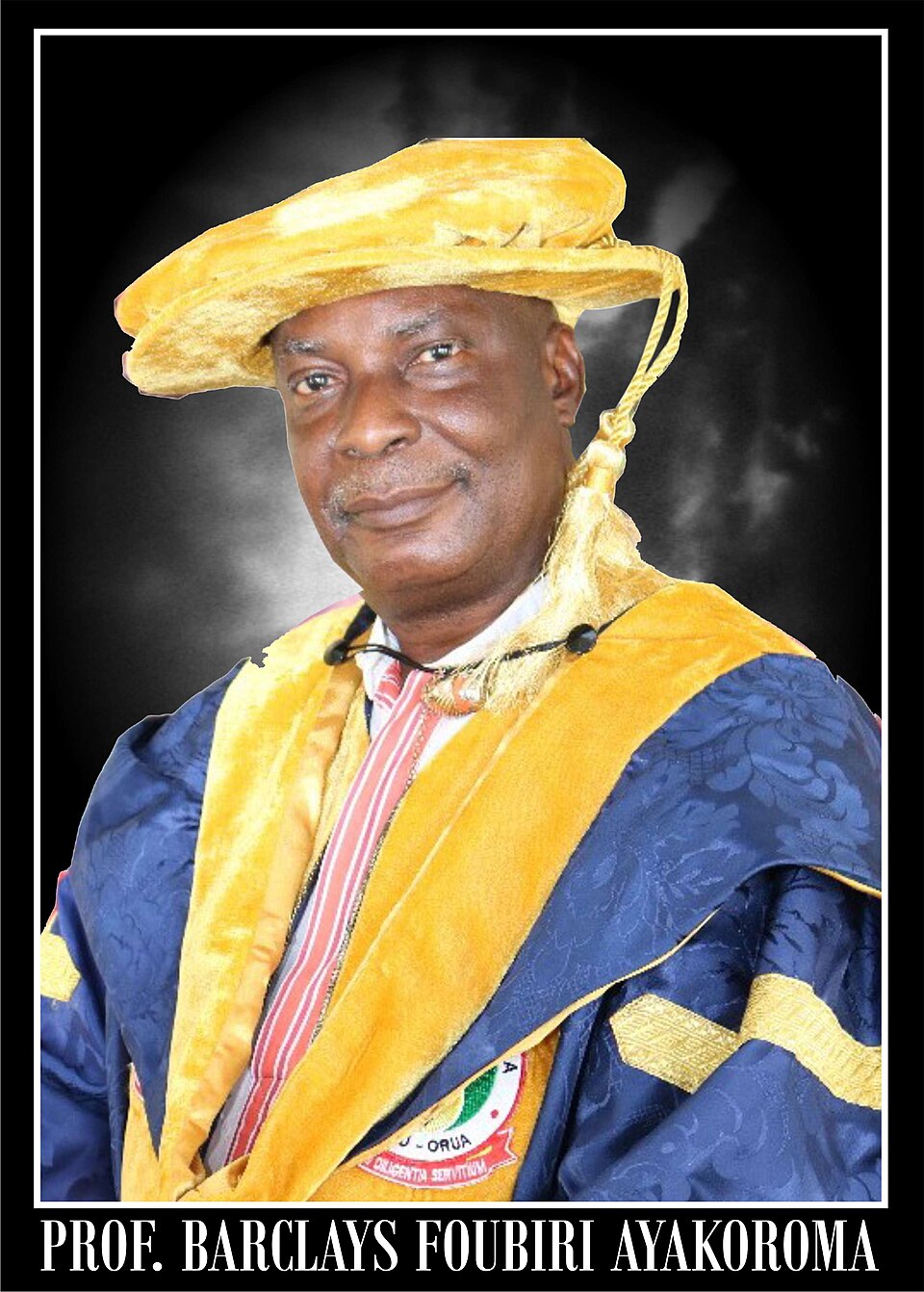
Professor Barclays Ayakoroma: At 70, A Kindred Spirit Still Giving
By Jerry Adesewo
I cannot remember exactly how I first met Professor Barclays Foubiri Ayakoroma. What I remember—clearly and without effort—is how I felt the first time our paths crossed. I was drawn to him. There was an immediacy to the connection, an ease that suggested familiarity even before friendship had a name. Some encounters announce themselves loudly; others arrive quietly and stay for life.
READ ALSO: AMAC at a Turning Point: Why Moses Paul Could Be the Answer
That bond deepened when we discovered we were February mates—he, born on February 13; I, on February 29. As it should be. A simple coincidence that felt symbolic. From that moment on, despite the wide age gap between us, Professor Ayakoroma became a mentor—one whose presence has consistently attracted good into my life, my work, and the institutions I care about deeply.
The history of Arojah Royal Theatre, and indeed theatre in Abuja cannot be complete without the mention of Professor Ayakoroma. Scholar, cultural administrator, teacher, institution-builder—he belongs to that rare generation of cultural workers who did not merely study culture but shaped the very ecosystems that allow it to thrive. His career reads like a map of Nigeria’s cultural development over the last three decades.
From his pioneering role as Executive Director of the Bayelsa State Council for Arts and Culture (2000–2009), to his impactful tenure as Executive Secretary and CEO of the National Institute for Cultural Orientation (NICO), Abuja (2009–2017), Professor Ayakoroma consistently demonstrated that culture, when taken seriously, can be a tool for national cohesion, identity, and dignity. Today, as Deputy Vice-Chancellor of the University of Africa, Toru-Orua, Bayelsa State (2022–2026), he continues to shape minds and institutions with the same calm authority and generosity of spirit.
For Arojah Royal Theatre, he became one of the strongest support structures we could ever have hoped for—especially as we dared to attempt the unthinkable: sustaining theatre in Abuja, and doing so regularly. He did not merely offer institutional backing; he offered belief. He cared deeply about what we were doing, why we were doing it, and whether it would endure.
In June 2012, when we mounted what remains very close to my heart—the Festival of Barclays Ayakoroma’s Plays, focusing on the works of a single playwright—Professor Ayakoroma stood firmly with us. At the time, he was at the helm of NICO, yet he treated our initiative not as a favour-seeking venture but as a cultural experiment worthy of support. We staged three of his plays. The festival succeeded, and in that success was the seed of a larger idea: that theatre festivals could be curated around depth, not just variety.
Later that same year came one of the darkest moments of my life—my kidnapping in Abuja. In that valley, Professor Ayakoroma was one of those who stood firmly behind my family and our theatre community to ensure my safe return. He did not retreat when the headlines faded. He attended the thanksgiving service in my church after my release. He offered financial and moral support to help me recover and to steady what had been shaken. He stayed present. That, perhaps more than anything else, reveals the man.
This is who Professor Ayakoroma is: deeply invested in people.
He cared about my growth and, at some point, urged me to further my education. I wish I had taken that advice more decisively—perhaps I would now be contemplating a professorial chair myself. But the counsel itself mattered. It came from love, not obligation. However, I eventually did, though long after he had left Nasarawa State University, where he was at the time.
His generosity extended well beyond individuals. While I served as Secretary of the National Association of Nigerian Theatre Arts Practitioners (NANTAP), Abuja Chapter, he supported the association’s bid to send two members to an international conference in London. The funding was approved and released. Flights and allowances were provided and released. Only visa challenges stood in the way. The effort, however, was total—and that speaks volume.
Professor Ayakoroma has taught across generations and institutions: at the Department of Creative Arts, University of Port Harcourt (1992–2000), and later at the Department of Theatre and Cultural Studies, Nasarawa State University, Keffi (2010–2019). Like all true teachers, he has sired many children who are not biologically his—students, protégés, colleagues—who continue to draw from his well of wisdom.
As he turns 70—on Friday, February 13, 2026, with celebrations holding on February 28 and March 1, 2026—it is a moment of deep gratitude for those of us who have walked with him, learned from him, and been lifted by his belief.
This tribute is unsolicited, but it is necessary. It is a thank-you for presence. For mentorship. For standing with others when it mattered most. For building institutions, nurturing people, and leaving culture better than he met it.
Happy 70th birthday, Professor Barclays Foubiri Ayakoroma, MNAL.
May the years ahead return to you the kindness, loyalty, and generosity you have given so freely.