


Beyond the Red Carpet: What Is a State Visit Really Worth for Nigeria?
By Ameh Abraham
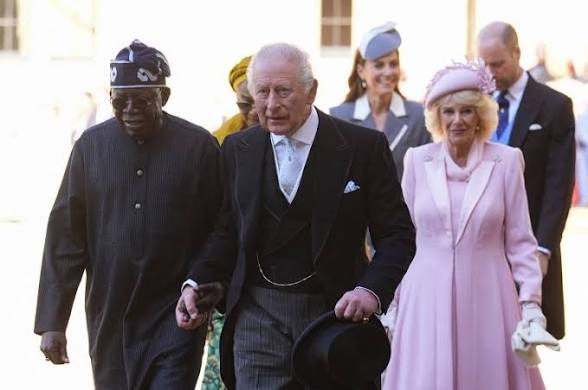
As President Bola Ahmed Tinubu and First Lady Oluremi Tinubu dine with King Charles III at Windsor Castle, a different kind of drama is unfolding thousands of miles away in Nigeria and on social media timelines. Images of governors and ministers queuing in a London hotel to greet the President have gone viral, sparking a familiar yet fierce debate: Is this high-table diplomacy a necessary tool for national advancement, or is it a costly, performative distraction?
READ ALSO: Reimagining Grid Governance in the Digital Age
To answer this, we must strip away the pageantry and look at the hard mechanics of a “State Visit” what it is, what it costs, and who it is really for.
The Anatomy of a Visit: Not All Handshakes Are Equal
First, it is crucial to understand that a “State Visit” is not just another business trip. It is the highest form of diplomatic engagement a host nation can offer a foreign dignitary. According to diplomatic protocol, a State Visit is specifically a visit by a Head of State (a President or Monarch) at the invitation of the host Head of State.
This distinction is important. It is different from an “Official Visit,” which might be led by a Head of Government (like a Prime Minister), or a “Working Visit,” which is often self-initiated and focused on specific meetings.
The visit to the UK by President Tinubu ticks all the boxes of a full State Visit: an invitation from the monarch, a ceremonial welcome, a State Banquet, and a bilateral meeting with the Prime Minister. The fact that a Nigerian leader hasn’t received this honour in 37 years underscores its diplomatic weight. It is a tool of “soft power,” a signal that the relationship between Nigeria and the UK is being given the highest official seal of approval.
What Nigeria Stands to Gain
Advocates for these trips argue that the pomp provides a platform for serious business. They point to the fact that high-level access, access that only a State Visit can unlock, facilitates the signing of major agreements.
In this case, the headline achievement is the £746 million (approximately N680 billion) financing deal between UK Export Finance (UKEF) and the Nigerian Ports Authority. This deal aims to refurbish the dilapidated Apapa and Tin Can Island Ports—infrastructure that handles over 70% of Nigeria’s maritime trade.
The argument for the visit rests on three pillars:
Investment: The UKEF deal is framed as a direct injection of capital into critical infrastructure.
Bilateral Relations: The visit is an opportunity to reset ties, discussing cooperation on security, immigration, and cultural exchange at the highest levels.
Global Image: A State Visit puts Nigeria on a global stage, signalling to other investors that the country is open for business and a key geopolitical player.
As the Ministry of Information would argue, you cannot secure a deal of this magnitude, which requires Treasury and political backing, through a Zoom call.
The Morality of the Entourage: Necessity or Waste?
However, the nuance of high diplomacy is often lost in the visuals. And the visuals from this trip have been potent. Videos and photos circulating online show a long queue of governors, including the Governors of Lagos, Katsina, Zamfara, Enugu, Akwa Ibom, and Plateau, alongside ministers and other officials, waiting to shake hands with the President at his hotel.
This is the crux of the public anger. At a time when Nigerians are facing severe economic hardship, the optics of a large delegation flying out to “welcome” the President in London feels, to many, like a lavish junket.
Official records show that the “official entourage” includes the Senate President and key ministers directly relevant to the agenda—Finance, Trade and Investment, Defence, and the NSA. The inclusion of a governor like Dauda Lawal of Zamfara was officially explained as a chance for him to network and attract investment for his state.
But this is where the lines blur between statecraft and political theatre. Critics argue that the presence of numerous governors, many of whom have no direct role in the UK-Nigeria bilateral negotiations, is purely performative.
The arguments against the large delegation:
Waste of Resources: In a country where state governors earn huge packages, funding multiple first-class tickets and London hotel accommodations for a two-day event is seen as a reckless use of public funds. As activist Omoyele Sowore and critics online have questioned, “Why must governors and ministers travel ahead just to form a reception party?”.
Performative Politics: The “queue to greet the President” is viewed not as a diplomatic necessity, but as a ritual of political loyalty, a public display of subservience designed to curry favour rather than conduct business. The UK government does not require state governors to greet a visiting president; the Nigerian political structure does.
Tone Deafness: The timing of the celebration has been sharply criticized. With the nation grappling with widespread insecurity, including recent deadly attacks in Maiduguri, critics have labeled the lavish banquet and champagne toasts as deeply insensitive, accusing the President of “dancing on the graves of martyrs”
Beyond the Outrage: A Crisis of Political Consciousness
Beyond the immediate outrage over costs and optics lies a more unsettling critique, one that interrogates not just what the Nigerian political elite does, but how it thinks. A growing strand of public commentary, powerfully articulated by social critics and amplified across digital platforms, frames the London spectacle as evidence of something deeper than policy failure: a crisis of political consciousness within Nigeria’s ruling class.
At the heart of this critique is the argument that governance in Nigeria operates within a system of what might be described as “weaponized deprivation.” The persistence of poverty, hunger, and economic precarity is not merely a failure of policy but, in this view, a structural condition that benefits the elite. A population struggling for daily survival is less likely to organize, resist, or demand systemic accountability. In such a context, sporadic relief, whether in the form of palliatives, food distribution, or token cash transfers, becomes a tool of control rather than a pathway to empowerment. From this perspective, the outrage over governors flying to London is not just about fiscal irresponsibility; it is about a governing logic that appears fundamentally indifferent to the lived realities of over 200 million citizens.
Even more provocatively, this critique introduces a psychological dimension. It suggests that the performative enthusiasm surrounding foreign validation, particularly from former colonial powers like the United Kingdom, reveals a lingering postcolonial inferiority complex. The symbolism of queuing in a London hotel, of proximity to Windsor Castle, and of access to British institutional power is interpreted not simply as diplomacy, but as a form of external validation-seeking behavior. In this reading, the State Visit ceases to be merely a strategic engagement tool and becomes instead a stage for what critics describe as “mental chains” a condition in which political actors derive legitimacy not from domestic performance, but from international recognition. The contradiction is stark: a leadership class that appears eager to affiliate with global prestige, yet struggles to deliver basic public goods, electricity, security, and economic stability at home.
This also reframes the question of performance versus governance. The grandeur of the State Visit, the ceremonial banquets, and the highly publicized diplomatic rituals risk being interpreted not as instruments of statecraft, but as political theatre, a spectacle that masks institutional weakness. The concern, as echoed in public discourse, is that such performances may substitute for governance rather than complement it.
The Verdict: A Tale of Two Narratives
Taken together, these arguments recast the London visit in far more critical terms. It is no longer just a debate about cost-benefit analysis or diplomatic necessity. It becomes a question of whether Nigeria’s engagement with the world is being driven by strategic national interest or by a leadership class still negotiating its own place in a postcolonial hierarchy.
Ultimately, the “State Visit” exists in two parallel realities.
In Reality A (The Official Narrative): This is a historic, 37-years-in-the-making diplomatic coup. It has yielded a £746 million infrastructure deal, strengthened Nigeria’s hand in international affairs, and is a crucial step in repositioning Nigeria as a prime investment destination in a volatile world.
In Reality B (The Public Perception): It is a symbol of a detached elite. While citizens struggle to afford fuel and food, their leaders are seen enjoying a Royal banquet and greeting each other in a five-star London hotel. The massive, taxpayer-funded entourage overshadows any policy achievements.
So, was the visit necessary? Diplomatically, yes. A State Visit is a fundamental tool of international relations. But the “morality” of it lies in the execution.
The core issue for Nigerians isn’t the President going to London; it’s the spectacle of a government seemingly traveling in a bloc, creating an “Aso Rock in exile” that reinforces the feeling of a ruling class disconnected from the grassroots. If the governors and ministers who traveled are serious about changing this narrative, they must return home not just with photos of the Royal Family, but with verifiable, tangible investments that translate the red carpet on Windsor’s floors into tarmac on Nigeria’s roads.
For now, the image of them waiting in that queue will likely be the defining and most damaging legacy of this historic trip.