


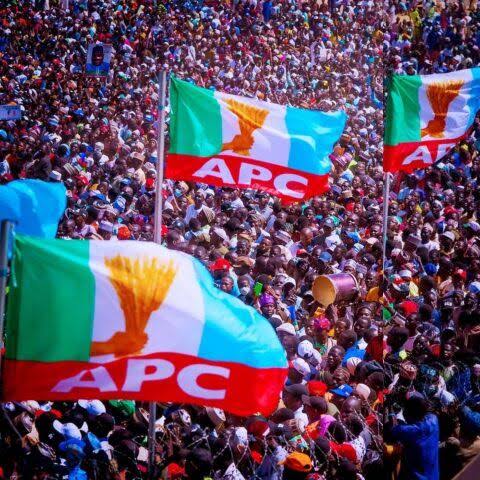
Democracy for Sale: Welcome to the APC Price List
By Jerry Adesewo
There is a breaking News. Not from the stock exchange. Not from a luxury real estate auction. Not even from a high-end wedding catalogue.
No—this is Nigerian democracy, freshly priced and neatly packaged:
- Presidential form — ₦200,000,000
- Governorship — ₦150,000,000
- Senatorial — ₦100,000,000
- House of Reps — ₦70,000,000
- State Assembly — ₦20,000,000
Ladies and gentlemen, welcome to APC Supermarket, where leadership is no longer about vision—it is about valuation.
READ ALSO: The Unyielding Standard: Why Principle, Not Bitterness, Defines Datti-Baba Ahmed
Step Right Up: Leadership Is Now a Premium Product
In this new retail democracy, the first question is no longer: What do you stand for?
It is now: What can you afford?
Gone are the days when politics pretended to be about ideology, service, or even competence. Those were the amateur years. Today, we are dealing with a fully monetised system—efficient, transparent (ironically), and brutally honest.
If you have ₦200 million, you can aspire to lead over 200 million people.
If you have ₦20 million, you can at least manage a constituency and practise governance on a smaller scale.
Democracy has finally been simplified: No money, no mandate.
The New Political Curriculum Vitae
In the past, candidates submitted CVs listing experience, education, and achievements.
Now, the CV has only one line: “Financial Capacity: Strong.”
Because let us be honest—if you can raise ₦200 million just to collect a form, you are not entering politics to serve. You are entering politics to recover your investment—with interest.
And Nigerians, as usual, will be the shareholders—unwilling, uninformed, and permanently unpaid.
From Ballot to Balance Sheet
What we are witnessing is not just money politics. It is pricing strategy.
The APC has not merely set fees; it has defined the market:
- Presidency = Premium Brand
- Governorship = Executive Package
- Senate = Luxury Tier
- House of Reps = Mid-range Option
- State Assembly = Entry-Level Democracy
Soon, we may begin to see promotions:
“Buy one senatorial ambition, get one committee chairmanship free.”
“Early bird discount for defectors.”
“Loyalty points redeemable after second term.”
At this rate, INEC may as well introduce a checkout counter.
The Silent Exclusion
Of course, the official explanation will sound noble:
“The fees ensure only serious candidates emerge.”
Yes, serious. As in seriously wealthy.
Because what this pricing system quietly achieves is exclusion. It locks out teachers, doctors, engineers, activists, young professionals—anyone whose wealth is measured in ideas rather than bank alerts. Indeed, it locks me out, of my day-dreaming to run for the office of the President gainst Preaident Bola Ahmed Tinubu.
It tells Nigerians, politely but firmly: Leadership is not for you. It is for those who can afford the entrance fee.
Investment Politics and Its Returns
Now let us follow the logic to its natural conclusion.
If a man spends ₦200 million just to get a form, campaigns with billions, and navigates a system where everything has a cost, what exactly do we expect him to do once in office?
Break even?
Make profit?
Or run government like a recovery project?
This is not cynicism. This is arithmetic.
Governance becomes less about policy and more about ROI—Return on Investment.
Road contracts become dividends. Appointments become reimbursements. Budgets become balance sheets.
And the people? The people become… expenses.
Democracy, Now Showing in 4K Irony
The most amusing part of this entire arrangement is the contradiction.
The same system that charges ₦200 million for a form will still tell Nigerians: “Vote your conscience.”
Which conscience? The one that cannot afford to contest? Or the one that must now choose between two heavily invested candidates?
It is like organising a race where only the rich can buy shoes, then asking the barefoot to compete fairly.
Final Call: Leadership or Luxury?
Perhaps we should stop calling it politics. Let us call it what it has become: A high-stakes investment platform with electoral features.
Where ambition is priced, access is monetised, and democracy is quietly repackaged as a luxury product—available to a few, advertised to many, and paid for by all.
And so, as Nigerians stare at this impressive price list, one final question remains: If it costs this much to enter power, how much will it cost us to survive it?
Because in this new marketplace, one truth is clear: The forms are expensive. The candidates are invested.
But the people—the people are the ones being sold.