


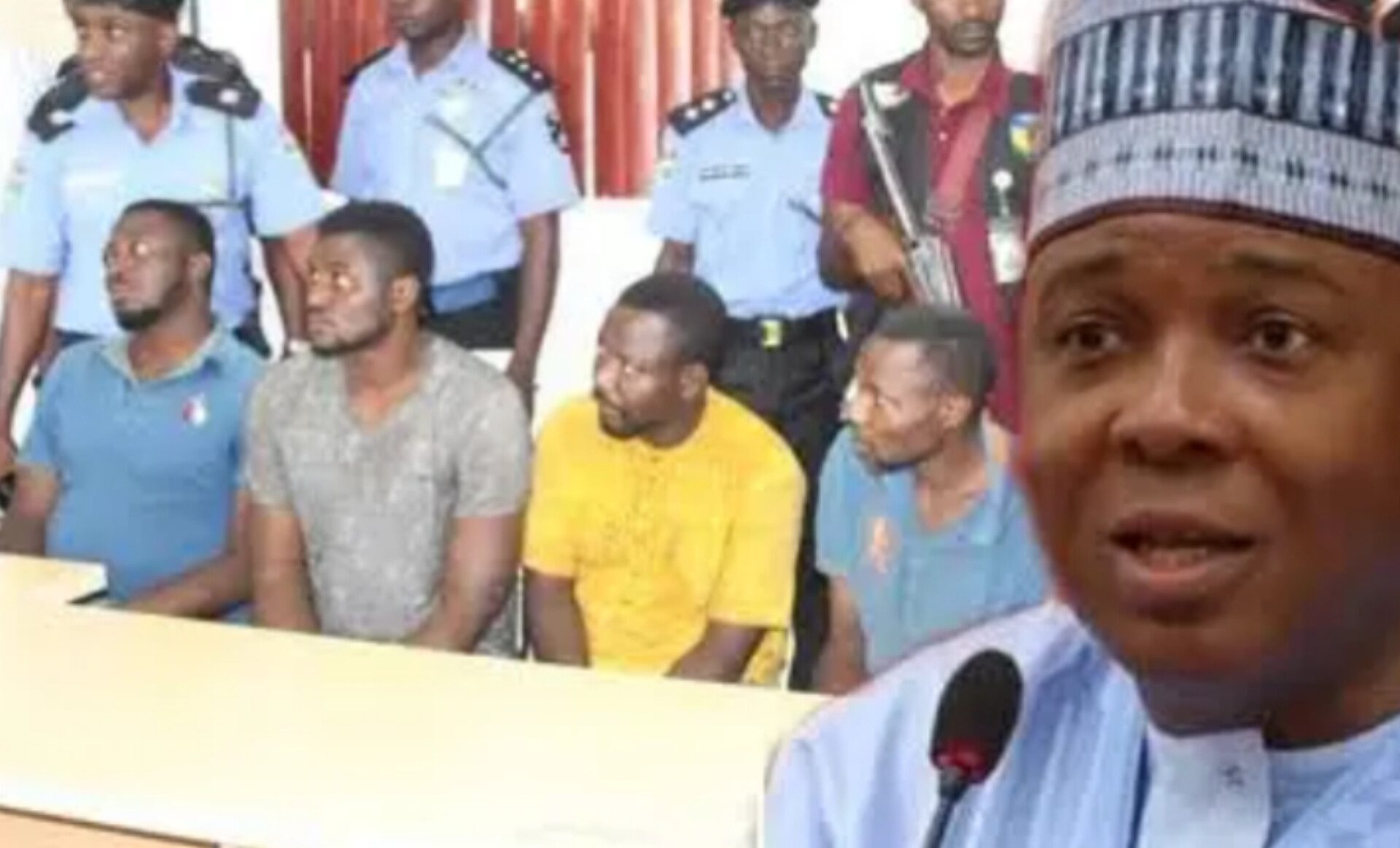
Offa Robbery Case Resurfaces: Politics, Justice and the Battle for Kwara’s Narrative
By Matthew Eloyi
Eight years after the tragic Offa robbery shocked Nigeria, the incident has once again found its way into the centre of Kwara State’s political arena, this time as a flashpoint in a renewed war of words and legal threats between two of the state’s most prominent figures.
At the heart of the storm is former Senate President, Abubakar Bukola Saraki, who has forcefully rejected fresh attempts to link him to the deadly attack. His response follows moves attributed to the current governor, AbdulRahman AbdulRazaq, to revisit allegations that had long appeared settled in the eyes of federal prosecutors.
When heavily armed robbers stormed banks in Offa in April 2018, the scale of violence stunned the country. Dozens were killed, including security personnel, in what became one of the most brazen bank robberies in Nigeria’s recent history.
The response from the Nigeria Police Force was swift and highly public. Arrests were made, and confessional statements from suspects soon introduced a controversial political dimension. Allegations surfaced suggesting links between some suspects and powerful figures in Kwara politics.
For many observers, the case quickly moved beyond criminal investigation into the realm of political intrigue, particularly given its timing ahead of the fiercely contested 2019 elections.
Saraki, then serving as Senate President, was among those named in the unfolding narrative. He denied any involvement, and the matter was subjected to federal legal scrutiny.
Twice in 2018, the Office of the Attorney General of the Federation issued legal advice stating there was no evidence to establish a case against him or then-governor Abdulfatah Ahmed. Those findings effectively removed them from the list of individuals to be prosecuted.
The legal process continued against other suspects. Trials were conducted, convictions secured, and appellate courts upheld those decisions. Yet, even as the judicial system progressed, the political undertones never fully dissipated.
Now, years later, the issue has resurfaced.
Saraki argues that the renewed attempt to reopen questions about his alleged involvement is not coincidental. He links it directly to his recent criticism of the state government’s handling of insecurity, an issue that has become increasingly sensitive in Kwara.
In his telling, the revival of the case is less about justice and more about politics: a calculated effort to discredit a long-standing rival and reshape public perception.
The governor, on the other hand, has not publicly detailed the full legal basis for the renewed move, but the development signals that the Offa robbery, far from being a closed chapter, remains a potent political tool.
The renewed dispute is unfolding against a backdrop of growing concern over security in Kwara State. Reports of banditry and kidnappings have heightened public anxiety, placing pressure on the state government to demonstrate control.
For Saraki, this context is central. He frames the legal move against him as a diversion from more urgent governance challenges. It is an argument that resonates in a country where insecurity often shapes political fortunes.
Yet, for critics of the former Senate President, the reopening of the case, if pursued, may be seen as an attempt to revisit unanswered questions, regardless of past legal conclusions.
As the political rhetoric intensifies, the burden may ultimately fall once again on the courts.
Saraki has expressed confidence that the judiciary will reaffirm earlier findings and dismiss any fresh claims. His stance underscores a broader reliance on legal institutions to navigate politically sensitive disputes in Nigeria.
But the situation also highlights a recurring tension: when high-profile criminal cases intersect with politics, legal outcomes alone do not always settle public debates.
The re-emergence of the Offa robbery in Kwara’s political discourse is a reminder that some events never fully fade. They linger, reshaped by time, reinterpreted by rivals, and revived when circumstances demand.
For the people of Kwara, the questions extend beyond who is right or wrong. They touch on trust in institutions, the use of state power, and the enduring influence of political rivalry.
As the legal and political drama unfolds, one thing is clear: the story of Offa is no longer just about a tragic day in 2018. It has become a living narrative that continues to define and divide Kwara State.
