


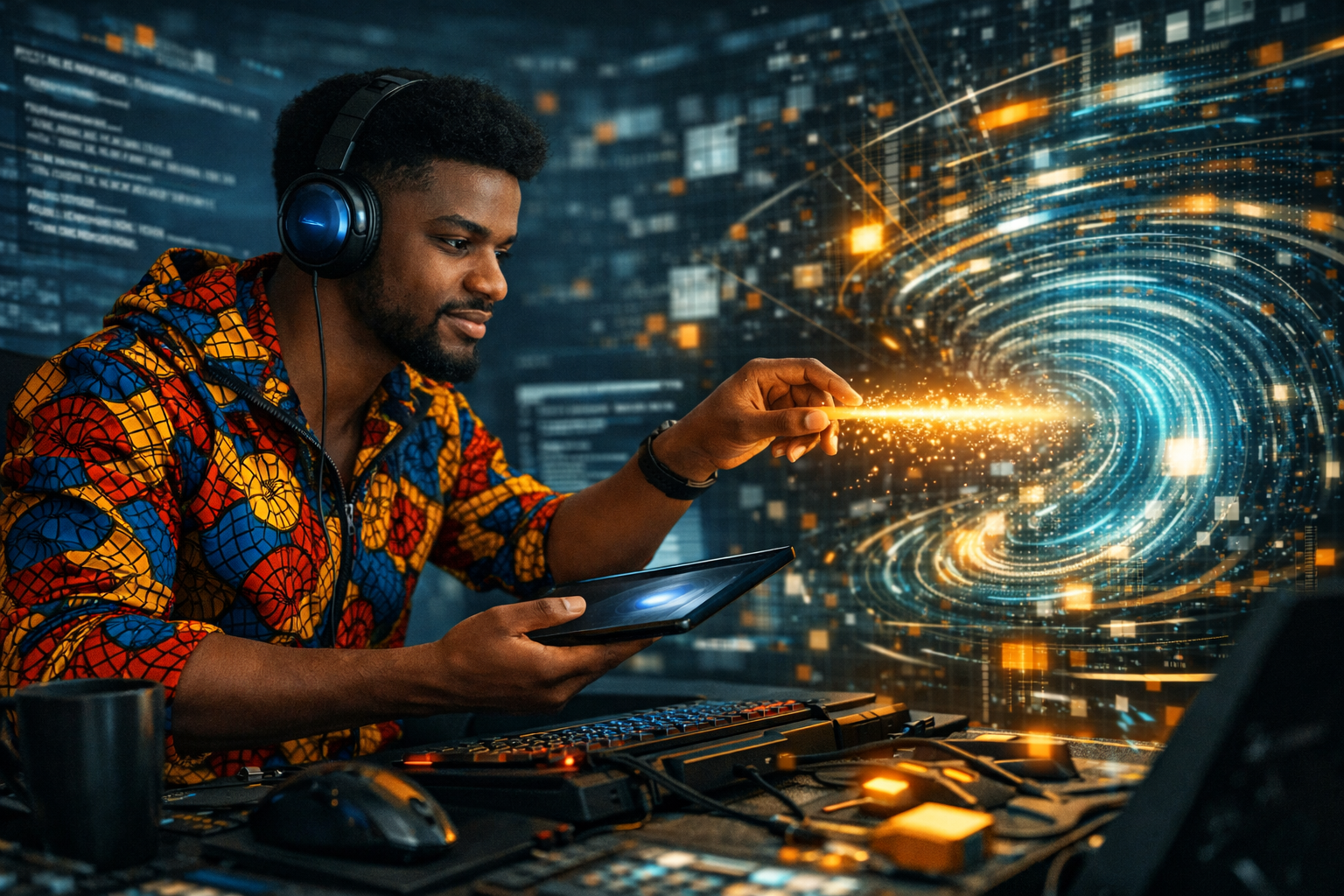
The Social Media Generation: Influence, Misinformation, and Identity in Nigeria
By Comfort Pius
At 11:42 p.m., a 23-year-old content creator in Lagos uploads a 30-second video on TikTok. By sunrise, it has crossed 200,000 views. By noon, it is shaping conversations far beyond her immediate circle. In that moment, without a newsroom, without an editor, and without formal training, she has done what traditional media once monopolized. She has influenced public thought.
This is the reality of Nigeria’s social media generation: a space where power has shifted quietly but decisively, from institutions to individuals, from gatekeepers to algorithms.
READ ALSO: Over 40 Ambassador-Designates Begin Induction in Abuja Ahead of Foreign Posting
Nigeria today is one of Africa’s most digitally active nations. With over 120 million internet users—according to recent telecommunications data—and a youth population that dominates online engagement, platforms like Instagram and X have evolved from social tools into cultural engines. They shape not only what Nigerians see but also how they think, what they believe, and increasingly, who they become.
But this shift is not merely technological; it is philosophical. It raises a fundamental question: when everyone has a voice, who guards the truth?
At the heart of this transformation lies influence. Once measured by institutional credibility and professional expertise, influence in Nigeria is now driven by relatability, visibility, and algorithmic reach. A compelling video, a witty post, or a controversial take can propel an individual into national relevance overnight.
This democratization is, in many ways, revolutionary. It has given young Nigerians a platform to tell their own stories, challenge dominant narratives, and participate in public discourse. It has broken barriers that once confined visibility to a privileged few.
Yet, this same openness has created a vacuum of accountability.
In traditional journalism, information passes through layers of verification: editors, fact-checkers, and ethical guidelines. On social media, speed often replaces scrutiny. The first to post is rewarded, not necessarily the most accurate. And in that race, truth is frequently the casualty.
Misinformation in Nigeria does not spread because people are inherently gullible; it spreads because it is engineered to travel. It is emotional, simplified, and often tailored to existing biases. During elections, security crises, or public health scares, false narratives move with alarming speed, shaping perceptions before facts can catch up.
A striking example emerged during Nigeria’s recent election cycle, when a manipulated video circulated widely on X, falsely suggesting electoral malpractice in a key polling unit. Within hours, it had been shared thousands of times, fueling outrage and deepening mistrust before independent verification debunked it. By then, however, the damage had already been done; the narrative had taken root.
In Nigeria, truth does not always lose to lies; it simply arrives late.
The consequences of this delay are profound. Repeated exposure to false or distorted information creates what can only be described as a parallel reality, one where facts are negotiable and narratives are fragmented. In this environment, belief is no longer anchored in evidence but in repetition and emotional resonance.
Beyond influence and misinformation lies a more subtle, deeply personal shift: the construction of identity.
For many young Nigerians, social media is not just a platform; it is a mirror and, sometimes, a mask. On these platforms, identity is curated, edited, and performed. Success is not merely achieved; it is displayed. Lifestyles are crafted to fit an algorithmic ideal, often detached from lived reality.
Scroll through timelines, and a pattern emerges: luxury, confidence, constant progress. What is less visible are the struggles behind the scenes the financial pressures, the uncertainties, and the quiet contradictions that rarely make it online.
This creates a silent but powerful tension. Young people are not just living their lives; they are measuring them against a continuous stream of curated perfection. The result is a culture of comparison, where self-worth is increasingly tied to visibility.
Are young Nigerians expressing themselves more freely, or are they becoming trapped in performances designed for validation?
The answer lies somewhere in between.
Social media has undoubtedly unlocked creativity and opportunity. It has allowed voices that were once marginalized to be heard. It has created new economic pathways, turning content creation into a viable career for many.
Brands now invest heavily in influencers, recognizing their ability to connect with audiences in ways traditional advertising cannot. For some, this represents empowermenta chance to earn, to build a personal brand, and to shape narratives.
But beneath this promise lies instability.
The influencer economy is as volatile as it is attractive. Visibility can surge overnight and disappear just as quickly. There are no guarantees, no clear regulations, and often, no safety nets. For every success story, there are countless others navigating an unpredictable landscape, chasing relevance in a system that rewards constant output but rarely offers long-term security.
In this sense, the digital economy reflects a broader Nigerian reality—innovative, resilient, but deeply uncertain.
Social media has also redefined activism. The #EndSARS movement stands as a powerful example of what digital mobilization can achieve. Hashtags became rallying points, amplifying voices and drawing global attention to local injustices.
For a moment, it seemed as though social media had bridged the gap between expression and action.
Yet, the aftermath tells a more complex story.
Online activism is often intense but fleeting. Issues trend, dominate conversations, and then fade, replaced by the next wave of content. The risk is not that activism is ineffective, but that it becomes episodic driven by momentum rather than sustained engagement.
The question, then, is not whether social media can spark change it clearly can. The real question is whether it can sustain it.
Underlying all these dynamics is a growing trust deficit.
Traditional media, once the primary gatekeeper of information, now competes in a fragmented landscape where authority is diffused. While this has reduced monopolies over information, it has not necessarily strengthened credibility. Instead, it has created an environment where trust is selective, fluid, and often misplaced.
When everyone is a publisher, accountability becomes optional.
And when accountability is optional, misinformation becomes inevitable.
In such a landscape, the responsibility of navigating information shifts increasingly to the audience. Media literacy is no longer a specialized skill; it is a basic necessity. The ability to question sources, verify claims, and recognize bias is now central to informed citizenship.
But even this raises a deeper concern: can individual vigilance compensate for systemic gaps?
Can a population, no matter how aware, fully counter a digital ecosystem designed to prioritize engagement over accuracy?
These are not just technological questions; they are societal ones.
Nigeria’s social media generation stands at a critical intersection. It holds unprecedented power to influence narratives, shape identity, and redefine public discourse. But this power is double-edged. It can illuminate truths or obscure them, empower voices or distort realities.
The future of Nigeria’s digital space will not be determined solely by technology, but by intention.
By whether influence can be anchored in responsibility.
By whether speed can coexist with accuracy.
By whether identity can remain authentic in a culture that rewards performance.
Because if the current trajectory continues unchecked, Nigeria risks building a society where visibility outweighs truth, where performance overshadows reality, and where the loudest voices are not necessarily the most credible.
And if that happens, Nigeria will not suffer from a lack of voices but from a collapse of meaning, where everything is said, yet nothing can be trusted.