


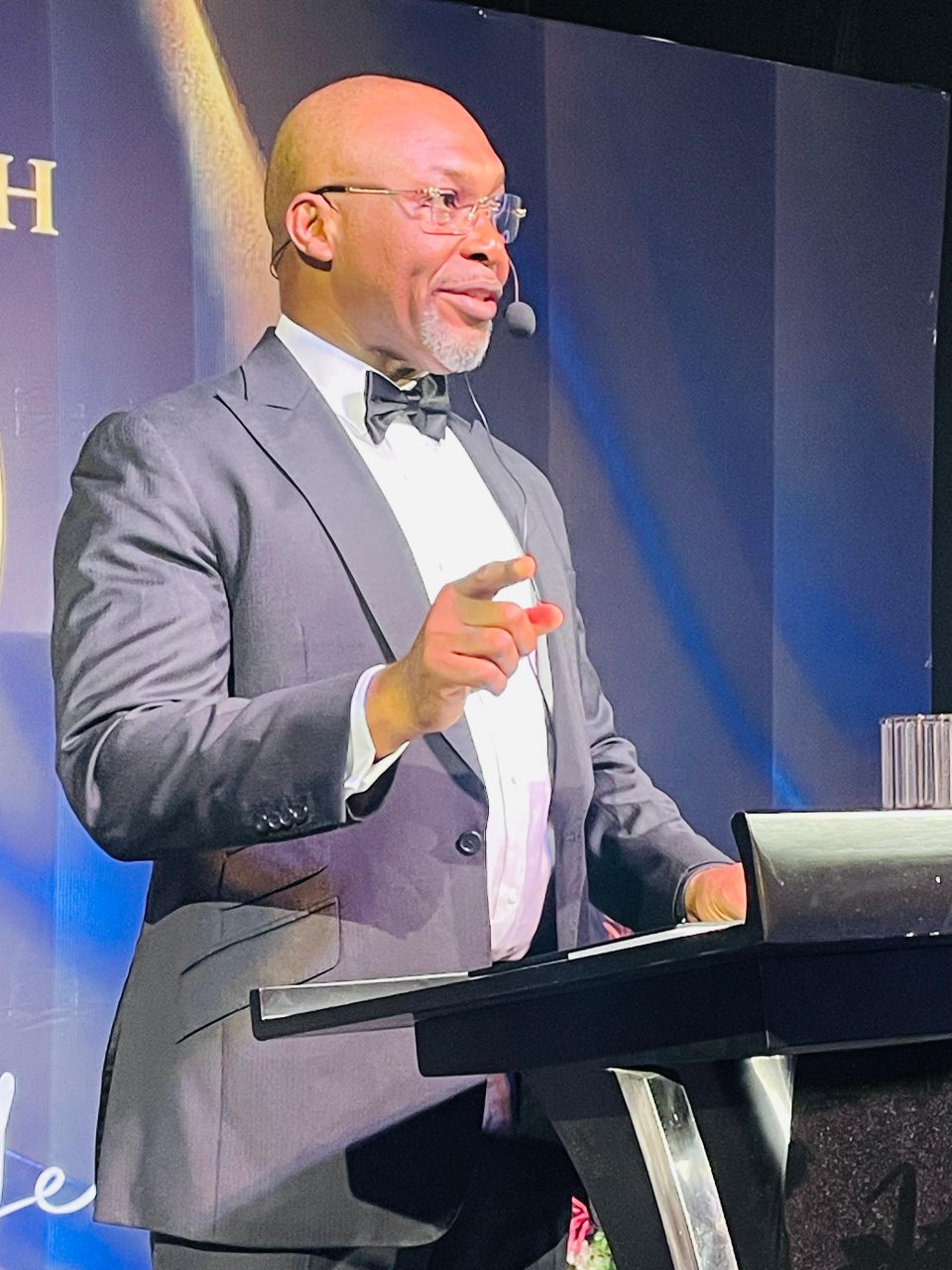
Nigeria’s Education Funding Below Global Benchmark, Chidoka Warns at Enugu Alumni Gala
By Onyi Rita, Enugu
Former Minister of Aviation and Chancellor of the Athena Centre for Policy and Leadership, Chief Osita Chidoka, has raised concerns over Nigeria’s low investment in education, revealing that the country currently spends only 2.14 per cent of its Gross Domestic Product (GDP) on public education—well below the UNESCO-recommended benchmark of 4 to 6 per cent for developing countries.
READ ALSO: Klub 98 Urges Swift Action as Abducted Oyo Schoolchildren Remain in Captivity
Chidoka made the disclosure while delivering the keynote address at the 70th Anniversary Gala of the Ekulu Primary School Alumni Association (EPSAA) in Enugu on Friday.
Speaking on the theme, “Ekulu at 70: How One School Tells the Nigerian Story of Decline and the Duty of Renewal,” the former Corps Marshal of the Federal Road Safety Corps said the country’s education funding crisis should be treated as a national emergency.
According to data compiled by the Athena Centre for Policy and Leadership, Nigeria’s total public spending on education in 2026 amounts to approximately ₦9.49 trillion, representing 2.14 per cent of the nation’s projected GDP of ₦442.8 trillion.
The figure was derived from federal education spending, allocations to the Universal Basic Education Commission (UBEC), interventions by the Tertiary Education Trust Fund (TETFund), and education budgets across the 36 states and the Federal Capital Territory.
“Nigeria is not in the middle of the developing world on this measure. It is below its floor,” Chidoka said. “We have been treating this as a routine budget conversation for too long. The figure is, in fact, a national emergency.”
The Athena Centre’s analysis shows that Nigeria lags behind several emerging economies and African nations in education spending. South Africa currently allocates 6.7 per cent of GDP to education, Brazil 5.6 per cent, Kenya 4.8 per cent, India 4.1 per cent, and Ghana 3.4 per cent.
Despite the national picture, Chidoka identified several states making significant commitments to education.
He singled out Anambra State, which has allocated 46.9 per cent of its 2026 budget to education—the highest in the country. Enugu follows with 32.2 per cent and is implementing its flagship Smart Green Schools initiative across all political wards.
Other states receiving commendation included Kano, which is undertaking a major teacher recruitment programme, as well as Lagos, Kaduna, Katsina, and Abia.
According to the report, the six states together are projected to spend approximately ₦1.8 trillion on education in 2026.
Interestingly, while Lagos remains one of the country’s largest spenders in absolute terms, only 5.6 per cent of its budget is allocated to education.
The Athena Centre noted that Enugu’s education spending, when measured in dollar terms, is now roughly twice that of Lagos—a dramatic reversal from 2000, when Lagos reportedly spent six-and-a-half times more than Enugu.
The Centre argued that the trend demonstrates that financial capacity alone does not guarantee educational commitment.
“Volume is not the same as priority, and wealth is not the same as political will,” Chidoka remarked.
Tracing the roots of Nigeria’s educational decline, the former minister pointed to the period between 1986 and 1999, which he described as the country’s “years of the locust.”
He cited data showing that the monthly salary of a Nigerian professor declined from approximately $1,000 in 1985 to just $137 by 1997. During the same period, Lagos State’s per-pupil spending reportedly fell from $281 to $22 in real terms.
Similarly, Ahmadu Bello University’s annual operating expenditure per student, once comparable to South Africa’s University of the Witwatersrand in 1980, has reportedly declined to a ratio of one-to-twenty-eight in favour of the South African institution.
However, Chidoka argued that Nigeria’s greatest failure was not the crisis years themselves but the inability of successive democratic governments since 1999 to fully reverse the damage.
“The deeper failure lies in the twenty-seven years after military rule. We accepted the empty field as the new harvest,” he said.
Turning to the role of alumni associations, Chidoka challenged members of the Ekulu Primary School Alumni Association to move beyond nostalgia and become active agents of educational renewal.
He proposed the creation of an Ekulu Learning Dashboard within the next 12 months to track literacy, numeracy, attendance, examination performance, teacher availability, and infrastructure development.
He also called for the establishment of a Teacher Development and Recognition Fund within two years, alongside targeted literacy and numeracy support programmes for struggling pupils.
Within three years, he urged the alumni body to partner with the Nigerian Research and Education Network (NgREN) under its Connecting Nigerian Education programme to integrate the school into the country’s digital learning infrastructure.
“Let’s Get It Done is not charity. It is repayment,” Chidoka said. “It is a clarion call from a generation that received much, to a generation now standing in the same classrooms, asking only what was once routinely given.”
The Athena Centre said its full report, including comparative analyses of education funding in Nigeria, South Africa, Vietnam, China, Poland and other countries, is available through the organisation.