

INEC Trains Gender, Inclusivity Staff to Strengthen Voter Education Ahead of 2027
INEC Trains Gender, Inclusivity Staff to Strengthen Voter Education Ahead of 2027

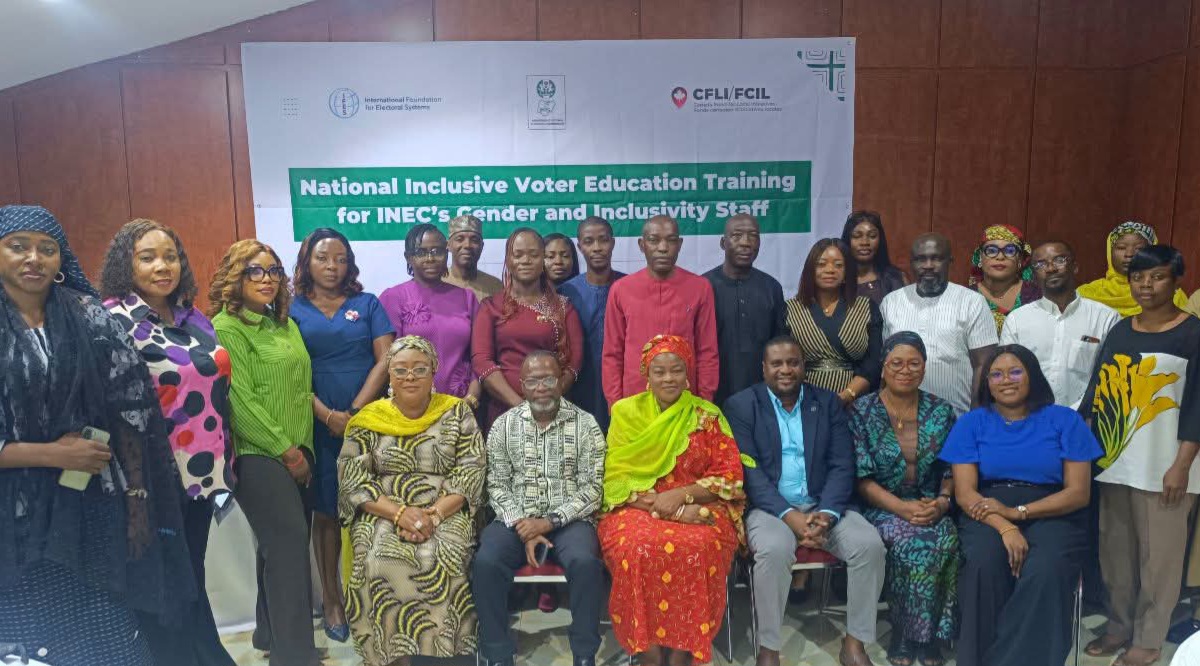
INEC Trains Gender, Inclusivity Staff to Strengthen Voter Education Ahead of 2027
The Independent National Electoral Commission (INEC) has commenced a two-day National Inclusive Voter Education Training for its Gender and Inclusivity personnel as part of efforts to promote broader participation in the 2027 General Election.
The training, supported by the Government of Canada through its Fund for Local Initiatives and organised in collaboration with the International Foundation for Electoral Systems (IFES), is aimed at strengthening the capacity of INEC personnel to deliver voter education that addresses the diverse needs of eligible citizens.
Held at the Exclusive Serene Hotel, Wuye, Abuja, the programme brought together staff of INEC’s Gender and Inclusivity Department from across the states and other relevant officials.
The training focuses on practical approaches to ensuring that voter information is accessible, understandable and responsive to different categories of citizens, including persons with disabilities, people with limited literacy, non-English speakers and residents of remote communities.
Speaking at the event, First Secretary, Political Affairs, Canadian High Commission in Nigeria, Colton Bridges, said Canada considered inclusive elections and democratic processes important to democratic development.
Bridges said the project was funded through Canada’s Fund for Local Initiatives and formed part of several election-related projects being supported by the country as Nigeria prepares for the 2027 elections.
He said the focus on inclusion reflected Canada’s commitment to ensuring that electoral processes were accessible to all citizens, regardless of their circumstances.
Bridges, who disclosed that he had participated in election observation missions in Ondo, Anambra and Osun states, commended INEC’s efforts to promote inclusive elections, particularly for persons with disabilities.
He, however, stressed that electoral inclusion should extend beyond disability to include citizens who face language, literacy, geographical and digital access barriers.
According to him, INEC has the responsibility and capacity to ensure that the electoral process itself is accessible to persons with disabilities and other groups requiring specific forms of voter information.
Also speaking, IFES Regional Director for Africa and Country Director for Nigeria, Seray Jah, described the training as an important area of collaboration between IFES, INEC and the Canadian Government.
Jah said IFES had previously supported INEC’s Voter Education Department in developing Frequently Asked Questions and expressed the organisation’s readiness to deepen its partnership with the Commission.
She urged participants to remain open to new ideas, noting that experience in election administration should not prevent practitioners from learning new approaches.
“Every election is different,” Jah said, stressing the need for electoral practitioners to remain adaptable and responsive to changing circumstances.
In her welcome remarks, Director, Gender and Inclusivity Department, INEC, Mrs Lakunuya Dorothy Bello, reaffirmed the Commission’s commitment to ensuring that no eligible voter is left behind.
Bello said INEC had introduced several initiatives to improve the participation of women, persons with disabilities and other marginalised groups, including its Gender Policy, framework for the participation of Internally Displaced Persons, Braille Ballot Guide and other accessibility measures.
She noted that policies and frameworks could only achieve their intended impact when supported by effective voter education capable of reaching the targeted beneficiaries.
Bello therefore urged participants to develop practical and targeted strategies for engaging marginalised communities and ensuring that electoral information reached them in accessible and understandable formats.
She said effective inclusive voter education would be critical to translating INEC’s policies and interventions into increased participation in the 2027 General Election.
INEC Trains Gender, Inclusivity Staff to Strengthen Voter Education Ahead of 2027
