


Nigeria’s Political Class and the Shameful Business of Electoral Violence
By Matthew Eloyi
Every election season in Nigeria comes with familiar promises. Politicians travel across communities, mount campaign platforms, distribute campaign materials and tell citizens how much they care about their welfare. They promise jobs, security, better roads, quality education, affordable healthcare and a brighter future. Yet, beneath the colourful banners, political jingles and carefully choreographed campaign appearances lies an ugly reality that continues to threaten Nigeria’s democracy: the business of electoral violence.
It is a business in which political desperation meets poverty, where unemployed young people are recruited as foot soldiers, where human lives become expendable and where the ambition of a few powerful individuals is placed above the safety and dignity of millions of Nigerians.
As the country moves towards the 2027 general elections, the growing atmosphere of political hostility, intimidation and attacks on political opponents raises serious concerns about the direction of our democracy. The recent attack on the campaign train of former Deputy Senate President, Ovie Omo-Agege, in Ughelli, Delta State, reportedly resulting in four deaths and several injuries, is another disturbing reminder of the human cost of political intolerance.
But the problem is much bigger than Delta State. It is a national problem that cuts across political parties, ethnic groups, religious affiliations and geographical boundaries. It is a recurring feature of Nigeria’s electoral environment that should no longer be treated as an unfortunate side effect of democratic competition.
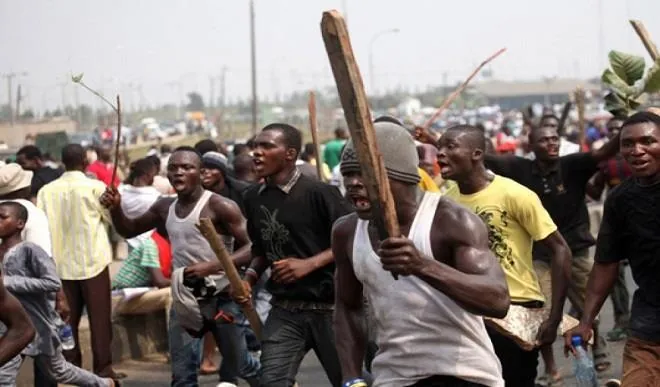
From the streets of our major cities to remote communities, political violence has continued to manifest in different forms: attacks on campaign convoys, disruption of political gatherings, intimidation of opponents, destruction of campaign materials, threats against supporters and, in some instances, the killing of innocent citizens.
The most painful part is that the victims are often ordinary Nigerians whose only offence is supporting a particular candidate or exercising their constitutional right to participate in the political process.
Behind every casualty is a family whose world may never remain the same. There is a mother who waits for her son to return from a political rally, a wife who expects her husband to come home after a campaign activity, children who look forward to seeing their father again and parents who have invested their entire lives in raising a child.
For these families, political violence is not a statistic in a police report or another headline in a newspaper. It is a permanent wound.
A young man who leaves home to participate in a political campaign should not return in a body bag. A woman attending a political rally should not have to worry about being caught in a clash between rival supporters. A candidate seeking votes should not have to fear for his or her life simply for exercising a democratic right.
Yet, these are the realities that political violence continues to impose on Nigerians.
The shameful business of recruiting poverty
Perhaps the most troubling dimension of electoral violence is the exploitation of Nigeria’s economic difficulties to recruit young people into political thuggery.
Nigeria has millions of young people struggling to find employment, establish businesses, acquire useful skills and secure a decent livelihood. Many are frustrated by years of economic hardship and limited opportunities. Rather than address these challenges through meaningful policies, some politicians exploit the desperation of vulnerable youths by offering them money, gifts and promises of political patronage.
They are recruited to mobilise crowds, intimidate opponents, disrupt campaign events and sometimes engage in violent confrontations. Some are reportedly supplied with dangerous weapons and encouraged to defend political interests with their lives.
It is a tragic contradiction that a country desperately in need of productive young people continues to witness the mobilisation of its youth population for activities that threaten lives and destroy communities.
The politicians who recruit these young people rarely share their risks. They do not stand in the streets when stones are thrown, weapons are drawn or bullets fly. They remain protected by their wealth, political influence and security arrangements, while the young people they mobilise are left to face the consequences.
When arrests are made, it is usually the foot soldiers who find themselves in police custody. When lives are lost, it is their parents, spouses and children who mourn. When injuries occur, it is ordinary families that struggle with hospital bills and the long-term consequences.
Meanwhile, the political actors whose interests were being defended may eventually reconcile with their opponents, form alliances and share political platforms.
This is perhaps the greatest hypocrisy in our politics: politicians can settle their differences over a negotiating table, but the young people who die fighting their battles cannot return to their families.
No political appointment, campaign payment or promise of future employment can compensate a mother for the loss of her child.
When political opponents become enemies
Another major problem is the growing inability of some political actors and their supporters to distinguish between political competition and personal hostility.
In a democracy, different political opinions are not a threat. Opposition parties are not enemies of the state, and supporters of rival candidates are not enemies of one another. They are citizens exercising the same constitutional rights.
Unfortunately, Nigeria’s political environment increasingly rewards hostility rather than tolerance. Opponents are insulted, threatened and sometimes treated as people who must be silenced. Political disagreements that should ordinarily be settled through debates and persuasion are allowed to degenerate into confrontations.
This culture is further encouraged by inflammatory statements, provocative campaign rhetoric, hate speech and the deliberate spread of misinformation.
Political leaders must understand that words have consequences. When those seeking public office constantly portray their opponents as enemies, their supporters may begin to see violence as a legitimate means of defending their political interests.
The danger is that such hostility does not disappear after elections. It can divide communities, destroy friendships, damage businesses and create tensions that may persist long after politicians have moved on to other political calculations.
Nigeria is too diverse and too fragile to accommodate a political culture built around intolerance.
The misplaced priorities of our political class
What makes the situation even more disappointing is that electoral violence is occurring at a time when Nigerians have more pressing issues demanding the attention of their political leaders.
Across the country, citizens are struggling with unemployment, insecurity, rising living costs, poor infrastructure, inadequate healthcare and an education system that requires sustained investment.
Parents are worried about how to pay school fees. Young graduates are searching for jobs. Small business owners are battling rising operating costs. Farmers are concerned about insecurity and access to their farmlands. Families are making difficult decisions about food, healthcare and other basic necessities.
These are the issues that should dominate political campaigns.
Nigerians should be listening to candidates explain how they intend to create jobs, improve security, strengthen the economy, reform education, expand healthcare and provide opportunities for young people.
Instead, political conversations are too often distracted by personal attacks, intimidation, accusations and struggles for political supremacy.
A politician who cannot articulate a credible development agenda but can mobilise hundreds of young people to intimidate opponents is contributing nothing meaningful to democratic development.
The purpose of seeking public office is to improve the lives of citizens, not to expose them to danger.
Where are the security agencies?
The responsibility for addressing electoral violence also rests heavily on Nigeria’s security institutions.
The Nigeria Police Force, the Department of State Services and other relevant agencies must demonstrate that the safety of citizens is not negotiable, regardless of the political identity of those involved.
It is not enough to issue statements condemning attacks after lives have been lost. Security agencies must develop effective preventive strategies, monitor threats, provide adequate protection for political gatherings and investigate incidents promptly.
Those who sponsor, finance, organise or participate in political violence must be brought to justice. The law should not distinguish between a political thug and a politically influential individual when determining accountability.
The perception that politically connected individuals can escape consequences while ordinary supporters bear the burden of prosecution only deepens public distrust in the justice system.
The Independent National Electoral Commission (INEC), political parties, civil society organisations, religious institutions, traditional rulers and the media must also strengthen efforts to promote peaceful political participation.
However, these institutions cannot succeed without the cooperation of political leaders themselves. Parties must take responsibility for the conduct of their supporters, while candidates must make it clear that violence has no place in their campaigns.
Nigerian youths must reject the politics of exploitation
There is also a message for young Nigerians who are often at the centre of this dangerous arrangement.
Your future is worth more than the money a politician offers you to attack an opponent. Your education, career, family and personal aspirations are more important than any political ambition.
The politician who recruits you today may not remember your name tomorrow. The person who gives you money to engage in violence will not necessarily stand by you when you are arrested or injured. And the candidate whose political ambition you defend may eventually reconcile with the same opponent you were encouraged to fight.
Do not allow unemployment, poverty or political frustration to turn you into an instrument of destruction.
Young people should be at the forefront of demanding accountable leadership, not at the forefront of political violence. They should organise peaceful campaigns, interrogate candidates, educate voters, participate in debates and insist on policies that address their needs.
Political participation is a right. Political thuggery is not a substitute for it.
The 2027 elections must be different
As preparations for the 2027 general elections gather momentum, Nigeria has an opportunity to confront this recurring problem and begin to change the character of its electoral politics.
Political parties must move away from the mentality that electoral success depends on intimidation and the ability to overpower opponents. Candidates must compete on the strength of their records, ideas, policies and capacity to serve.
Citizens must also reject the notion that supporting a political party requires hostility towards everyone who supports another.
We must remember that after the elections, Nigerians will continue to live in the same communities, attend the same schools, worship in the same neighbourhoods, conduct business together and raise their children in the same country.
The politician who wins an election will not personally repair every damaged relationship, rebuild every destroyed business or restore every life lost to political violence.
Ultimately, it is ordinary Nigerians who pay the price.
The political class must therefore understand that democracy is not a licence to intimidate citizens or endanger lives in pursuit of power. Public office is a responsibility, and the first responsibility of any government or political organisation should be respect for human life and the rule of law.
Nigeria cannot continue to sacrifice its young people on the altar of political ambition. We cannot keep celebrating electoral victories while families bury their loved ones. And we cannot claim to be strengthening democracy when citizens are afraid to participate in the process of choosing their leaders.
The real measure of political leadership is not the number of people a candidate can mobilise to fight opponents, but the number of lives that can be positively transformed through responsible governance.
The business of politics should be about building a country, not destroying its people.
As Nigeria approaches 2027, the shameful business of electoral violence must no longer enjoy the protection of political influence, financial inducement or institutional indifference. Those who profit from it must be held accountable, and those who are recruited into it must recognise that their lives are too valuable to be spent defending another person’s ambition.
Our democracy deserves better. Our young people deserve better. And the families who continue to lose their loved ones to political violence deserve a country where the simple act of participating in an election does not become a death sentence.
