

Artificial Womb Technology Shows Promise for Saving Extremely Premature Infants
Artificial Womb Technology Shows Promise for Saving Extremely Premature Infants

Artificial Womb Technology Shows Promise for Saving Extremely Premature Infants
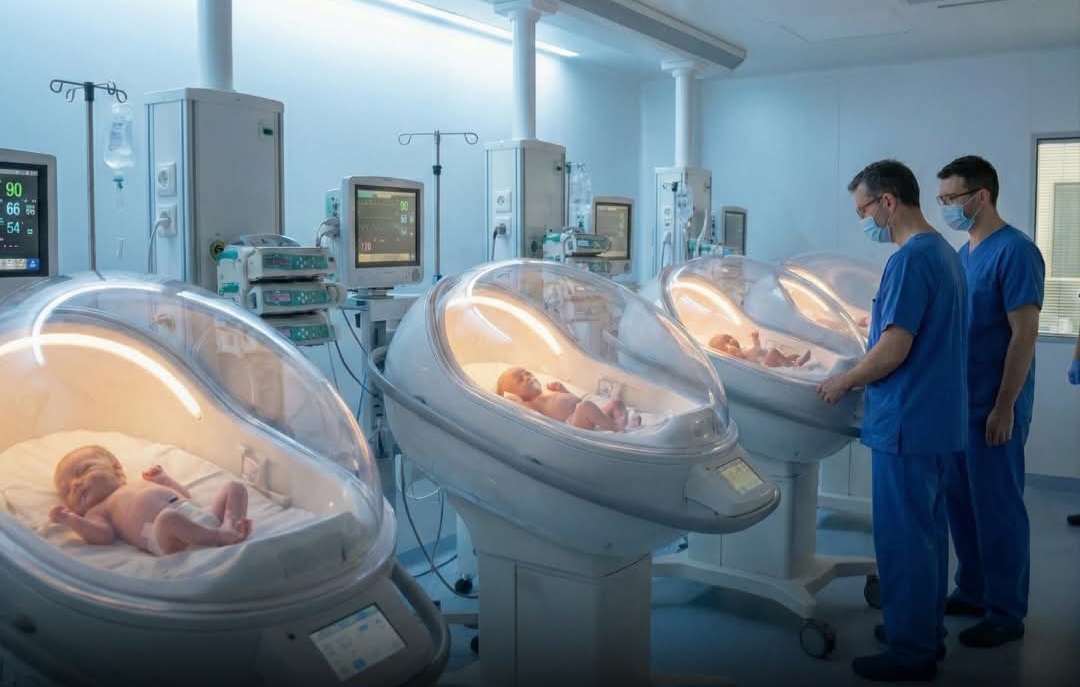
Scientists are making significant progress in the development of artificial womb technology, also known as ectogenesis, aimed at supporting extremely premature infants by replicating critical conditions of the human womb.
ALSO READ: Study Finds Two Hours of Silence May Boost Brain Cell Growth
The experimental systems are designed to carefully control temperature, oxygen levels, and nutrient delivery, allowing fragile newborns to continue their development in a protected, womb-like environment. Researchers say the technology could bridge the gap between the uterus and conventional neonatal intensive care, where survival for extremely premature babies remains a major challenge.
Although artificial wombs are still in the research and testing phase, early studies suggest the innovation has the potential to dramatically improve survival rates and reduce long-term health complications associated with premature birth.
Experts note that beyond increasing survival, the technology could also lessen the risk of organ damage and developmental disorders often faced by premature infants. As research continues, artificial womb technology is being viewed as a transformative step in neonatal medicine, with the potential to reshape care for premature babies worldwide.
Artificial Womb Technology Shows Promise for Saving Extremely Premature Infants
