

CAF’s AFCON Verdict: Punishing Players for Its Own Officiating Failures

CAF’s AFCON Verdict: Punishing Players for Its Own Officiating Failures
By Matthew Eloyi
African football’s governing body has once again found itself at the centre of controversy; not for what happened on the pitch, but for how it chose to respond afterward. The Confederation of African Football’s (CAF) decision to strip Senegal of their Africa Cup of Nations (AFCON) title and award it to Morocco is not just heavy-handed; it exposes a deeper, recurring problem: poor officiating and inconsistent governance.
At the heart of the issue lies a match already tainted by questionable refereeing decisions. The final itself was defined by confusion, delay and controversy long before CAF’s ruling. A late penalty awarded to Morocco after the allotted added time had effectively elapsed sparked outrage among Senegalese players and fans. The decision, made by referee Jean-Jacques Ndala following a VAR review, came under intense scrutiny, not least because of its timing and the apparent lack of clarity in its application.
This is not an isolated incident. Throughout recent AFCON tournaments, concerns about refereeing standards, VAR inconsistencies and timekeeping irregularities have continued to surface. From prematurely ended matches to baffling VAR calls, CAF has struggled to convince players, coaches and fans that officiating meets the standards expected at elite international competitions.
In this context, Senegal’s reaction, while not ideal, was hardly inexplicable. Players briefly leaving the pitch in protest was a symptom of frustration, not the root problem. The game had already slipped into chaos. A 20-minute delay, a near pitch invasion and rising tensions were all signs of a match that officials had lost control of.
Yet CAF’s response has been to focus narrowly on punishing Senegal rather than addressing the broader failure. Declaring the match forfeited and retroactively awarding Morocco a 3-0 victory effectively rewrites sporting history. It ignores the fact that Senegal returned to the pitch, the penalty was missed and the game was ultimately decided in extra time—fairly, on the balance of play.
Read Also: CAF Strips Senegal Of 2025 AFCON Title, Crowns Morocco Champions
By choosing this route, CAF risks sending a dangerous message: that administrative decisions can override what happens on the field, even when the governing body’s own systems contributed to the breakdown.
Even Morocco’s football federation acknowledged that its complaint was procedural, not a challenge to “the sporting performance of the teams.” That distinction matters. The match was played to a conclusion. Senegal won it. Whatever procedural breaches occurred should be assessed proportionately, not used as a basis to overturn the result entirely.
More troubling is CAF’s apparent reluctance to confront its officiating crisis head-on. African football deserves better than refereeing controversies becoming a recurring headline. Investment in referee training, clearer VAR protocols and greater transparency in decision-making are long overdue.
Discipline is essential in football, but it must be applied with context and fairness. Sanctions should not become a tool to mask institutional shortcomings. In this case, CAF appears to have chosen the easier path: punishing players instead of fixing the system that failed them.
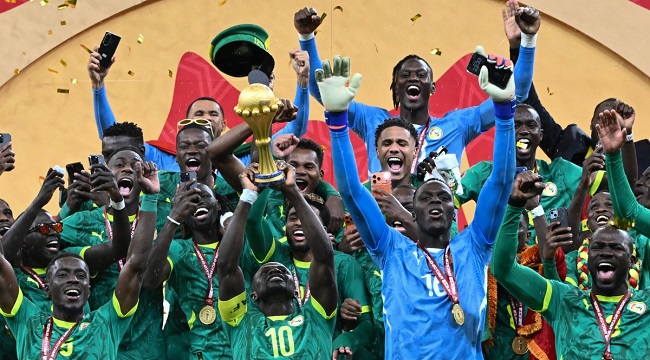
The AFCON final should have been remembered for Pape Gueye’s decisive goal and Senegal’s resilience. Instead, it will be remembered as another chapter in a growing catalogue of officiating controversies, and a governing body’s decision that raises more questions than it answers.
