

Dangote’s Burundi Move: Why the Expansion Strengthens Africa’s Home-Grown Industrial Giant

Dangote’s Burundi Move: Why the Expansion Strengthens Africa’s Home-Grown Industrial Giant
By Jerry Adesewo
Africa’s richest man, Aliko Dangote, has taken another deliberate step in consolidating his vision of an Africa-driven industrial economy, with Burundi emerging as the latest frontier in the expansion strategy of the Dangote Group.
READ ALSO: Dangote Refinery Pushes Back Against Claims, Reassures Nigerians on Fuel Quality
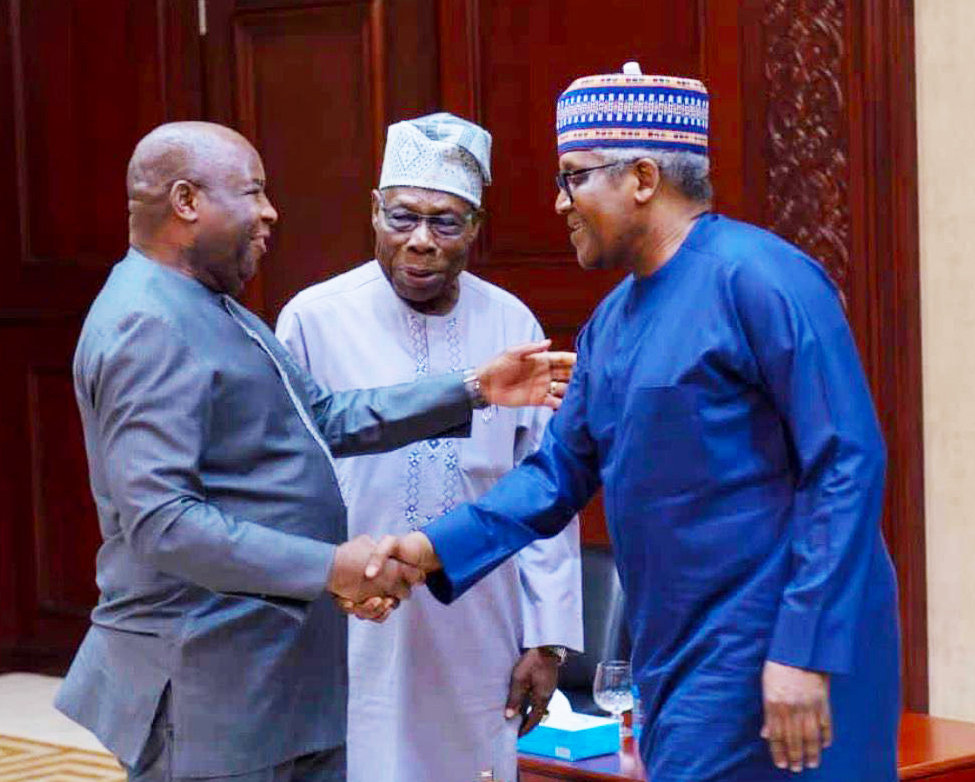
Dangote’s recent visit to Burundi, where he held talks with President Évariste Ndayishimiye, goes beyond ceremonial diplomacy. It reflects a long-standing business philosophy that has consistently set Dangote Industries apart: scale, local production, and continental integration.
Why Burundi?
Burundi may not yet rank among Africa’s largest economies, but it occupies a strategic position in East and Central Africa. For Dangote Industries, entry into Burundi offers access to new regional markets, mineral resources, and logistics corridors that connect to the wider Great Lakes region. This fits neatly into Dangote’s pattern of investing early in under-served but high-potential markets, where industrial infrastructure can be transformative rather than merely competitive.
The decision to set up joint technical teams—one from the Burundian government and another from Dangote Group—also signals a key advantage of the Dangote model: alignment with host-country development priorities. Rather than extractive or short-term ventures, the Group typically focuses on long-horizon investments in cement, agriculture, power, and infrastructure, sectors that anchor broader economic growth.
The Dangote Advantage
Dangote Industries’ edge on the continent lies in three core strengths:
1. Local Production at Scale
By producing cement, fertiliser, sugar, and energy within Africa, Dangote reduces dependence on imports, stabilises prices, and builds domestic value chains. This approach has already reshaped markets in several African countries.
2. African Capital, African Priorities
Unlike many multinational players, Dangote’s expansion is funded largely with African capital and driven by African market realities. As Dangote himself noted during the Burundi visit, the focus is “investing heavily in the African continent, not anywhere else.”
3. Political and Institutional Access
High-level engagements—such as the Burundi meeting, attended by former Nigerian President Olusegun Obasanjo—give Dangote Industries the ability to navigate regulatory environments and align investments with national development agendas. This reduces risk and accelerates project execution.
A Continental Footprint
Dangote Group already operates across much of Africa, particularly in cement manufacturing, agribusiness, and energy. Its footprint includes:
West Africa: Nigeria, Ghana, Senegal, Ivory Coast, Benin, Togo, Sierra Leone
Central Africa: Cameroon, Congo
East Africa: Ethiopia, Tanzania, Zambia
Southern Africa: South Africa (through cement and allied interests)
The potential addition of Burundi would deepen Dangote’s presence in East Africa, complementing existing operations in Ethiopia and Tanzania, and reinforcing the Group’s ambition to build an integrated African industrial network.
What It Means for Africa
From a broader perspective, Dangote’s Burundi outreach underscores a shift in African economic leadership. Instead of waiting for foreign direct investment from outside the continent, African mega-investors are increasingly driving industrialisation themselves. For Burundi, this presents an opportunity to leapfrog infrastructure gaps; for Dangote Industries, it reinforces its position as Africa’s most influential indigenous conglomerate.
As Africa grapples with development financing constraints and global economic uncertainty, Dangote’s strategy offers a clear message: sustainable growth will be built by Africans who invest in Africa, for Africa.
Dangote’s Burundi Move: Why the Expansion Strengthens Africa’s Home-Grown Industrial Giant