


Daniel Bwala and the Science of Political Amnesia: All Hail the Jagaban!
By Jerry Adesewo
In Nigeria, politics has many talents: survival, reinvention, and the delicate art of pretending yesterday never happened. But if the nation were to award a lifetime achievement prize in political elasticity, the shortlist would certainly include one man—Daniel Bwala.
READ ALSO: Rigging Threats: Adeleke Responds to Oyebamiji & Oyetola, Says Voters will Punish Osun APC
Bwala’s political journey reads less like ideology and more like GPS navigation: recalculating route… recalculating route… recalculating route.
Once upon a political season, Bwala belonged to the All Progressives Congress. Then came the great migration—he exited the party, discovered moral clarity, and joined the opposition Peoples Democratic Party, where he developed a sudden allergy to everything associated with APC and, more specifically, Bola Ahmed Tinubu.
From that moment, Bwala transformed into a political meteorologist predicting storms over Tinubu’s candidacy. On television panels and public platforms, he questioned Tinubu’s health, his history, his competence, and even the wisdom of entrusting him with national leadership.
To hear Bwala speak then, Tinubu’s presidency was not merely unlikely—it was practically a constitutional hazard.
Those were the days of moral certainty.
Those were the days of televised indignation.
Those were the days when Bwala spoke as though political judgment were carved in granite.
Then something miraculous happened: the election ended.
And like many Nigerian political miracles, this one was accompanied by a change of address.
Today, Bwala has found his way back into the orbit of the very party he once fled—and the very president he once diagnosed as politically unfit. Suddenly, the once-dangerous record now appears… misunderstood. The once-troubling questions now seem… exaggerated. The once-alarming concerns now sound like the echoes of a man who has misplaced his old microphone.
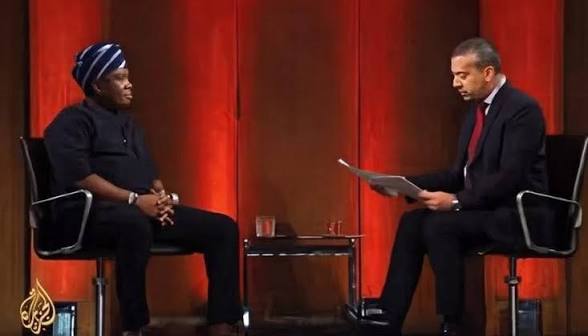
The transformation reached its most entertaining moment recently during his interview on Al Jazeera, where Bwala performed a masterclass in rhetorical gymnastics. Watching him explain the virtues of a leadership he once described as problematic was like watching a man politely argue with his own archived videos.
It is one thing to change one’s mind. Human beings do that all the time. But Bwala’s case is not a change of mind—it is a change of memory.
The old criticisms have not been rebutted so much as… evaporated. Statements once delivered with legal confidence are now treated as historical misunderstandings, the political equivalent of “that wasn’t me, that was my Wi-Fi.”
And this is where the story becomes even more interesting—because the president may have understood something long before everyone else did.
In the grand chessboard of Nigerian politics, Bola Ahmed Tinubu has never been known for impulsive moves. His nickname, Jagaban, did not emerge from accidental victories. It came from an instinct for positioning—placing people exactly where they can do the most work for you.
Which raises a fascinating possibility: perhaps Bwala’s return was not merely accepted—it was strategically welcomed.
After all, who better to defend the president than a man who once attacked him with legal vocabulary and televised confidence? Who better to dismiss allegations than someone who originally popularised them?
In politics, nothing neutralises criticism like the critic himself.
By bringing Bwala into the fold, the president may have executed one of the oldest political maneuvers in the book: convert the loudest prosecutor into the most enthusiastic witness for the defence.
Every time Bwala now explains that Tinubu’s record is misunderstood, he is not merely defending the president—he is quietly dismantling his own earlier arguments. Every interview becomes a public correction of his past self. Every defence becomes an implicit admission that his previous certainty was, at best, premature.
It is a political masterstroke.
Because when critics attack Tinubu today using the same arguments Bwala once used, the president does not need to respond. Bwala responds for him—effectively telling the nation that those arguments are flawed.
And who can argue with that more convincingly than the man who once made them?
In that sense, the appointment was not merely inclusive; it was strategic containment. Yesterday’s critic becomes today’s translator, explaining to the public why yesterday’s outrage should now be archived.
Satire aside, one must admire the elegance of the move.
In Nigerian politics, there are two ways to silence critics: argue with them or employ them. The first is noisy. The second is efficient.
Tinubu chose efficiency.
Still, there is a lingering question that satire cannot resist asking: when Bwala now defends Tinubu against critics, is he defending the president—or debating the ghost of his own commentary?
Because somewhere out there, in the archives of television debates and panel discussions, Daniel Bwala is still arguing passionately against Daniel Bwala.
And for once, the Nigerian public would very much like to see that debate.
If it ever happens, one thing will be certain:
the president will be watching calmly from the front row.
After all, that is how a Jagaban plays the game.