


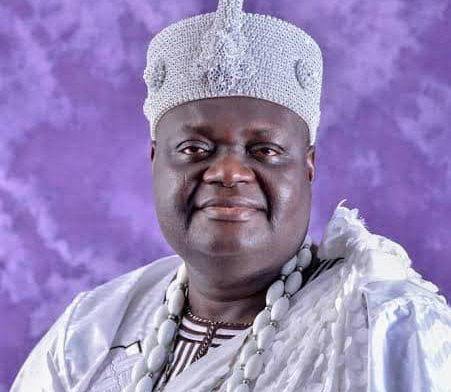
ELERINMO OF ERIN-IJESA: When Throne Meets Altar
Jerry Adesewo
It was more than a ceremonial moment — it was a historic convergence. When Oba (Dr.) Michael Odunayo Ajayi, Arowotawaya II, the Elerinmo of Erin-Ijesa Kingdom, was recently ordained as a Senior Special Apostle in the Cherubim and Seraphim Movement Church Worldwide (Ayo Ni O), Nigeria witnessed an event that transcended cultural celebration. It was a profound intersection of kingship and priesthood, two sacred offices rarely united in one mortal man.
READ ALSO: Prioritising God’s Interest
As the news spread across the nation, many were struck not only by the symbolism of the ordination but by its spiritual implication. For in Oba Ajayi, the throne and the altar met — tradition embraced revelation, and royalty knelt before divinity.
When Throne Meets Altar
Kingship in Yoruba culture, as in many ancient societies, is a divine trust. The king — Kabiyesi, “the one whose word is unquestionable” — embodies not only temporal authority but spiritual guardianship over his people. Yet, in Nigeria’s post-colonial context, most traditional rulers have maintained a respectful distance from direct religious office, like it was reported of my own forebears in Ekiti once did according to legend, focusing instead on cultural preservation and community development.
Oba Ajayi’s ordination therefore stands out as unique — perhaps even prophetic. It invites reflection on how ancient and modern authorities might find harmony under the sovereignty of God.
To understand this union, one must return to the Scriptures, where the archetype of the King-Priest first appeared.
Melchizedek: The Prototype
In Genesis 14:18, we are introduced to Melchizedek, the King of Salem — “priest of the Most High God.” He met Abraham returning from battle, blessed him, and received tithes of all. This moment, quiet yet powerful, established a divine pattern: a man who could reign over people and minister before God — a ruler and an intercessor in one.
Centuries later, the Psalmist echoed this mystery:
“The LORD hath sworn, and will not repent, Thou art a priest forever after the order of Melchizedek.” — Psalm 110:4 (KJV)
And in the New Testament, the Book of Hebrews identifies this as a foreshadowing of Christ Himself, who reigns as King of Kings yet also intercedes as the eternal High Priest (Hebrews 7:1–3, 24–25).
Thus, when a king today embraces priesthood, he steps into a pattern older than the law and deeper than culture — one that mirrors the dual ministry of Christ, who unites governance and grace.
The Significance of the Elerinmo’s Ordination

In the ordination service reported by The Nation, the C&S Church described the event as “a profound convergence of kingship and priesthood.” It was more than a religious endorsement; it was a recognition that God’s authority can manifest in multiple dimensions.
The Elerinmo, a monarch already known for his philanthropy, developmental projects, and peace-building initiatives in Osun State, stood not as one seeking new titles but as one expanding his platform of service. To rule and to serve are not contradictory; they are complementary when governed by righteousness.
This mirrors the biblical ideal of leadership. In Isaiah 32:1, the prophet declared:
“Behold, a king shall reign in righteousness, and princes shall rule in judgment.”
Kingship without righteousness breeds tyranny, just as priesthood without humility breeds hypocrisy. But when righteousness governs both, the result is peace and progress.
Righteousness Exalteth a Nation
Every generation must return to the truth of Proverbs 14:34:
“Righteousness exalteth a nation: but sin is a reproach to any people.”
This verse is not merely moral advice; it is a spiritual law. The prosperity of a people depends not only on economic policies or political alliances, but on moral integrity and justice. When those who sit on the throne also kneel at the altar, there is hope for righteous governance.
Nigeria’s greatest need is not just more institutions but more men of integrity — leaders whose authority flows from both the crown and the cross. In the Elerinmo’s ordination lies a symbolic challenge to all leaders: that rulership must be rooted in service, and power must always bow before purpose.
Between Culture and Faith
For centuries, Africans have wrestled with the balance between traditional identity and Christian faith. Too often, the two have been treated as opposites. Yet, the ordination of the Elerinmo may mark a new chapter — one where cultural heritage and spiritual conviction are not enemies but allies.
It shows that one can wear the crown of ancestors and still bear the yoke of Christ. The throne can coexist with the altar when both serve the same divine purpose: to uphold justice, preserve peace, and glorify God.
However, this union must be handled with great wisdom. As seen in Scripture, when Saul — the king — trespassed into priestly duties without divine authorization (1 Samuel 13:8–14), it led to his downfall. The lesson is clear: no one, however anointed, can use the things of God for self-glory. The roles of king and priest must not be conflated in pride but harmonized in humility.
Oba Ajayi’s ordination, therefore, must be understood not as an elevation in hierarchy but as a commission to deeper service. A priest-king is first and foremost a servant — to God, to truth, and to his people.
A Model for Leadership in Troubled Times
In a nation yearning for good governance, the symbolism of a king who also kneels in prayer is powerful. It reminds us that leadership without spirituality becomes tyranny, and spirituality without responsibility becomes escapism.
Nigeria’s political, traditional, and religious leaders could draw a lesson here: that true greatness is measured not by titles, but by righteousness. The people’s trust cannot be demanded; it must be earned through justice and compassion.
As the prophet Micah declared:
“He hath shewed thee, O man, what is good; and what doth the Lord require of thee, but to do justly, and to love mercy, and to walk humbly with thy God?”
— Micah 6:8 (KJV)
Elerinmo’s ordination is not just a headline; it is a message — that authority, whether sacred or civic, must align with God’s justice. Only then can the nation be exalted.
A Convergence for the Future
The image of a Yoruba king wearing both the royal crown and the apostolic robe may seem novel, but perhaps it is prophetic. It signals a coming generation of leaders who will not separate governance from godliness — who will rule with compassion, speak with conviction, and serve with the fear of God.
Yoruba culture has long believed that “Oba kii ku” — the king does not die, meaning true leadership endures beyond the mortal. Yet in Christ, that endurance finds its true meaning: “For the kingdom is the Lord’s, and he is the governor among the nations.” (Psalm 22:28)
So, when we behold Oba (Dr.) Michael Odunayo Ajayi — the Elerinmo of Erin-Ijesa — we behold not merely a man of double honour, but a signpost of what leadership could look like when heaven and earth agree.
A king who prays.
A priest who rules.
A servant who leads.
Indeed, behold — a king and a priest.