

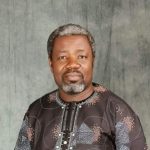
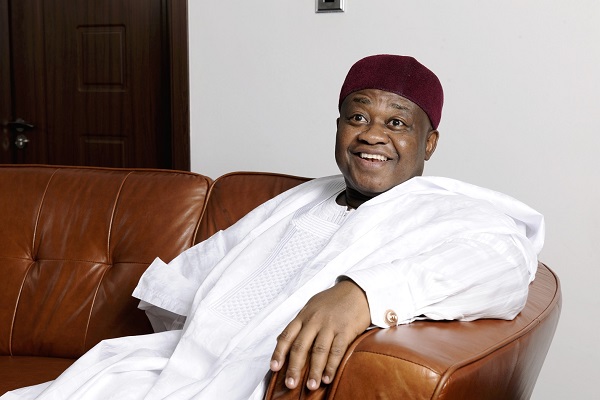
Five Years After: Remembering Sam Nda Isaiah
By Jerry Adesewo
When I, on behalf of Arojah Royal Theatre, received the call asking me to produce a bespoke drama to celebrate Sam Nda Isaiah, I knew without hesitation that I had finally found the much-needed opportunity, or perhaps the courage, to do what I should have done five years ago. I was not engaged because of my private admiration for Sam, but because of the public identity I have built as a theatre maker. Still, the invitation felt personal. It felt overdue.
Time has a way of dulling pain while sharpening memory. Five years after his passing, Sam’s name still summons a presence that feels unfinished—like a conversation paused mid-sentence. He was not merely a media proprietor or a public intellectual; he was a force of conscience in a country too accustomed to silence, fear, and convenient neutrality.
READ ALSO: Sa’ada Isa Yahaya: A Young Voice Refusing Silence
That, in fact, remains the lasting impression from my only meeting with him. It was sometime in February 2018. I had gone in search of Sam Nda Isaiah to invite him to an event where I hoped he would serve as the Keynote Speaker. I remember quite literally stalking my way through channels and contacts until I finally found myself standing before him that day. It may have been in the company of Mallam Ibrahim Sheme, though I can no longer be entirely certain of that detail. What has stayed with me, vividly and immovably, is the exchange itself. Sam looked up at the men in the room with him and offered a one-line statement, but heavy with conviction: “That is why the press must remain unbowed. And to do that, we need courage.”
The men in the room—most of whom I did not have the privilege of knowing—exchanged glances at that moment. That sentence stayed with me.
From that day, I followed him closely. I made it a point not to miss his columns. When he declared for the presidency, I told myself I would find my way into his team—not in search of a position, but out of conviction. Even from that single encounter in his leadership office, his honesty felt unmistakable. It felt rare.
Sam’s courage never sought applause. It was not performative; it was principled. He spoke when speaking carried consequences. He published when publishing could provoke power. He stood his ground not because it was fashionable, but because retreat was never an option for a man who believed Nigeria deserved honesty—raw, sometimes uncomfortable, but always necessary.
What struck me most was his humanity. Behind the sharp columns and firm positions was a man deeply invested in people—especially the unseen and unheard. He carried the burden of the nation not as an abstract idea, but as a lived reality. He understood that journalism, at its best, is not about headlines, but about human lives, dignity, and accountability. That understanding shaped his work and softened his strength.
Then there was his nationalism—unapologetic, demanding, and rooted in hope rather than nostalgia. Sam believed in Nigeria with a stubbornness that refused despair. He criticised the country because he loved it. He challenged power because he believed the nation could be better than its current self. His patriotism was not blind loyalty; it was active responsibility.
For years, I carried a quiet regret: that I had not found the right artistic language to honour him when the wound was still fresh. Grief, after all, can silence even those whose vocation is expression. But this invitation—to create, to interpret, to remember through theatre—felt like permission. Permission to confront loss. Permission to translate memory into meaning. Permission to finally say thank you. I took it with both hands.
Producing the ten-minute drama titled SAM NDA ISAIAH: PRESS UNBOWED was not an act of closure; it was an act of continuity. It is my way of insisting that Sam Nda Isaiah’s courage still matters, his humanity still instructs, and his nationalism still challenges us. Five years on, his voice echoes—not as nostalgia, but as a summons.
Listening to guests that night—friends, colleagues, and close associates—reminisce about their time with him, about who Sam was to them, the impact he had on their lives, and how deeply he is missed, I found myself thinking of what might come next. Perhaps the next step is to begin conceiving a fuller theatrical work in his honour.
Nigeria still needs men like Sam. And until we produce them in abundance, we must keep telling his story—honestly, boldly, and without fear.