

From Nine Gates to Lafia’s Birth: The Untold Story of Doma

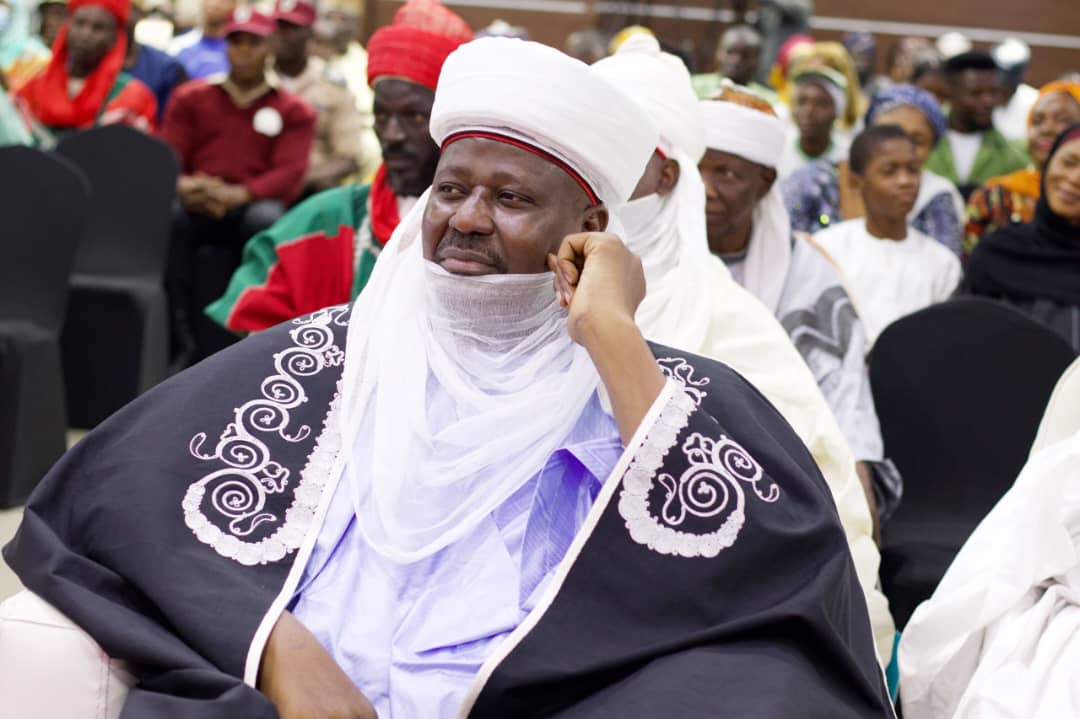
By Matthew Eloyi
History, when carefully preserved, is not only a record of the past but a compass for the future. For the Alago people of Doma in Nasarawa State, their journey across centuries has been one of resilience, unity, and survival. In the book “Highlights on the History of Doma”, compiled by the Doma Traditional Council, this remarkable story unfolds in fascinating detail — from the migration of the people, to the founding of the kingdom, the struggles for recognition, and the cultural traditions that continue to thrive today.
The ancient city of Doma was once fortified by a great wall known locally as Oba. Unlike many other towns of its era, Doma’s fortification was not merely symbolic; it had nine gates, each named and strategically positioned, serving as both protective barriers and points of access. According to Highlights on the History of Doma, these gates included Osumoku-Onah, Onarikpe, Orikitombwo, Osota, Okpagose, Okpa Godugushi, Okpago Kusupa, Okpago-Dorogya, and Akpada, the main entrance leading to Lafia.
What makes this system unique is that every gate, except the Akpada, opened directly towards a stream, ensuring that the people had immediate access to water while maintaining a controlled and secure environment. In a land surrounded by perennial streams such as Arumangye, Obyegyegokpa, Odorogya, and Okusupa, water was not just for survival but also a defining feature of identity. The book emphasises that these streams never dried up, providing drinking water and anchoring agricultural activities throughout the year.
Today, the expansion of Doma town has swallowed up these gates, but the memory of their existence lingers as a reminder of how deeply water and defence shaped the life of the ancient settlement.
The origins of Doma, as detailed in Highlights on the History of Doma, are deeply tied to the disintegration of the once-mighty Kwararafa Kingdom. The Alago people, originally referred to as Idoma, were among the groups that left when the empire fractured. Led by Andoma Osabonya Ogoshi, the people embarked on a long migration that took them through Ogoja in present-day Cross River State, to Idah among the Igala, and later across the River Benue.
At every stage of the journey, some members remained behind, founding new communities. The Idoma people of Otukpo, for example, are believed to be descendants of such groups, still referring to the Doma Alago as Idoma Noku (Elder Idoma). Eventually, the migration led to the present site of Doma around 1232 AD, where Andoma Osabonya Ogoshi established the kingdom and laid the foundations for the three ruling dynasties: Odorogya, Odogyo, and Asibiri.
The book recounts a fascinating episode involving Osabonya’s younger brother, Akyana Anyapa Adi, who discovered a salt spring during a hunting expedition. Choosing to remain behind, he eventually founded Keana. This led to the establishment of a centuries-old exchange ritual between Doma and Keana, involving salt and a royal cloth called Opa, symbolising pardon and reconciliation. It was from the word Elagogo, born of their variance, that the name Alago evolved, displacing the earlier identity of Idoma.
Thus, Doma’s founding is not just the story of settlement, but of migration, unity, and adaptation, reflecting the ability of the people to reinvent themselves without losing their heritage.
Diplomacy, Trade, and the Birth of Lafia
One of the most captivating revelations in Highlights on the History of Doma is that the city of Lafia (today the capital of Nasarawa State) owes both its name and its existence to the diplomatic foresight of a Doma king.
According to the book, during the reign of Andoma Oboshi Oga in the late 18th century, waves of migration were reshaping the social map of central Nigeria. The Fulani Jihad of 1804 had triggered movement of people across the north, while internal conflicts in various kingdoms sent smaller groups seeking refuge. Among such groups was one led by a man named Dunama, who, with his companions, approached Doma in search of a safe haven.
Rather than turn them away, Andoma Oboshi Oga exercised a kind of diplomacy rare for the period. He not only permitted the strangers to settle within his domain but did so with an open-hearted blessing. He instructed them to integrate peacefully among his subjects, uttering the now historic words: “Ku tafi ku zauna lapiya”, meaning “go and settle in peace.”
The settlement that grew from this act of generosity came to be known simply as Lapiya, which over time evolved linguistically into Lafia. Today, Lafia stands as the administrative heartbeat of Nasarawa State, a city whose very name echoes the goodwill and statesmanship of a Doma ruler centuries earlier.
But Doma’s diplomacy did not stop at Lafia. The book carefully outlines how successive rulers fostered alliances with powerful kingdoms across the north. Treaties were established with Zaria, Sokoto, Bida, and Wukari, ensuring both military support in times of war and channels for flourishing trade. The friendship with Zaria, in particular, was cemented by the valor of Doma warriors. One commander, Madakin Doma Abu, earned the legendary sobriquet Sara ka Gaji in Zaria, a recognition of his unmatched military prowess.
Trade was equally transformative. Doma became known for exporting cultural and material products that carried its identity far and wide. Chief among these was the famed Wandon Doma, a distinct traditional garment whose elegance made it highly sought after across Hausa land. In Sokoto, Zaria, and beyond, the cloth became a symbol of prestige, further enhancing Doma’s reputation as both a cultural and economic power.
The book stresses that these trade relations were not incidental but deliberate strategies of diplomacy. By engaging in exchange of gifts, textiles, and even military support, Doma positioned itself as a kingdom of influence, respected not only for its strength but for its wisdom in cultivating peace through interdependence.
This tradition of openness and diplomacy contrasts sharply with the image of kingdoms defined solely by warfare or isolation. Doma’s leaders understood that survival and prosperity lay in building bridges, not walls. That ethos is still evident today in the warm relations Doma maintains with neighboring communities in Nasarawa and Benue States.
The naming of Lafia, the trade in Wandon Doma, and the alliances with Sokoto, Bida, and Zaria together form a narrative of a kingdom whose influence radiated far beyond its streams and farmlands. As the Doma Traditional Council rightly notes in Highlights on the History of Doma, this history proves that Doma was not just a local settlement but a diplomatic and cultural hub, whose legacy continues to shape the political geography of Nasarawa State and the wider Middle Belt.
Colonial Interference and the Struggle for Recognition
Colonialism across Africa disrupted traditional systems of governance, often weakening or distorting institutions that had stood for centuries. Doma was no exception. As recorded in Highlights on the History of Doma, by the early 20th century the kingdom was already a formidable entity with a well-structured administration that commanded respect across the Middle Belt and the wider North.
In 1903, when Lord Lugard extended the British system of indirect rule to Nasarawa Province, the Andoma of Doma, Attah Omaku (1901–1925), was officially recognised. The British presented him with a fourth-class staff of office at Keffi, alongside the Emirs of Lafia and Keffi and the Osana of Keana. This recognition was not symbolic alone; it was a seal of legitimacy, a confirmation that the colonial government saw Doma as a political force worth engaging.
Barely six years later, in 1909, Doma’s status was upgraded to third-class. This elevation, as the book carefully notes, placed the Andoma on the same pedestal as other influential rulers of the region, reflecting the esteem in which the kingdom was held. For a time, it seemed that colonial administration had not only acknowledged but also strengthened Doma’s place in the political hierarchy.
But that recognition would not last. In 1932, a sweeping reorganisation of chieftaincies by the colonial administration stripped Doma of its third-class status, unjustly downgrading it back to fourth class. The book describes this as “an unjustified retrieval” — a move that many in the kingdom interpreted as an affront to their history and authority. The downgrade did not just affect prestige; it reduced Doma’s influence in administrative matters and weakened its bargaining power in regional politics.
The loss of status galvanised the Alago people into a decades-long struggle. For nearly forty years, their leaders lobbied, petitioned, and pressed successive administrations to restore the recognition that had been unfairly taken away. It became a matter of pride, a rallying cry for unity.
Relief finally came in 1970 under the military administration of Joseph Gomwalk, then governor of Benue-Plateau State. According to Highlights on the History of Doma, Gomwalk partially restored the dignity of the chiefdom by returning the fourth-class staff of office to the Andoma. But the people knew this was only half a victory. The kingdom had been third class before 1932, and nothing short of a full restoration would suffice.
Their persistence paid off. The Yahaya Kanam Panel on Chieftaincy Affairs in Benue-Plateau State reviewed the case and concluded that Doma had indeed been third class since 1909. Following the panel’s recommendation, the status was officially reinstated.
The final triumph came in 1980 during the administration of Chief Solomon Lar, the first civilian governor of Plateau State. Lar upgraded the Andoma’s stool to second class, and just two years later, on June 1, 1982, it was elevated to first class. On December 4, 1982, the staff of office was formally presented — restoring, at last, the dignity of a throne that had endured centuries of migration, diplomacy, and resistance.
This trajectory, as Highlights on the History of Doma makes clear, is more than just administrative reshuffling. It is the story of a people who refused to let colonial decrees define their worth. The repeated struggle for recognition reflects not only resilience but also a profound sense of identity, a belief that the authority of the Andoma was anchored in history long before the arrival of the British.
Doma’s experience mirrors that of many African kingdoms, where traditional institutions had to fight to reclaim their place after colonial interference. Yet, unlike some that withered under the weight of imposed systems, Doma emerged stronger, transforming the struggle for recognition into a symbol of collective pride. Today, the Andoma’s first-class status stands as a testament to that long journey — a reminder that legitimacy cannot be given or taken by outsiders, but only affirmed by the people themselves.
The Dark Years of Interregnum (1991–2004)
If the history of Doma has always been marked by resilience and survival, no period tested the soul of the kingdom more than the thirteen years of interregnum between June 1991 and September 2004. In “Highlights on the History of Doma”, the Doma Traditional Council describes this period as “a decade that can best be described as the dark age of Doma’s shared experience in a quest to develop as an entity.” It was a time when politics interfered with tradition, when courts were drawn into matters of custom, and when the peace of an ancient kingdom hung by a thread.
The crisis began after the death of Andoma Aliyu Addra Odeh Onawo in June 1991. By law and tradition, the succession to the throne was governed by the Modification of Native Law and Custom relating to the Selection of the Andoma of Doma, gazetted in 1972. This law had harmonised earlier, varied methods of succession and empowered a college of seven kingmakers to oversee the process. These kingmakers, led by the Owuse (Madaki) and including the Okuba (Madauchi), Oshata (Galadima), Ogbole (Makungiji), Akpoho (Waziri), Oleho (Tafida), and Ogotu (Pakaci), represented centuries of carefully balanced tradition.
But when the time came to choose a new Andoma, political actors at both the local government and Plateau State levels sought to impose their will. In 1993, the government of Governor Fidelis N. Tapgun tampered with the 1972 law by issuing a new order: the Modification of Native Law and Custom relating to the Selection of the Andoma of Doma Order, 1993. In this order, three of the seven traditional kingmakers were illegally removed — Ogotu, Akpoho, and Oleho. This left only four kingmakers, who quickly selected Alhaji Yahaya Ari Doma, a retired Commissioner of Police, as Andoma.
The imposition was deeply controversial. The book records that the people of Doma were bitterly divided. For many, the process had not only violated their customs but also insulted their ancestral heritage. In Doma tradition, only the Andoma himself has the prerogative to appoint or remove kingmakers. That power, rooted in centuries of practice, could not be usurped by any government, no matter how powerful.
The sidelined kingmakers: Alhaji Muhammad Rajab Ogiri (Ogotu), Alhaji Abdulrahman Idris (Akpoho), and Alhaji Husaini Ogu (Oleho), took the matter to the Plateau State High Court in Jos, determined to protect the integrity of their tradition. While the case was still pending, Yahaya Ari Doma was hurriedly installed in defiance of a court injunction, an act that further deepened the wound.
The judgement, delivered on January 20, 1995, by Justice Matilda M. Ochoga, was a landmark. The court nullified Yahaya Ari Doma’s appointment, declared the 1993 order illegal, and restored the three displaced kingmakers. But the ruling did not end the crisis. Rather, it intensified it. According to the book, Ari Doma “vowed vengeance and became vindictive,” allegedly using state apparatus, particularly the police, to intimidate opponents and suppress dissent. Families were torn apart, and for the first time in living memory, Doma was plunged into open hostility.
Appeals followed. At the Court of Appeal in Jos, the High Court’s ruling was upheld. Undeterred, Ari Doma pressed further, dragging the matter to the Supreme Court in Abuja. On March 12, 2001, the apex court delivered a definitive judgement. In suit No. SC/169/1998, Justice M. E. Ogundare declared:
“This appeal is completely devoid of any merit. Exhibit Q on which the Appellant was appointed is clearly invalid. It was made during the pendency of an injunctive order of Court… In the result, I dismiss this appeal.”
With that ruling, Yahaya Ari Doma’s claim to the throne was finally extinguished. Yet, the scars of the interregnum ran deep. As the book notes, “The society which hitherto enjoyed peaceful coexistence became radically polarised. There was uncertainty and mass dissatisfaction.” The throne of the Andoma, once a unifying symbol, had become a source of strife.
It took the intervention of the Nasarawa State government under Governor Abdullahi Adamu to restore order. On September 4, 2004, the properly constituted college of kingmakers convened under official supervision to elect a new Andoma. Contestants included Yahaya Ari Doma himself, alongside Ahmadu Aliyu Oga Onawo, Abdukarim Iymoga, Abdullahi Bako, and Dr. Muhammad Onumenya Omaku.
In the end, the kingmakers cast their votes. Ahmadu Aliyu Oga Onawo emerged victorious with four votes out of five. Yahaya Ari Doma, despite his years of pursuit, managed just one. Thus, Onawo was installed as the 43rd Andoma of Doma, bringing an end to more than a decade of turbulence.
The book describes this moment not just as the restoration of peace, but as a rebirth of Doma’s dignity. The dark years of interregnum had taught the kingdom hard lessons about the fragility of tradition in the face of politics, but they had also proven the endurance of custom, the rule of law, and the unyielding spirit of a people determined to guard their heritage.
A Fertile Land of Prosperity
If history and tradition form the backbone of Doma, then its land and natural resources are the lifeblood that sustains its people. The book Highlights on the History of Doma makes it abundantly clear that agriculture is not merely an occupation in the area; it is a way of life, a cultural identity, and the economic engine of the kingdom.
The soil of Doma is described in the book as rich and highly productive, particularly suitable for irrigation farming. Its geology, dominated by sedimentary formations, gives rise to moist and fertile floodplain soils. Despite a naturally low pH (sometimes as low as 3.0), the soils respond well to cultivation, producing impressive yields of both staple and cash crops. For centuries, the people have harnessed this blessing to feed their households, sustain trade, and create surpluses that attract merchants from far and near.
From yam to rice, maize to groundnut, sesame (beniseed) to cassava, the land yields abundantly. According to Highlights on the History of Doma, fruits such as mango, guava, cashew, banana, and shea butter nuts also flourish in the area, making it a diversified agricultural hub. Unlike some regions where farming is seasonal, the presence of multiple streams and the Doma Dam means that farmers can cultivate year-round.
Indeed, the commissioning of the Doma Dam in May 1988 by then Head of State General Ibrahim Babangida changed the face of agriculture in the area. Designed to irrigate 2,000 hectares of farmland, the dam stores over 37 million cubic meters of water, enabling farmers to move from subsistence and single-cropping patterns to diversified, commercial-scale production. “The dam has greatly assisted farmers in the area to move from single cropping of arable crops to all-year-round diversification,” the book notes, highlighting its transformative impact.
The Doma Dam serves as more than a reservoir; it is the anchor of a broader water supply scheme. In 1995, the Doma Urban Water Supply Scheme was established, drawing raw water from the dam to provide two million gallons (nine million liters) daily for domestic and industrial use. As Highlights on the History of Doma points out, this initiative was part of a larger African Development Bank–backed project and has since provided potable water not just for Doma town but also for surrounding communities.
For farmers, the dam means the possibility of cultivating rice and vegetables on a commercial scale. Irrigation schemes at Iwashi (Dogon Kurmi) and Ruttu have been particularly successful, opening opportunities for crop rotation and reducing dependence on rainfall. Plans for aquaculture and even small-scale hydropower have been floated, further demonstrating the dam’s potential as a multi-purpose economic catalyst.
But agriculture in Doma is not only about production; it is equally about exchange. Every Wednesday, Doma’s international market comes alive with traders from across Nigeria and neighboring countries — Niger, Chad, Cameroon, and Benin Republic. Yams and rice from Doma are sold alongside livestock, textiles, and manufactured goods, turning the town into a bustling hub of commerce.
The book emphasises that this market, in addition to daily economic activities, provides not just income for farmers but also cultural exchange, as people of different ethnic and national backgrounds meet weekly in Doma. The vibrancy of the market reflects the confidence that traders place in the fertility of Doma’s soil and the productivity of its farmers.
While farming is the backbone, Highlights on the History of Doma also draws attention to the variety of other economic activities that have sprung from the land’s prosperity. Trading, fishing, hunting, weaving, blacksmithing, carpentry, welding, and masonry all thrive in the area. These skills, often passed down through generations, complement agriculture by diversifying household incomes and strengthening local economies.
The book underscores that agricultural development in the area has not been left solely to tradition. Government interventions, such as those by the Nasarawa Agricultural Development Programme (NADP) and the Lower Benue River Basin Development Authority (LBRBDA), have introduced new techniques, improved seedlings, and mechanisation, boosting productivity. This marriage of tradition and modernity has ensured that Doma remains competitive in the face of changing times.
With its fertile land, strategic location just 24 kilometers from Lafia, and an established tradition of peaceful coexistence, Doma today presents itself as a land of opportunity. Highlights on the History of Doma concludes its economic survey with a clear message: there is room for large-scale investment in agro-allied industries, irrigation farming, and food processing. The land can feed not just Nasarawa State but much of Nigeria, and with the right infrastructure, it could supply the wider West African sub-region.
In the end, Doma’s prosperity lies not only in what it produces but in the enduring relationship between its people and their land. Farming is not just an economic activity; it is part of their cultural rhythm, tied to festivals, markets, and family life. As the book rightly asserts, “Doma is one of the Local Government Areas that is blessed with fertile land, and the major occupation in the area is farming.” This blessing continues to define the identity and destiny of the ancient kingdom.
Culture, Faith, and Spiritual Identity
Culture, for the people of Doma, is not a mere performance but a living heritage that binds the past with the present. The book “Highlights on the History of Doma” makes clear that while Doma has witnessed waves of migration, wars, colonial intrusion, and modern politics, the heartbeat of its people has always been anchored in spirituality, tradition, and communal identity.
Long before the arrival of Islam and Christianity, the people of Doma recognised the existence of a Supreme Being called Owuso. He was seen as the creator and sustainer of life, the ultimate source of authority. The people believed that human beings were not alone but lived in constant communion with both God and their departed ancestors. As the book notes, Owuso was not approached directly. Instead, ancestors acted as intermediaries, ensuring that prayers, sacrifices, and blessings reached the divine.
Central to this spiritual life is Aleku — the ritual medium of communication between the living and the dead. In everyday practice, the Alago man who followed traditional religion would pour libation before eating or drinking, offering the first portion to the ancestors. By calling the names of departed relatives, he sought their intercession for protection, fertility, good harvest, and peace.
The book explains that Aleku was not just an act of faith but also a philosophy of continuity: life did not end at death; it only transformed. Children were often named after ancestors, believed to be reincarnated within the family. Thus, every household maintained a spiritual bond that tied generations together in an unbroken chain.
Interestingly, Aleku was symbolised by fine sand, often collected from a riverbed. This sand represented purity and divine creation, echoing the biblical and Quranic narratives of man being molded from earth.
The spiritual calendar of Doma was marked by festivals that reinforced communal unity. The most solemn of these is the Amiri festival, celebrated annually between October and November. During Amiri, families and clans cleared their ancestral burial grounds, which also serve as sacred spiritual spaces. The festival was more than an act of sanitation; it was a collective ritual of remembrance, an opportunity for the living to reconnect with their ancestors through prayers and sacrifices.
Equally significant is the Odu festival, where masquerades take center stage. Masquerades in Doma are not mere entertainers; they are considered embodiments of ancestral spirits. The Odu masquerade, or Eku, leads the procession, flanked by other masquerades whose performances combine artistry, discipline, and moral instruction. These displays serve to remind the people of their values while providing spectacle and joy. According to the book, masquerades also appear during funerals, reinforcing the belief that the dead are never far from the living.
Faith and culture also shaped social relations. Marriage, for instance, was traditionally seen not just as a union of individuals but as a sacred covenant blessed by Owuso. The people believed strongly in the simplest form of marriage — one man, one woman — for the purpose of procreation. Marital rites involved not only families but also the ancestors, who were invoked to bless the new household.
With time, the spread of Islam and Christianity transformed the spiritual life of Doma. Today, mosques and churches dominate the religious landscape. Yet, even in this transformation, elements of the old ways endure. For example, names linked to ancestors remain common, and festivals such as Amiri continue to be observed, even by those who profess modern religions.
This synthesis of the old and the new reflects the adaptability of the people. They embraced global faiths without entirely discarding their cultural soul. The book emphasises that this continuity is a testament to the resilience of Doma’s identity, where tradition and modernity coexist without erasing each other.
Ultimately, the cultural and spiritual heritage of Doma reveals a people who see life as a continuum — between past and present, between the living and the dead, between the divine and the human. As Highlights on the History of Doma points out, the Alago man sees himself as part of a wider cosmic family, responsible not just to his community but to generations before and after him.
It is this worldview that has enabled the Doma Kingdom to endure through centuries of migration, colonial intrusion, and political upheaval. Culture is not static here; it is a living, breathing force that continues to guide the destiny of the people.
Conclusion: A Kingdom of Resilience
To speak of Doma is to speak of endurance. The story, as carefully chronicled in Highlights on the History of Doma, is not one of linear progress, but of a people who have learned to navigate turbulence without losing sight of their identity. Each chapter in Doma’s past reflects a lesson in resilience — the ability to adapt, to reconcile, and to continue in unity even after fractures.
When the great Kwararafa Kingdom disintegrated, many groups scattered into oblivion, assimilated by others, or lost their distinct identities to the tides of history. But the Alago of Doma refused to vanish. They preserved their name, their leadership, and their customs, even as they migrated through different regions, leaving behind new communities but carrying the essence of Doma within them. The very name itself, born from Adomoma, meaning unity and sovereignty, was both a declaration and a prophecy.
The kingdom’s history is also one of diplomacy and generosity. When others might have chosen hostility, Doma’s leaders chose accommodation — as seen in Andoma Oboshi Oga’s decision to welcome strangers and give them land, inadvertently giving rise to Lafia. This act of peacebuilding not only shaped the destiny of the capital of Nasarawa State but also stamped Doma’s name in the broader geography of Nigeria. The lesson here is clear: greatness lies not in conquest, but in the ability to create alliances that outlive generations.
Resilience in Doma’s story is also found in its response to injustice. Colonial administrators attempted to diminish its chieftaincy status, stripping away recognition that had earlier been granted. Yet, the people did not surrender. They pushed, petitioned, and protested until their rightful place was restored. In post-colonial Nigeria too, the kingdom weathered its darkest storm during the interregnum years of 1991 to 2004, when politics sought to suffocate tradition. Families were divided, and confidence in the institution of the Andoma was tested. But like the perennial streams that surround the land, the spirit of Doma refused to dry up. The eventual restoration of traditional authority in 2004 was not just a victory for a king, but for the soul of a people.
Economically, the land continues to embody resilience. Farming, fishing, and trade have remained the backbone of Doma life for centuries. The commissioning of the Doma Dam in 1988 transformed possibilities, opening the way for irrigation, water supply, and potential hydropower. Where other communities struggled with arid conditions, Doma leveraged its natural resources to sustain growth and even attract international traders to its weekly markets. In every sense, the people have demonstrated an ability to thrive, regardless of challenges.
Culturally and spiritually, resilience is visible in the way the Alago people have balanced change with continuity. While Islam and Christianity have become dominant faiths, the ancestral practices, from Aleku rituals to the Amiri and Odu festivals, remain alive as markers of identity. This balance ensures that while the people adapt to new realities, they do not lose touch with their roots.
Ultimately, the enduring lesson of Doma’s history is that heritage is not static; it is living, breathing, and constantly redefined by those who carry it forward. The walls of the nine gates may no longer stand, but their symbolism remains in the people’s resilience. The salt springs of Keana may be distant, but the spirit of reconciliation and brotherhood still echoes in Alago identity. The streams still flow, just as the spirit of the people continues to flow across centuries.
Doma is, therefore, more than an ancient chiefdom. It is a testament to what can be achieved when a people hold on to unity, honour their past, and refuse to allow external forces, whether colonial, political, or economic, to erase their story. As the Doma Traditional Council reminds in its compilation, “The history of Doma is a reflection of determination and independence.” That reflection remains a shining mirror, not only for the Alago people but for Nigeria as a whole.
