


From Stage to Soil: How Ekiti Is Growing Culture, Agriculture, and Youth Futures
By Jerry Adesewo
Ekiti State’s development story is increasingly being told through an unusual but deliberate sequence: first the stage, then the soil. Before tractors rolled into farmlands and young people cashed cheques from bumper harvests, the state had already made a statement by investing in creativity through its Endowment Fund for the Arts. That early commitment to culture has now found its economic counterpart in a bold agricultural revolution—one that places youths at the centre of both expression and production, imagination and sustenance, identity and livelihood.
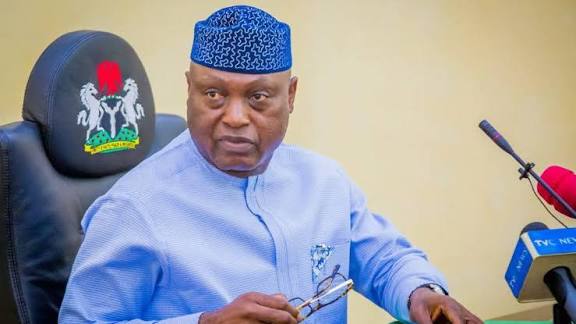
Under the leadership of Biodun Oyebanji, Ekiti has quietly advanced a development philosophy that treats human capital as the starting point of growth. Culture was not funded as decoration; it was supported as infrastructure. The Endowment Fund for the Arts, launched earlier in the administration, signalled a recognition that societies that create, remember, and express themselves are better positioned to innovate, organise, and endure. It was an ideological move as much as a cultural one.
That thinking has now travelled from rehearsal rooms and creative spaces to farmlands across the state.
READ ALSO: LET DANGOTE BREATHE
A Different Kind of Agricultural Conversation
Agriculture in Nigeria has long been framed as necessity rather than opportunity, often reduced to survival rhetoric or emergency interventions. Ekiti’s approach departs from that script. The state’s youth-focused agricultural programme—backed by a reported ₦1 billion investment—does not present farming as a last resort, but as a viable economic pathway. It deliberately targets young people, not with handouts, but with structure, land access, training, inputs, and a clear expectation of profit.
What makes the programme striking is not only the scale of participation, but the language around it. Participants are described as agripreneurs, not beneficiaries. The emphasis is on returns, reinvestment, and continuity. In practical terms, thousands of young Ekiti indigenes are now engaged in organised farming clusters, cultivating crops, managing livestock, and participating in value chains designed to outlive the programme itself.
This is agriculture as enterprise, not nostalgia.
Youths at the Centre, Not the Margins
 The decision to invest heavily in youths is neither accidental nor cosmetic. Ekiti, like many Nigerian states, faces the pressures of youth unemployment, migration, and disengagement. Rather than frame young people as a problem to be managed, the Oyebanji administration has chosen to position them as assets to be activated.
By committing substantial resources to youth-led agriculture, the state is attempting to reverse a familiar pattern: rural abandonment and urban congestion. The farms become not just sites of production, but spaces of dignity and possibility. Young people who might otherwise drift into precarious urban economies are being offered a reason to stay, build, and grow.
Crucially, the programme also embeds accountability. Participants are expected to reinvest proceeds, scale operations, and demonstrate progression. This insistence on continuity aligns with the administration’s broader governance tone—steady, incremental, and focused on sustainability rather than spectacle.
Infrastructure Beyond Roads and Buildings
Ekiti’s agricultural push is supported by more than funding. The state has invested in complementary infrastructure: land clearing, access roads, security arrangements, and extension services. These are often overlooked but critical enablers. Farming fails not because people lack interest, but because ecosystems are weak. By addressing these structural gaps, the state is attempting to lower the barriers that traditionally discourage youth participation in agriculture.
This approach mirrors the logic behind the earlier arts endowment. In both cases, the government is not merely funding outcomes; it is strengthening systems. Artists were supported not just to perform, but to develop careers. Farmers are supported not just to plant, but to build businesses.
The connecting thread is institutional thinking.
Culture and Agriculture as Complementary Sectors
At first glance, the Endowment Fund for the Arts and a youth-focused agricultural initiative may appear unrelated. In reality, they are deeply connected. Both speak to how a society values labour, creativity, and the future.
Culture shapes how people see themselves; agriculture shapes how they sustain themselves. By investing in both, Ekiti is acknowledging that development is not only about GDP figures or harvest volumes, but about confidence, belonging, and agency.
The arts endowment recognised that creative talent, when ignored, migrates or withers. The agricultural programme recognises the same truth about productive energy. In both cases, the state has chosen engagement over neglect.
A Quiet Counter-Narrative
Ekiti’s story is not loud. It has not relied on constant national headlines or grandiose declarations. Instead, it has unfolded through policy continuity and targeted interventions. This quietness may be its strength. In an era where governance is often reduced to announcements, Ekiti is attempting to build credibility through follow-through.
The youth agricultural payouts—widely reported and documented—serve as tangible proof points. They move the conversation from intention to outcome. For participants, the cheques are not just income; they are validation that the state’s promise has materialised.
Challenges and the Long View
None of this suggests that the journey is complete or without risk. Agriculture remains vulnerable to climate variability, market fluctuations, and security concerns. Youth engagement requires sustained mentorship, not one-off programmes. The arts, too, demand consistent funding and institutional protection.
But Ekiti’s approach offers a framework worth examining: start with people, invest in systems, and allow time for results to compound.
The real test will be continuity—whether these initiatives are shielded from political cycles and maintained as long-term commitments. If they are, the state may well produce not only harvests and performances, but a generation confident in its ability to create value locally.
From Stage to Soil—and Back Again
By first affirming culture and then expanding into agriculture, Ekiti has articulated a development narrative that begins with identity and moves toward sustenance. It suggests that a society that knows who it is can better decide how it grows.
From stage to soil, Ekiti is not merely cultivating crops or funding performances. It is rehearsing a future in which young people are seen, supported, and trusted to carry the state forward—both in what they create and in what they grow.