

Gombe Cracks Down on Diversion of Therapeutic Foods, Unveils Task Force to Safeguard Malnourished Children

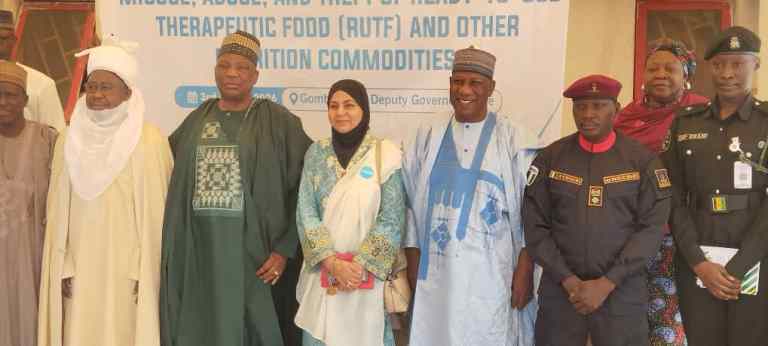
Gombe Cracks Down on Diversion of Therapeutic Foods, Unveils Task Force to Safeguard Malnourished Children
By Auwal Ahmad, Gombe
Gombe Moves to Shield Lifesaving Nutrition Supplies, Sets 18% Stunting Reduction Target by 2027
The Gombe State Government has launched a decisive crackdown on the diversion and misuse of critical nutrition commodities, inaugurating a Task Force to safeguard Ready-to-Use Therapeutic Food (RUTF) and other lifesaving supplies meant for malnourished children.
The initiative, unveiled at the Office of the Deputy Governor in Gombe, is part of a broader partnership between the state and UNICEF aimed at cutting the state’s stunting rate to 18 per cent by 2027. Central to the strategy is the promotion of improved, locally produced complementary foods and deeper community engagement to tackle malnutrition at the grassroots.
The move follows reports of diversion and misuse of therapeutic nutrition supplies in neighbouring states, prompting authorities in Gombe to take proactive measures to secure the supply chain.
Speaking at the inauguration, Dr. Nuzhat Rafique, Chief of Field Office at UNICEF’s Bauchi Field Office, praised Gombe for leading the way. She described the state as the first among five under the Bauchi Field Office to establish a dedicated committee focused on preventing the theft and diversion of RUTF.
Dr. Rafique disclosed that substantial investments—running into millions of dollars and billions of naira—have been committed by both the state government and UNICEF through the Child Nutrition Fund to procure therapeutic foods and related commodities.
“These therapeutic foods are essentially medicine for malnourished children and must not be misused or sold in markets,” she warned.
She urged traditional rulers and community leaders to strengthen grassroots monitoring systems capable of detecting and reporting any leakages.
“This committee cannot operate in isolation. Royal fathers and community structures must support effective feedback mechanisms to ensure these supplies reach the children who need them most,” she added.
In his remarks, Deputy Governor Dr. Manassah Daniel Jatau, representing Governor Muhammadu Inuwa Yahaya, reaffirmed the administration’s commitment to improving health outcomes across the state.
He emphasized that health ranks among the government’s top priorities, coming after security and ahead of education and agriculture.
“Nutrition is the bedrock of human growth and development. Without proper nourishment, children face both physical and cognitive setbacks,” Jatau said.
He recalled that in July 2025, the state inaugurated Local Government Committees on Food and Nutrition to enhance coordination at the community level, bringing traditional leaders and other stakeholders into the fight against malnutrition.
Charging members of the newly constituted Task Force, the deputy governor directed them to identify, prevent, and recommend sanctions against anyone found misusing, diverting, or hoarding nutrition supplies.
“Our vision is to build a healthy population free from the burdens of malnutrition and its long-term consequences,” he stated.
Chairman of the Task Force and Commissioner for Budget and Economic Planning, Alhaji Salisu Baba Alkali, assured stakeholders of the committee’s determination to fulfill its mandate.
He pledged that the panel would thoroughly examine its terms of reference and plug any gaps within the distribution system to prevent abuse.
“We recognize the gravity of this responsibility and will work tirelessly to ensure the government’s objectives are realized,” Alkali said.
He further highlighted the inclusive nature of the committee’s composition, noting significant female representation and plans to co-opt more women from the state’s three senatorial districts to strengthen oversight.
Despite the sobering statistics surrounding child malnutrition, stakeholders expressed confidence that tighter accountability measures, enhanced community participation, and sustained funding would gradually reverse the trend.
For thousands of vulnerable children across Gombe State, the success of this Task Force may well determine whether they remain trapped by the limitations of malnutrition or gain a renewed opportunity to grow, learn, and reach their full potential.
