

IGP Tunji Disu: A New Police Chief and the Agenda for Reform
IGP Tunji Disu: A New Police Chief and the Agenda for Reform
By Jerry Adesewo
When Tunji Disu assumed office as Nigeria’s new Inspector-General of Police in February 2026, he stepped into one of the most difficult leadership roles in the country’s public sector. The office of the Nigeria Police Force carries enormous responsibility—maintaining law and order across Africa’s most populous nation, facing complex security threats ranging from banditry and kidnapping to cybercrime and urban violence.
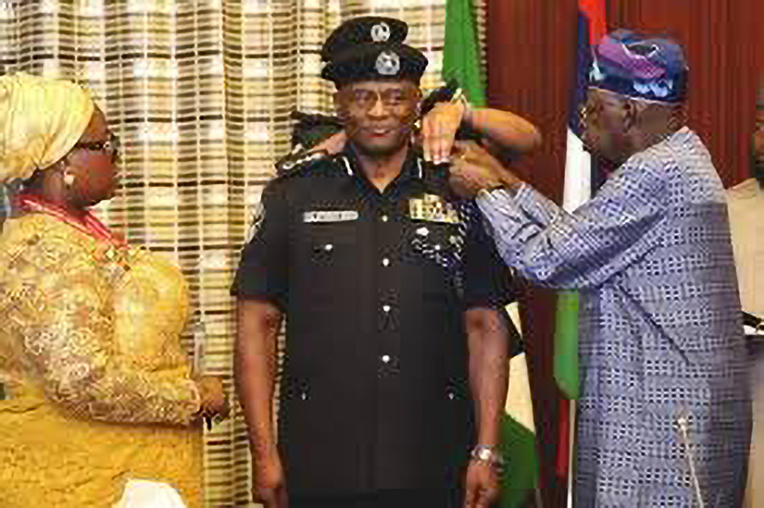
Appointed by President Bola Ahmed Tinubu, Disu became the 23rd Inspector-General of Police, succeeding Kayode Egbetokun. His appointment has generated both expectation and scrutiny, not simply because of his professional record but because Nigerians increasingly demand deep reforms within the police institution.
The question before him is simple yet daunting: Can Tunji Disu redefine policing in Nigeria?
READ ALSO: Sanwo-Olu Reaffirms Commitment to Women’s Empowerment at IWD 2026 Celebration
A Career Built Inside the Force
Born on April 13, 1966, in Lagos Island, Disu represents the classic career police officer who rose through the ranks rather than emerging from political patronage. He joined the Nigeria Police Force in 1992 as a cadet Assistant Superintendent of Police and has since served in multiple operational and investigative roles across the country.
His early postings as Divisional Police Officer in towns across Ogun, Ondo and Rivers States exposed him to grassroots policing—handling community disputes, criminal investigations and local security challenges.
Over time, Disu moved into more strategic assignments. He served as commander of the Lagos Rapid Response Squad, head of the Intelligence Response Team, Commissioner of Police in Rivers State and later in the Federal Capital Territory before his elevation to the nation’s top policing office.
In these roles he built a reputation as an operational officer—one comfortable with intelligence work and crisis response. During the 2020 #EndSARS protests, his leadership of the Rapid Response Squad reportedly emphasised a people-centred approach to policing, an experience that now shapes expectations of his leadership.
Yet leadership at the national level demands more than operational competence. It demands vision.
The Office He Now Holds
The Inspector-General of Police is the highest-ranking officer of the Nigeria Police Force and is responsible for directing the operations of the entire police system nationwide. The Force itself is enormous. With roughly 370,000 personnel spread across 36 states and the Federal Capital Territory, it is one of the largest police organisations in Africa.
But size has never guaranteed effectiveness.
Nigeria’s policing system faces longstanding problems: insufficient manpower relative to population, poor equipment, weak investigative capacity, low public trust and political interference.
These are the structural realities that Disu must confront.
Restoring Public Trust
Perhaps the most urgent task before the new IGP is rebuilding trust between citizens and the police.
For decades, the Nigeria Police Force has struggled with a reputation for corruption, brutality and impunity. The #EndSARS protests of 2020 were the most visible eruption of public anger against police misconduct.
If Disu is to succeed, he must move beyond rhetoric and implement practical reforms such as: strengthening internal disciplinary mechanisms, improving officer training and professionalism, expanding community policing initiatives, increasing transparency in police operations.
Public confidence in policing cannot be restored through public relations campaigns alone. It must be earned through consistent accountability.
Technology and Modern Crime
Nigeria’s crime landscape is rapidly evolving. Cybercrime, digital fraud, organised kidnapping networks and cross-border trafficking require investigative capabilities far beyond traditional policing methods.
Disu’s experience in intelligence and specialised investigative units could position him to modernise the Force’s technological capacity.
This means investing in: digital forensic laboratories, advanced crime data systems, surveillance and intelligence analysis platforms, and specialised cybercrime units.
Fact is, modern crime demands modern policing.
The State Police Debate
Perhaps the most consequential issue facing the new police chief is the debate over state policing.
Nigeria currently operates a centralised national police system, meaning the federal government controls all policing authority. While this structure was designed to preserve national unity, critics argue that it has become increasingly inefficient for a country of more than 200 million people.
Security experts have long argued that decentralising policing—allowing individual states to establish their own police services—could improve responsiveness and local accountability.
Disu himself has previously acknowledged the importance of reforming Nigeria’s policing structure and strengthening local security architecture. This much he reiterated upon his assumption of office, with the inauguration of an 8-man committee to look into the proposal.
If he truly wishes to leave a lasting legacy, he must play a constructive role in advancing the national conversation around state police.
This would involve working with the National Assembly. state governments, the Police Service Commission, and civil society organisations, to design a system that balances local control with national security safeguards.
The Leadership Test
Leadership of the Nigeria Police Force has historically been a difficult assignment.
Many previous Inspectors-General have entered office with reform agendas only to encounter the complex realities of politics, institutional resistance and resource limitations.
Yet every generation produces leaders whose tenure marks turning points.
Tunji Disu now faces that opportunity. His experience—from grassroots policing to intelligence operations—suggests he understands both the strengths and weaknesses of the institution he now leads.
But history will judge him not by the offices he held before becoming IGP, but by the reforms he implements now.
Hence, If Tunji Disu is to succeed where many before him struggled, his leadership must focus on five priorities:
- Rebuilding public trust through accountability and transparency.
- Professionalising the Force through training and welfare reforms.
- Modernising policing technology to tackle emerging crimes.
- Strengthening community policing across Nigeria’s diverse regions.
- Advancing the debate on state policing as part of long-term security reform.
Nigeria’s security challenges are vast, but so too is the opportunity for transformation. For Tunji Disu, the badge of Inspector-General is not merely a promotion, it is a test of leadership—and perhaps the last opportunity in a generation to redefine policing in Nigeria.
This article was originally published in the March edition (hard copy) of OurNigeria News Magazine