

Plateau Academics Enter the Political Arena Ahead of 2027
By Comfort Pius, Jos
The decision by academics across Plateau State to organise under the banner Plateau Academics for Mutfwang–Tinubu 2027 signals a new phase in the evolving relationship between Nigeria’s intellectual community and electoral politics.
READ ALSO: AK Peters Leads APC Support Groups to Rally Behind Renewed Hope Network for Tinubu’s 2027 Bid
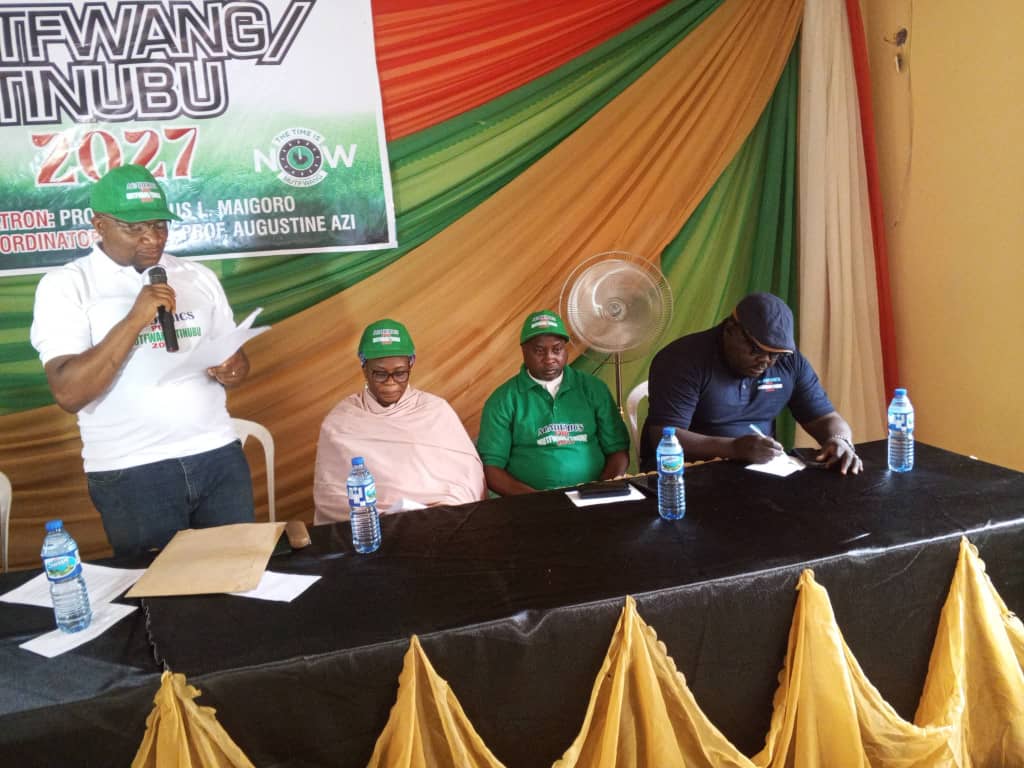
Unveiled at a gathering of scholars and institutional leaders at Great Links Hotel Gold and Base in Jos on March 13, 2026, the platform represents more than a routine political endorsement. It reflects an emerging attempt by segments of the academic community to move beyond the traditional role of observers and critics to become active participants in shaping political outcomes.
For decades, academics in Nigeria have largely positioned themselves as watchdogs of governance—producing research, critiquing policy and influencing public discourse. The formation of a structured political support platform therefore raises important questions about the role intellectuals should play in the country’s democratic process.
From Ivory Tower to Political Mobilisation
The organisers say their intention is not merely partisan mobilisation but the promotion of governance through intellectual advocacy, policy dialogue and voter sensitisation.
Chief of Staff to the Plateau State Governor, Hon. Jeremiah Satmark, who addressed the gathering, framed the initiative as a natural extension of the academic community’s role in strengthening democratic institutions. He noted that the Independent National Electoral Commission frequently relies on lecturers and university staff as ad-hoc electoral officers because of their perceived credibility and integrity.
“In an academic environment, people think deeply and critically,” Satmark told participants, describing the gathering as evidence of intellectual engagement with governance.
Beyond political rhetoric, the administration of Caleb Mutfwang has attempted to cultivate closer ties with tertiary institutions in the state. Satmark highlighted ongoing reforms in the education sector and pointed to rising enrolment in higher institutions as evidence that the government is positioning Plateau as a hub for academic excellence.
He also cited infrastructure interventions such as the rehabilitation of a water treatment plant in Yelwa, a community that reportedly lacked potable water for more than two decades before the project was revived.
A Powerful Intellectual Constituency
The scale of the academic community in Plateau makes the platform potentially influential.
Professor Lazarus L. Maigoro, Provost of the College of Education Gindiri and Patron of the initiative, noted that the state hosts more than twenty federal, state and private tertiary institutions. According to him, these institutions collectively employ more than 15,000 academic staff and about 30,000 non-academic workers while serving an estimated 350,000 students.
Such numbers suggest that the academic sector represents not only a knowledge hub but also a significant voting bloc capable of shaping political narratives and influencing communities.
Maigoro argued that governance should be supported by “informed voices and credible analysis,” adding that the platform would engage in intellectual advocacy, grassroots outreach and voter education.
If effectively organised, the network could provide a bridge between policy debates within universities and political conversations in the broader society.
Intellectual Endorsement or Political Risk?
Yet the involvement of academics in open political mobilisation is not without controversy.
Historically, Nigerian universities have served as centres of ideological contestation and critical thought. Many scholars believe academic institutions should maintain a degree of independence from political power to preserve credibility and intellectual freedom.
Professor Jimam Lar, an adviser to the platform representing Plateau South Senatorial Zone, acknowledged this tension. A long-time academic at the University of Jos and a veteran union activist, Lar admitted that he had spent much of his career “speaking truth to power” rather than aligning with political movements.
However, he said recent developments convinced him that scholars must sometimes move beyond criticism to support policies and leadership they believe are beneficial.
His interaction with Governor Mutfwang during discussions on a research project funded under the Tertiary Education Trust Fund National Research Fund appeared to influence that decision. The project seeks to document the histories of Plateau’s ethnic nationalities as educational material for Nigeria’s history curriculum.
According to Lar, the engagement revealed a governor with strong intellectual depth and a genuine interest in educational development.
“In my assessment, since 1999 we have not had a governor who has been as deliberate about tertiary education as Governor Mutfwang,” he said.
Political Strategy Ahead of 2027
Observers say the timing of the initiative is significant.
Although the next general election is still more than a year away, political alignments for 2027 are gradually taking shape across the country. In Plateau State, where politics has historically been shaped by ethnic, religious and regional considerations, the entry of academics into the mobilisation process could alter the tone of political engagement.
Across Nigeria, early political realignments are already emerging as interest groups, professional associations and civic organisations quietly position themselves ahead of the next electoral cycle. In that context, the decision by Plateau scholars to organise politically reflects a broader national trend in which professional communities are increasingly seeking to influence leadership choices and policy direction long before formal campaign activities begin.
Supporters of the platform believe intellectual involvement could elevate political discourse by encouraging evidence-based policy debates rather than personality-driven campaigns.
Dr Vera Anap, adviser representing Plateau North Senatorial Zone, said academics in the zone are ready to support initiatives that promote development and good governance.
Similarly, Professor Iliya Goyit, adviser for Plateau Central, described the platform as a strategic effort by intellectuals to contribute meaningfully to governance and political stability.
Balancing Scholarship and Politics
Despite the enthusiasm surrounding the initiative, some observers say the growing involvement of academics in partisan mobilisation raises broader questions about the neutrality of institutions traditionally seen as centres of independent thought.
Universities have historically played the role of critics and evaluators of public policy. As academics increasingly step into political advocacy, maintaining the delicate balance between intellectual engagement and institutional independence may become an important challenge.
For supporters of the initiative, however, participation in political discourse is itself a democratic responsibility.
Participants at the meeting indicated that the platform intends to engage students and communities through voter education programmes, grassroots outreach and policy discussions aimed at strengthening democratic participation.
A New Phase of Intellectual Engagement
For Plateau State, where universities and colleges play a central role in social and economic life, the involvement of intellectuals in political mobilisation may reshape the relationship between knowledge production and governance.
Whether the initiative ultimately strengthens democratic participation or blurs the lines between scholarship and politics remains to be seen.
What is clear, however, is that the state’s academic community is no longer content to remain in the background of political conversations.
As political preparations for the 2027 elections gradually gather momentum across the country, the emergence of the Plateau Academics platform suggests that the contest for ideas and influence may increasingly be fought not only in party offices and campaign rallies, but also within Nigeria’s lecture halls and research communities