

Saif al-Islam Gaddafi’s Funeral Draws Massive Crowds as Libya Mourns a Controversial Figure
Saif al-Islam Gaddafi’s Funeral Draws Massive Crowds as Libya Mourns a Controversial Figure

Saif al-Islam Gaddafi’s Funeral Draws Massive Crowds as Libya Mourns a Controversial Figure
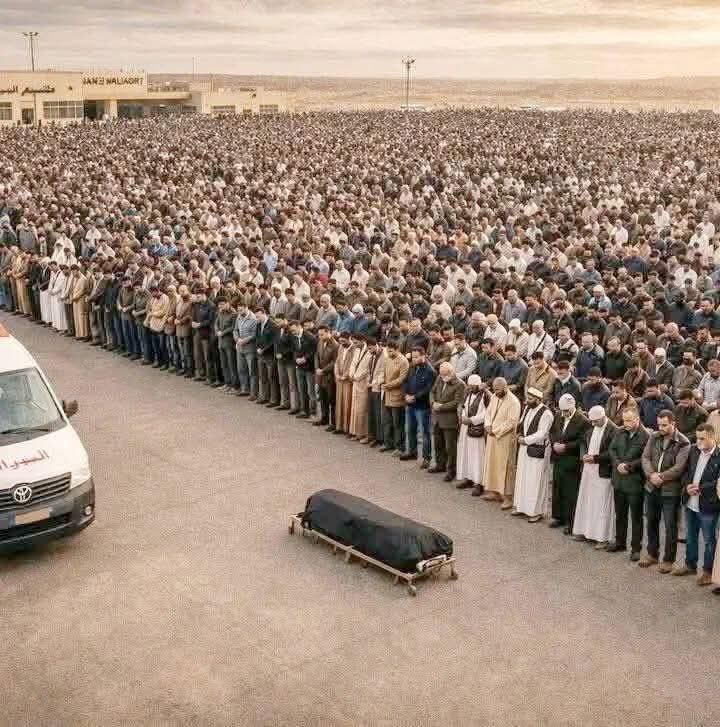
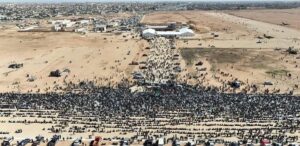
In one of the largest funerals in the country’s recent history, millions of Libyans gathered in the western town of Bani Walid to mourn Saif al-Islam Gaddafi, the son of former Libyan leader Muammar Gaddafi, who was killed earlier this week under violent circumstances.
ALSO READ: South Korean Scientists Develop Rapid Medical Spray That Seals Wounds in Seconds

Saif al-Islam, 53, was shot dead on February 3, 2026, by a group of unidentified assailants who stormed his home in the northwestern city of Zintan. Forensic examinations confirmed that he died from gunshot wounds, and Libyan authorities have launched an investigation to identify those responsible.

A Life Torn Between Power and Conflict
Born in Tripoli in 1972, Saif al-Islam was long regarded as the most prominent of Muammar Gaddafi’s children. Educated in Libya and abroad, including at the London School of Economics, he served as a key political figure before the 2011 uprising, often seen as his father’s heir apparent. He played leading roles in diplomatic initiatives, including negotiations over Libya’s previously disputed weapons programmes and compensation for the 1988 Lockerbie bombing
However, his image was sharply divided. In the early years of the Arab Spring protests, he defended his father’s regime and promised a brutal crackdown on dissent, remarks that later became part of his complex legacy. In the aftermath of the uprising that toppled Muammar Gaddafi in 2011, Saif al-Islam was captured by militia forces and held in Zintan for six years. During that time, he was sentenced to death in absentia by a Libyan court and was also wanted by the International Criminal Court for alleged crimes against humanity.
Freed from detention in 2017 under a general amnesty, Saif al-Islam kept a low profile before re-emerging as a controversial presidential candidate in 2021 — a bid that was later disqualified due to his unresolved legal status and deep fractures within Libya’s political system. His attempted return to politics highlighted broader tensions in a country still struggling with division and instability more than a decade after the civil war.

A Funeral Reflecting Deep National Fault Lines
The funeral in Bani Walid took place in a town known for its historical loyalty to the Gaddafi family and drew mourners from across Libya and beyond. Many carried portraits of Saif and the iconic green flags associated with the former regime, underscoring lingering support among segments of the population.
“We are here to accompany our beloved one, the son of our leader in whom we placed our hope and our future,” said one mourner from Sirte, nearly 300 kilometres away. The turnout highlighted the emotional and political complexities in Libya, where loyalty to the Gaddafi legacy remains strong among some communities even as others reject it.
Rival governments in Libya’s east and west did not send official representatives, reflecting the deep political divisions that have endured since the 2011 civil war. The attendance of tens of thousands — by some estimates reaching into the hundreds of thousands — became a poignant expression of a fractured nation’s competing narratives about its past and future.

Legacy and Uncertainty
Saif al-Islam’s death has reverberated across Libya and the wider region. The African Union has condemned the killing and urged a thorough investigation, warning that political violence could further destabilise a country already grappling with fragile governance and ongoing security challenges.
Analysts say his absence may reshape Libya’s political dynamics, removing a symbolic figure around whom loyalists might have rallied while also raising fresh questions about the country’s prospects for reconciliation and peace.
As Libya moves forward, the legacy of Saif al-Islam — like that of his father — will continue to be debated, studied and remembered as part of the nation’s long and complex journey through conflict, upheaval and change.

Saif al-Islam Gaddafi’s Funeral Draws Massive Crowds as Libya Mourns a Controversial Figure
