

Shettima Calls for Stronger African Health Sovereignty at AU Summit
Shettima Calls for Stronger African Health Sovereignty at AU Summit

Shettima Calls for Stronger African Health Sovereignty at AU Summit
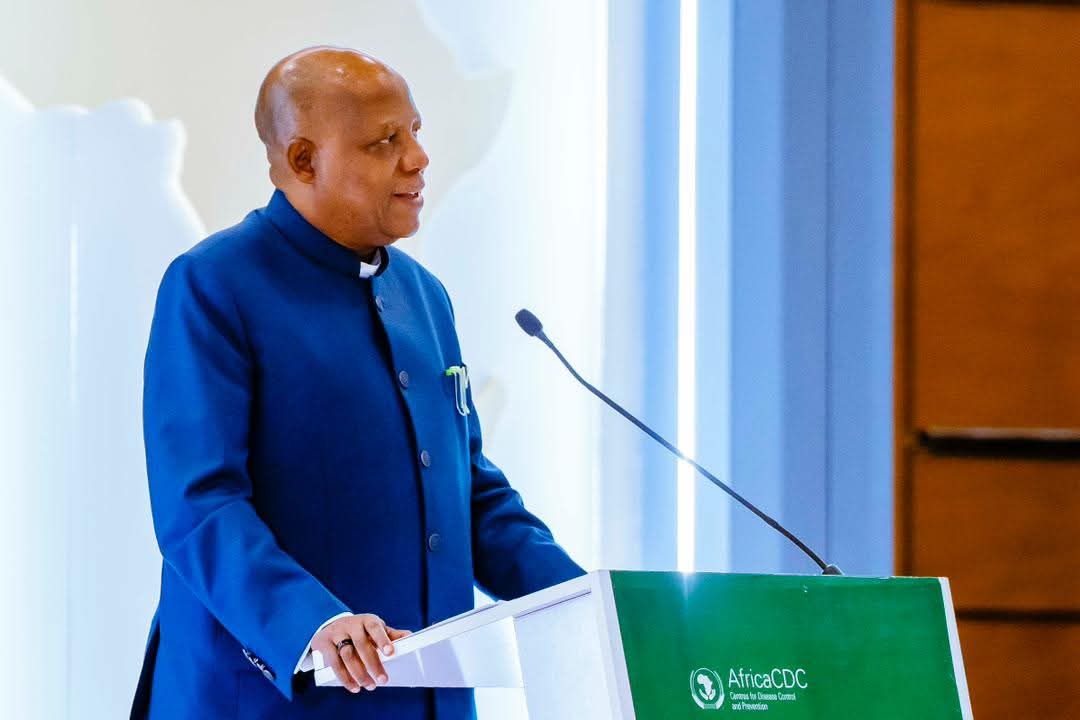
Vice President Kashim Shettima has urged African nations to strengthen health security across the continent, describing it as a necessity to shield Africans from the uncertainties of distant supply chains and shifting global priorities during crises.
ALSO READ: Dangote Group’s $2.5bn Fertiliser Plant in Ethiopia Set to Boost African Agriculture
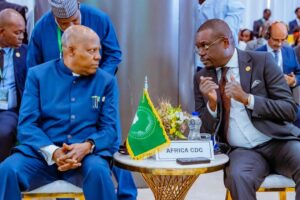
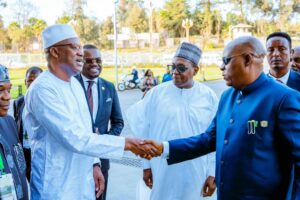
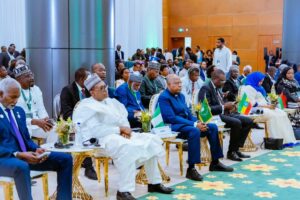
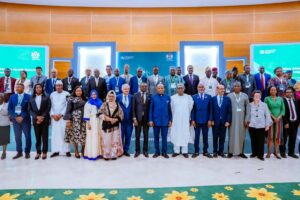
Speaking on Friday at a high-level side event themed “Building Africa’s Health Security Sovereignty,” held on the sidelines of the 39th Ordinary Session of the Assembly of Heads of State and Government of the African Union (AU) in Addis Ababa, Ethiopia, Shettima reaffirmed Nigeria’s commitment to continental collaboration in the health sector.
The Africa Health Security and Sovereignty Initiative, a partnership between the Nigerian government and the Africa Centre for Disease Control and Prevention (Africa CDC), aims to mobilise investments in the health workforce, community health systems, and sustainable immunisation programmes.
Representing President Bola Ahmed Tinubu at the summit, the Vice President said Nigeria stands ready to work with member states of the African Union to build measurable health security outcomes through the commissioning of factories, accreditation of laboratories, training of health workers, dismantling of counterfeit medicine markets, and expansion of health insurance coverage.
“When history reflects on this generation of African leadership, may it record that when confronted with vulnerability, we chose capacity; when confronted with dependence, we chose dignity; and when confronted with uncertainty, we chose cooperation,” he said.
Shettima warned of the dangers of overdependence, recalling how Africa faced vaccine shortages and limited medical supplies during the COVID-19 pandemic as countries prioritised their domestic needs.
“Endurance is not a strategy. Leadership is measured not by how long vulnerability can be withstood, but by how deliberately we reduce it,” he noted, adding that health security is both national and continental security.
Highlighting Nigeria’s efforts under President Tinubu’s administration, the Vice President pointed to key reforms including the Nigeria Health Sector Renewal Investment Initiative, which secured over $2.2 billion in commitments to renovate more than 17,000 primary healthcare centres, train 120,000 frontline health workers, and expand insurance coverage through reforms driven by the National Health Insurance Authority.
He also referenced the Presidential Initiative to Unlock the Healthcare Value Chain, aimed at addressing structural bottlenecks affecting domestic pharmaceutical manufacturers, medical device assemblers, and biotechnology innovators.
According to Shettima, Nigeria has strengthened epidemic intelligence and emergency preparedness through enhanced laboratory networks, expanded genomic surveillance, and improved coordination at emergency operations centres under the Nigeria Centre for Disease Control and Prevention (NCDC).
The Vice President further disclosed that regulatory oversight has been intensified through the National Agency for Food and Drug Administration and Control (NAFDAC), with upgrades to quality-control laboratories and stricter enforcement against substandard and falsified medicines.
He called for greater private sector participation, stressing that governments cannot achieve health sovereignty alone.
Earlier, the Coordinating Minister of Health and Social Welfare, Prof. Muhammad Ali Pate, commended the Africa CDC and the African Union Commission for partnering with Nigeria to strengthen Africa’s health security. He highlighted ongoing efforts to build a reliable health workforce database and bridge rural-urban gaps in the distribution of health personnel.
Director General of the Africa CDC, Dr Jean Kaseya, praised Nigeria’s leadership in healthcare reforms and immunisation programmes, noting that fragmented investments and shortages of skilled health workers remain pressing challenges across the continent.
Health ministers from Senegal, Malawi and Ethiopia also pledged their countries’ commitment to deepening collaboration and strengthening workforce development and community health systems.
In a communiqué issued at the end of the forum, Ministers of Health and Finance from AU member states called on African leaders and development partners to increase sustained investment in Human Resources for Health and Community Health Systems. They urged leaders to elevate health workforce development as a strategic pillar of primary healthcare, universal health coverage, and pandemic preparedness.
The ministers further set a target of accelerating progress toward two million community health workers across Africa by 2030, alongside increased domestic financing and implementation of continental and national community health acceleration plans.

Shettima Calls for Stronger African Health Sovereignty at AU Summit
