

Theatre of the Absurd: When Clout Becomes a National Emergency
From fake suicides to false rape alarms, we are laughing our way to societal collapse. When did we stop feeling the weight of being human?

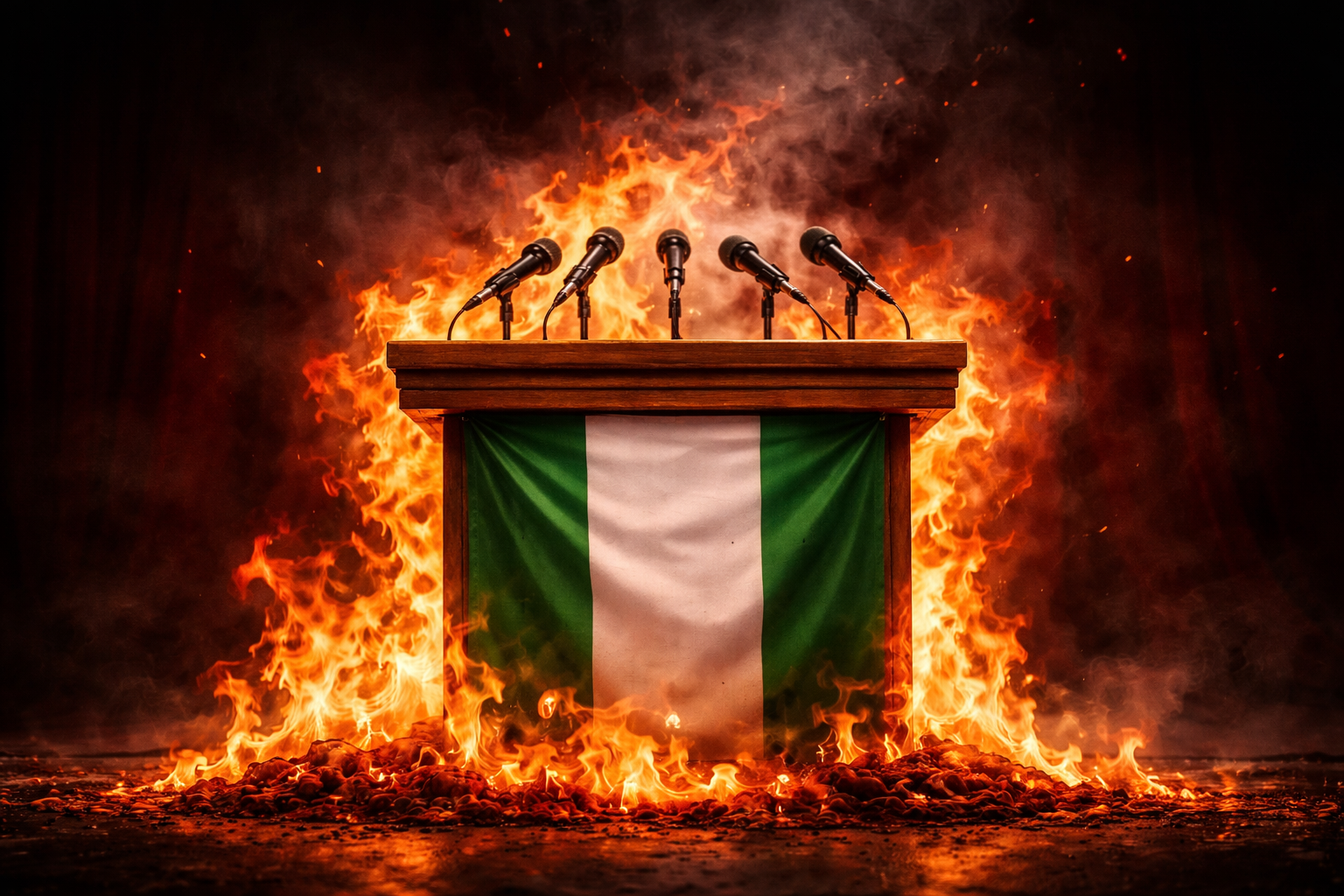
Theatre of the Absurd: When Clout Becomes a National Emergency
By Abraham Ameh
A young woman sobs, detailing a brutal rape, a blade inserted in her flesh. The nation weeps with her. Money pours into her account. Influencers demand justice. Then, the truth emerges: it was a performance, a script written for the algorithm.
A popular activist, known for his fiery rants, stages his own death and burial. For hours, followers mourn a man who is very much alive, watching the confusion unfold from behind a screen.
A heartbroken content creator, after a public breakup, sparks a suicide scare, forcing a wave of concern before later apologising, citing “treatment.”
And in the most disturbing trend yet, the consumption of bleach a poisonous, agonising chemical that burns through flesh and organs- is flirted with as a theatrical prop for online drama.Welcome to the new Nigerian internet. It is a theatre of the absurd, where the pursuit of “clout” has not only blurred the line between reality and performance but has erased it. We are watching, liking, and sharing our way into a moral coma, normalising the unthinkable for a few more views.
READ ALSO: Late Chief Abibatu Ashabi Mogaji: The Legendary Iyaloja-General, Mother of the Masses
The recent spate of incidents from the Mirabel false rape saga to the VeryDarkMan’s (VDM) fake death stunt, the Peller suicide scare, and the troubling “Hypo” drinking threats in the ongoing VDM-King Mitchy feud are not isolated cases of youthful exuberance. They are symptoms of a deep, systemic rot in our content creation culture. They are a national emergency dressed up as entertainment.
In the last few weeks, Nigeria has watched, half-shocked, half-entertained, as a wave of “content” spiralled into something darker: suicide jokes, staged poison-drinking theatrics, unverified death announcements, rape-accusation drama, and even public vandalism in the name of virality.
What used to be pranks have become psychological landmines. What used to be humour now toys with life-and-death themes. And what used to be harmless skits are fast morphing into a culture that trivialises trauma for likes, shares, outrage, and algorithmic applause.
This is no longer just “social media madness.” It is a moral and mental health emergency. A Facebook user, Hymar David, captured the gravity of the moment in a post that has since circulated widely:
“Suicide is far too serious to be turned into cheap theatrics by taigas who do not understand the weight of what they are playing with. It is not a trend. It is not something to normalize for attention, outrage, or entertainment. It is a matter of life and death.”
He is right.
The recent online drama around influencers joking about suicide, falsely announcing deaths, or filming themselves allegedly drinking bleaching agents like Hypo is not edgy humour. It is reckless endangerment of public mental health.
When the Script Becomes a Weapon
Let’s be clear about what is at stake. These are not harmless pranks.
The Mirabel case is a textbook example of how clout-chasing vandalises our social fabric. As the reporting from the Punch Healthwise piece detailed, Abigail Nsuka’s fabricated rape story wasn’t just a lie; it was a heist. She allegedly made millions of naira by hijacking the empathy of a nation and exploiting the very real trauma of countless sexual assault survivors. As women’s rights activist Josephine Effah-Chukwuma rightly fumed, this “reckless and badly behaved young girl” has made it harder for genuine victims to be believed. She has poured acid on the already fragile trust in our justice system, all for rent money and social media fame. The three-year prison term she potentially faces under the Cybercrimes Act is a consequence, but the social scar she has helped create is far deeper.
Then, there is the trivialisation of death itself. When a public figure like VDM reportedly fakes his own demise, as highlighted in an open letter by PressExpress Nigeria, the message sent is profoundly nihilistic. Death is not content. It is the final, painful full stop for millions of families who have lost loved ones. It is the spirit Kelechi Nwaorgu warned about in a comment on that post a force not to be mocked. To turn it into a tool for engagement is to announce that you value attention more than the sanctity of life itself. It erodes credibility, certainly, but more importantly, it desensitises us all to the very real grief that exists in every community.
The Poison in the Punchline
But the most disturbing frontier in this race to the bottom is the normalisation of self-harm for drama. The recent episodes where threats of drinking bleach (sodium hypochlorite) have entered public discourse are not just irresponsible; they are a public health hazard.
We must state this with absolute clarity: drinking bleach is an unimaginably horrific way to die or live. The moment it is swallowed, it begins to burn the mouth, throat, and stomach chemically. It causes excruciating pain, internal bleeding, and vomiting of blood. It can burn through the oesophagus and stomach lining, leading to permanent scars that make swallowing impossible for life. It can cause the throat to swell shut, leading to suffocation. If it enters the lungs, it causes severe damage and respiratory failure. Survivors often face a lifetime of surgeries, pain, and trauma.
What exactly is the “content” in this? Where is the joke? When we allow public figures to brandish this poison as a prop in their petty feuds, we are sending a dangerous signal to vulnerable young followers who might see it as a dramatic, attention-grabbing solution to their own pain. We are desensitising an entire generation to the finality and agony of self-destruction.
In a rare and commendable move, the manufacturers of Hypo Bleach itself issued a public notice to unequivocally condemn this trend:
The Grift of False Accusations and Vandalism
This culture of performance has also weaponised accusation. The Mirabel case is the tip of the iceberg. We are seeing a rise in dramatic accusations of rape, of assault, of threats levelled in videos and on timelines, designed to go viral before the facts can catch up. By the time the truth emerges, the damage is done: reputations are shredded, families are terrorised, and real victims are pushed further into the shadows. It is a form of digital vigilantism where the currency is outrage and the payment is attention.
And what of the property destruction? The videos of vehicles being vandalised in the name of dramatic content or filming for our entertainment?
A Call for Sanity: What We Must Do
We cannot simply wring our hands and blame “the youth.” This is a collective failure of parents, of platforms, of regulators, and of us, the audience. The algorithm rewards what we click. We have been clicking on madness.
To pull back from this brink, we need a multi-front campaign for sanity:
1. To the Content Creators: This is an appeal to your better angels. Influence is not a toy. It is a trust. You have the power to shape discourse, to inform, and to entertain responsibly. Using suicide, rape, and self-harm as plot devices is not “edgy”; it is sociopathic. The few minutes of fame are not worth the lasting damage you inflict on a society already struggling with real trauma, economic hardship, and a mental health crisis. As the open letter to VDM stated, “You are bigger than this kind of trend. Not everything should be done for clout.”
2. To the Platforms (Meta, TikTok, YouTube): Your algorithms are amplifying this toxic content because it generates engagement. You have a moral and operational responsibility to treat clear threats of self-harm, dangerous dares, and fabricated crisis events with the urgency they deserve. Your community guidelines must be enforced not just with automated takedowns, but with context-aware moderation that understands the difference between a joke and a national emergency.
3. To Law Enforcement and Regulators: The arrest of Mirabel is a start, but it cannot be performative. She must face the full weight of the law to serve as a clear deterrent. The Nigerian Police and the National Broadcasting Commission must develop clear protocols for responding to these digital crises. Faking a death should have consequences. Inciting panic should have consequences. Using platforms to coordinate vandalism should have consequences. The law, as legal experts noted in the Mirabel case, provides tools like the Cybercrimes Act. It is time to use them decisively.
4. To Us, the Audience: We must stop rewarding the circus. We must stop sharing the outrageous video before verifying the story. We must stop giving our views, our likes, and our emotional energy to those who trade in tragedy. We must demand more from the content we consume. Let us starve the clout-chasers of the attention they crave and redirect it towards voices that seek to build, inform, and heal.
Conclusion: Irrelevance is a Choice, But So is Sanity
We are at a crossroads. One path leads further into this abyss, where nothing is sacred, everything is content, and we are numbed to the point of no return. The other path requires a collective effort to reclaim our humanity, to treat serious issues with the gravity they deserve, and to build a digital culture that reflects our deepest values, not our worst impulses.
The performers of this theatre of the absurd may think they are winning. But in the race to the bottom, everyone loses. It is time to stop the show. It is time to choose sanity.