


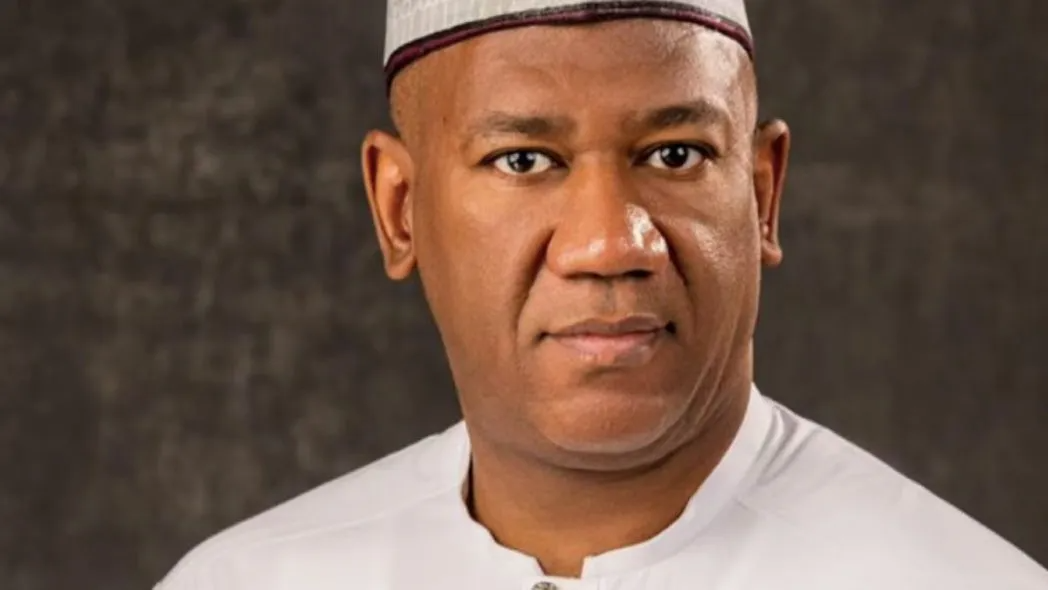
Yusuf Datti Baba-Ahmed: Where Technocracy Meets Politics
By Jerry Adesewo
In a political environment often defined by populism, patronage, and personality cults, Datti Yusuf Baba-Ahmed has consistently occupied an unusual space. His recent declaration of interest in Nigeria’s presidency under the platform of the Labour Party is not merely another entry into a crowded field; it is the culmination of a decade-long political journey shaped by technocratic thinking, private-sector discipline, and a restless dissatisfaction with how power is exercised in Nigeria.
READ ALSO: Liberia’s Concession Agreements Have Failed the People Since 1847 — Sheikh Kouyateh
To understand the significance of this moment, one must look beyond campaign rhetoric and examine the trajectory that has brought Baba-Ahmed here—one marked less by flamboyance and more by ideas, policy conversations, and a stubborn insistence that governance can be rational, structured, and measurable.
From Boardrooms to Ballots
Baba-Ahmed entered national political consciousness not as a career politician but as a businessman and technocrat. His background in real estate, finance, education, and enterprise development informed his earliest public interventions, which often sounded more like investor briefings than political speeches. Long before electoral ambitions became explicit, he was already asking uncomfortable questions about productivity, value creation, and the cost of governance.
In the last decade, this orientation has remained constant. Unlike many contemporaries whose politics evolved as a function of access to power, Baba-Ahmed’s politics evolved from a critique of inefficiency. He approached politics as a systems problem—Nigeria as an underperforming enterprise with broken incentives, poor leadership selection, and no accountability metrics.
This technocratic lens would later define both his appeal and his limitations.
The Senatorial Years: Policy over performance
His tenure in the Senate, preceded by a stint at the Federal House of Representatives between 2003 to 2007, offered a clearer window into how Baba-Ahmed thinks about public office. He was never the loudest voice on the floor, nor the most theatrical. Instead, his interventions often focused on macroeconomic stability, education reform, energy policy, and the dangers of fiscal recklessness.
At a time when legislative productivity was frequently measured by constituency projects and media visibility, Baba-Ahmed appeared more concerned with structural questions: Why does Nigeria consume more than it produces? Why are public revenues persistently insufficient despite abundant resources? Why does leadership recycling trump competence?
This approach won him admiration among policy analysts and reform-minded citizens, but it also exposed a central tension in Nigerian politics—the disconnect between technocratic logic and mass political mobilisation. In a system that rewards emotional narratives and ethnic arithmetic, data-driven arguments can struggle to inspire.
The Vice-Presidential Moment
The turning point in Baba-Ahmed’s political journey came with his emergence on the national ticket of the Labour Party in the last general election cycle. Though he was focused on contesting the governorship of Kaduna State, his commitment to national development became his first choice. That moment elevated him from a respected policy voice to a national political actor.
As a vice-presidential candidate, he became one of the most articulate critics of Nigeria’s elite consensus. His speeches consistently framed Nigeria’s crisis not as a failure of destiny but as a failure of choices—bad budgeting, elite capture, and leadership without competence.
What stood out during this period was his refusal to dilute complexity. While others simplified Nigeria’s problems into slogans, Baba-Ahmed often doubled down on detail. He spoke of debt sustainability, productivity gaps, education outcomes, and institutional decay. To supporters, this was refreshing honesty. To critics, it was political naïveté.
Yet, the campaign revealed something important: there is a constituency in Nigeria—small but growing—that is hungry for substance over spectacle.
Technocracy in a Populist Arena
Baba-Ahmed’s declaration to run for president, following the departure of his former principal, Mr. Peter Obi, to the African Democratic Congress, brings this tension into sharper focus. Nigeria’s political terrain is not naturally hospitable to technocrats. Electoral success has historically favoured those who master identity politics, patronage networks, and emotional mobilisation.
The technocrat-politician must therefore perform a delicate balancing act: retain intellectual integrity while translating policy into language that resonates with lived experience. Baba-Ahmed’s challenge is not a lack of ideas but the communication of those ideas in a way that inspires trust across social strata.
In the last decade, his political evolution suggests awareness of this challenge. His more recent engagements show a conscious effort to connect policy to everyday realities—food prices, transport costs, education outcomes, and the dignity of work. Whether this adaptation is sufficient remains an open question.
A Different Theory of Leadership
At the heart of Baba-Ahmed’s political philosophy is a belief that leadership is primarily managerial before it is performative. He often speaks of Nigeria as a country suffering not from a lack of resources, but from a lack of discipline in deploying them.
This worldview places him at odds with Nigeria’s dominant political culture, where charisma often substitutes for competence and access substitutes for accountability. His insistence on metrics, planning, and evaluation challenges a system comfortable with ambiguity.
From a technocratic standpoint, his presidential ambition is logical. If one believes the system is broken at the top, the rational response is to seek control of the system. But politics is rarely sensible.
Why His Declaration Matters
Baba-Ahmed’s presidential declaration matters because Nigeria needs such quality and genuine alternatives. It signals that technocratic politics has not retreated in the face of repeated electoral disappointments. It suggests that a segment of Nigeria’s political class still believes in the possibility of evidence-based governance.
In a system often accused of recycling the same personalities and ideas, his candidacy introduces a different conversation—about productivity, systems, and long-term planning. Even critics must acknowledge that such conversations are rare and necessary.
As Nigeria approaches another defining electoral moment, Baba-Ahmed stands as a test case: Can a technocrat win in a deeply political environment? Can policy coherence compete with populist certainty? Can integrity be scaled?
His last decade in politics suggests consistency, intellectual honesty, and courage. Whether these qualities translate into electoral success is uncertain. But his journey forces Nigeria to confront an uncomfortable question: if leaders like Baba-Ahmed cannot thrive, what does that say about the kind of politics the country rewards?
In that sense, his declaration is not just about personal ambition. It is a referendum on whether Nigeria is ready to take governance seriously—not as a performance, but as a profession.