

Historical Records Affirm “Olu of Warri” as Enduring Title of Ancient Monarchy
Historical Records Affirm “Olu of Warri” as Enduring Title of Ancient Monarchy

Historical Records Affirm “Olu of Warri” as Enduring Title of Ancient Monarchy
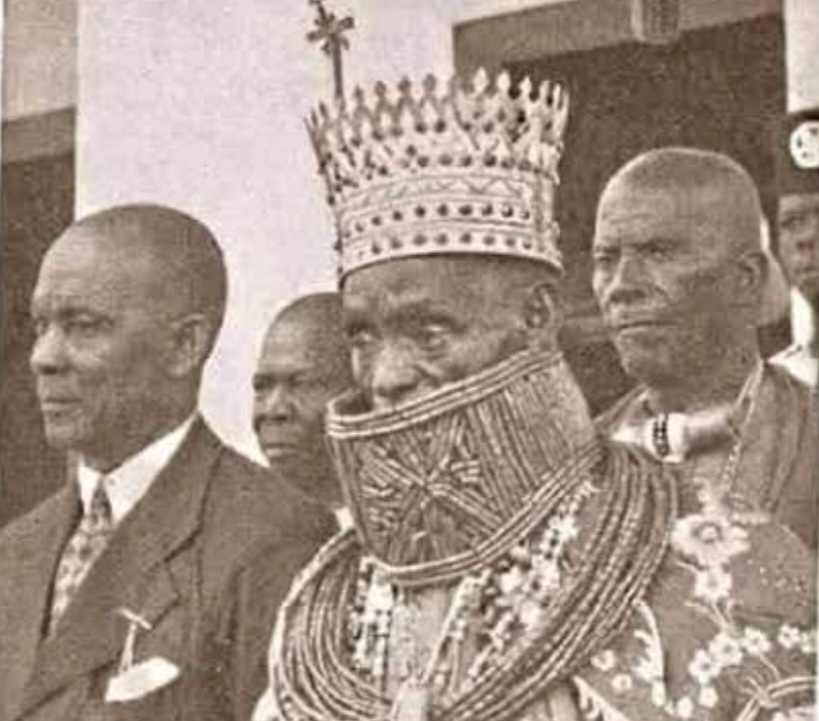
Extensive historical evidence has reaffirmed that the title “Olu of Warri” is an ancient and legitimate designation that predates colonial rule by centuries, reflecting the unbroken sovereignty of the Warri Kingdom and the Itsekiri people.
ALSO READ: 4 Brigade Marks AFCRD 2026 with Interdenominational Church Service in Benin
The origins of the monarchy date back to 1480, when Prince Ginuwa, son of the Oba of Benin, founded the kingdom known as Iwere, later called Warri. From its inception, the ruler was referred to as the Olu (King) of Warri, a title that signified dominion over the land and waters of the kingdom. Historical scholars, including Jacob Egharevba and Professor Saburi Biobaku, have consistently documented this lineage and title in Benin and Itsekiri histories.
European records further reinforce this position. Portuguese decrees from the 16th and 17th centuries explicitly refer to the “King of Warri,” including a 1607 royal Portuguese document acknowledging diplomatic relations with the Warri monarch and his heir. In 1651, correspondence recorded by European clerics showed the King of Warri writing directly to the Vatican, highlighting the kingdom’s international recognition long before British colonial involvement.
Ancient maps published between the 16th and 18th centuries also clearly identify Warri (variously spelled Owere, Awerri, or Ouere) as a distinct kingdom along the West African coast. Where a kingdom existed, historians note, there was a recognized sovereign—consistently referred to as the Olu of Warri.
Literary accounts from European travelers and missionaries, including John Barbot and Father Jerome Merolla da Sorrento, further describe Warri as a kingdom ruled by a king, while 19th-century British publications, such as Fraser’s Magazine, recorded the death of the King of Warri in 1848, confirming continued use of the title into the colonial era.
The temporary shift to “Olu of Itsekiri” in the 1930s has been widely attributed to colonial administrative considerations during the creation of Warri Province, rather than any historical inaccuracy. Declassified colonial documents reveal that as early as 1936, British officials, including Sir William Hunt, acknowledged that “Olu of Warri” was historically correct. The title’s restoration in 1952 was based on these established records and long-standing recognition.
Historians and traditional authorities maintain that the brief colonial-era alteration did not negate centuries of documented usage. Instead, they argue it underscores how political expediency momentarily overshadowed historical fact.
Today, the title “Olu of Warri” stands reaffirmed as a symbol of ancient sovereignty, cultural continuity, and historical truth—rooted in pre-colonial governance and validated by both indigenous and colonial records long before modern Nigeria emerged.
Historical Records Affirm “Olu of Warri” as Enduring Title of Ancient Monarchy
