

Dreams in the Dark: How a Night Journey to Write Exams Turned Into a Nightmare in Benue

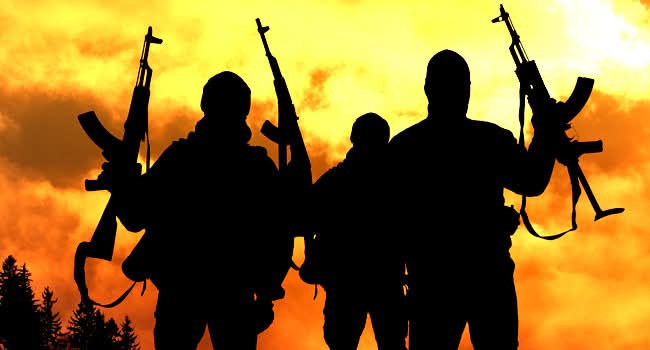
Dreams in the Dark: How a Night Journey to Write Exams Turned Into a Nightmare in Benue
By Matthew Eloyi
On a humid Wednesday night along the lonely Makurdi–Otukpo road in Benue State, a bus carried not just passengers, but dreams in transit. Young men and women, many barely out of their teenage years, clutched their hopes tightly as they journeyed toward Otukpo. By morning, they were meant to sit for the Joint Admissions and Matriculation Board (JAMB) examination – that pivotal test that stands like a gatekeeper between aspiration and opportunity in Nigeria. But they never made it.
Somewhere in the darkness, around 8 p.m., the road turned from a pathway of promise into a corridor of fear. Armed men, suspected to be bandits, emerged and intercepted the Benue Links bus. In a matter of moments, the night swallowed the laughter, the quiet revisions, the nervous anticipation that had filled the vehicle.
Eighteen passengers were reportedly on board. By the time the attackers vanished into the surrounding bush, they had taken most of them along.
Among the abducted were students, young people who had set out with pens and registration slips, not knowing they would instead be forced into a terrifying ordeal far from the safety of examination halls. Their journey, meant to test their knowledge, has now become a brutal test of survival.
Two individuals (the driver and one passenger) managed to escape. Their survival offers a sliver of relief, but it does little to quiet the anguish left behind. Fourteen others remain unaccounted for, their whereabouts unknown, their families gripped by dread.
One can only imagine the scene: parents waiting for phone calls that never came, guardians refreshing their hopes with every passing minute, and communities plunged into a familiar but no less painful cycle of worry and helplessness.
The Benue State Commissioner of Police, Ifeanyi Emenari, confirmed the abduction and has since led a search operation into the surrounding bush. Security teams are combing the area, holding on to the urgent mission of bringing the victims back alive.
Yet, even as the search continues, troubling questions linger.
Why was the journey made at night, despite existing policies discouraging such travel? Could this tragedy have been avoided? And how many more young Nigerians must have their futures interrupted, or entirely rewritten by the growing insecurity on roads meant to connect, not endanger?
For now, what remains is a haunting silence; the absence of voices that should have been heard in examination centres, the empty seats where determined students should have sat, and the crushing weight of uncertainty.
These were not just passengers. They were futures in motion. And somewhere in the forests off a darkened highway, those futures now hang in the balance.
