

Chidoka Calls for Shift in Nigeria’s Political Culture at ESUT Lecture

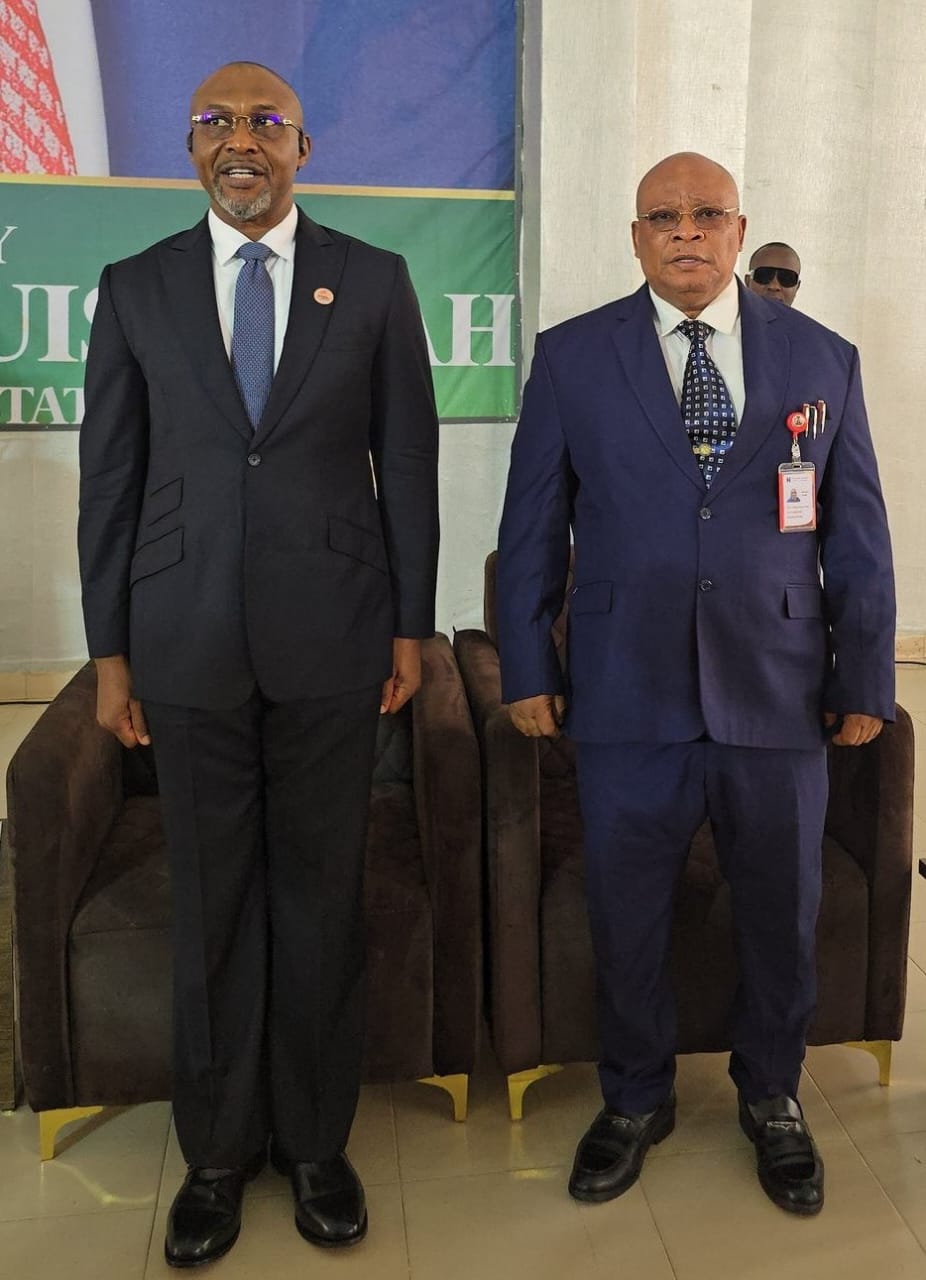
Chidoka Calls for Shift in Nigeria’s Political Culture at ESUT Lecture
By Rita Onyi, Enugu
Former Minister of Aviation and Chancellor of the Athena Centre for Policy and Leadership, Osita Chidoka, has called for a fundamental shift in Nigeria’s political culture, arguing that the country’s democratic challenges stem from a “conversion crisis” rather than voter apathy.
Chidoka made this assertion while delivering the 2nd Distinguished Personality Lecture at Enugu State University of Science and Technology (ESUT) on April 30, 2026.
READ ALSO: President Tinubu Embarks on France, Kenya, Rwanda Tour for Key Global Summits
Speaking on the theme “Beyond Participation: Rebuilding Nigeria’s Political Culture for a New Generation,” he challenged prevailing narratives around declining voter turnout, citing data from the Independent National Electoral Commission (INEC) showing that only 26.7 percent of registered voters participated in the 2023 presidential election, compared to 53.7 percent in 2011.
According to him, the issue is not a lack of willingness among Nigerians to vote but systemic barriers that make participation costly and uncertain.
“Nigeria does not have an intention crisis. Nigerians intend to vote, but when the day comes, they begin to calculate the cost of transport, loss of income, and uncertainty of the process,” he said.
Chidoka also highlighted structural deficiencies in governance, presenting research findings that show limited transparency across state legislatures. He noted that only 39 percent of State Houses of Assembly maintain verified websites, while just 11 percent operate YouTube channels, and none publish legislative proceedings online.
He contrasted Nigeria’s situation with countries like South Africa and India, where access to legislative processes is more open and institutionalised.
The former minister further introduced the concept of “Alibi Culture” versus “Agency Culture,” arguing that Nigeria’s progress has been hindered by a tendency to justify challenges rather than address them.
He proposed the philosophy of “Mekaria”—an African framework centered on discipline, measurement, and accountability—as a pathway for institutional reform, urging Nigerians to focus on measurable outcomes in governance.
“A country does not improve because people are angry. It improves when people organise around standards, measurement, and accountability,” he said.
The lecture, held at the Barr. Dr. Peter Ndubuisi Mbah Multipurpose Auditorium, was chaired by ESUT Vice-Chancellor Professor Aloysius-Michaels Okolie, who commended Chidoka’s insights and emphasised the importance of bridging academia and governance.
The event attracted faculty members and students, who engaged in discussions on democratic reform, transparency, and youth participation in governance.
The ESUT Distinguished Personality Lecture Series is designed to foster informed dialogue on national development and public policy.