

National Digital Literacy Dashboard: Tracking Nigeria’s Journey to a Digitally Empowered Nation

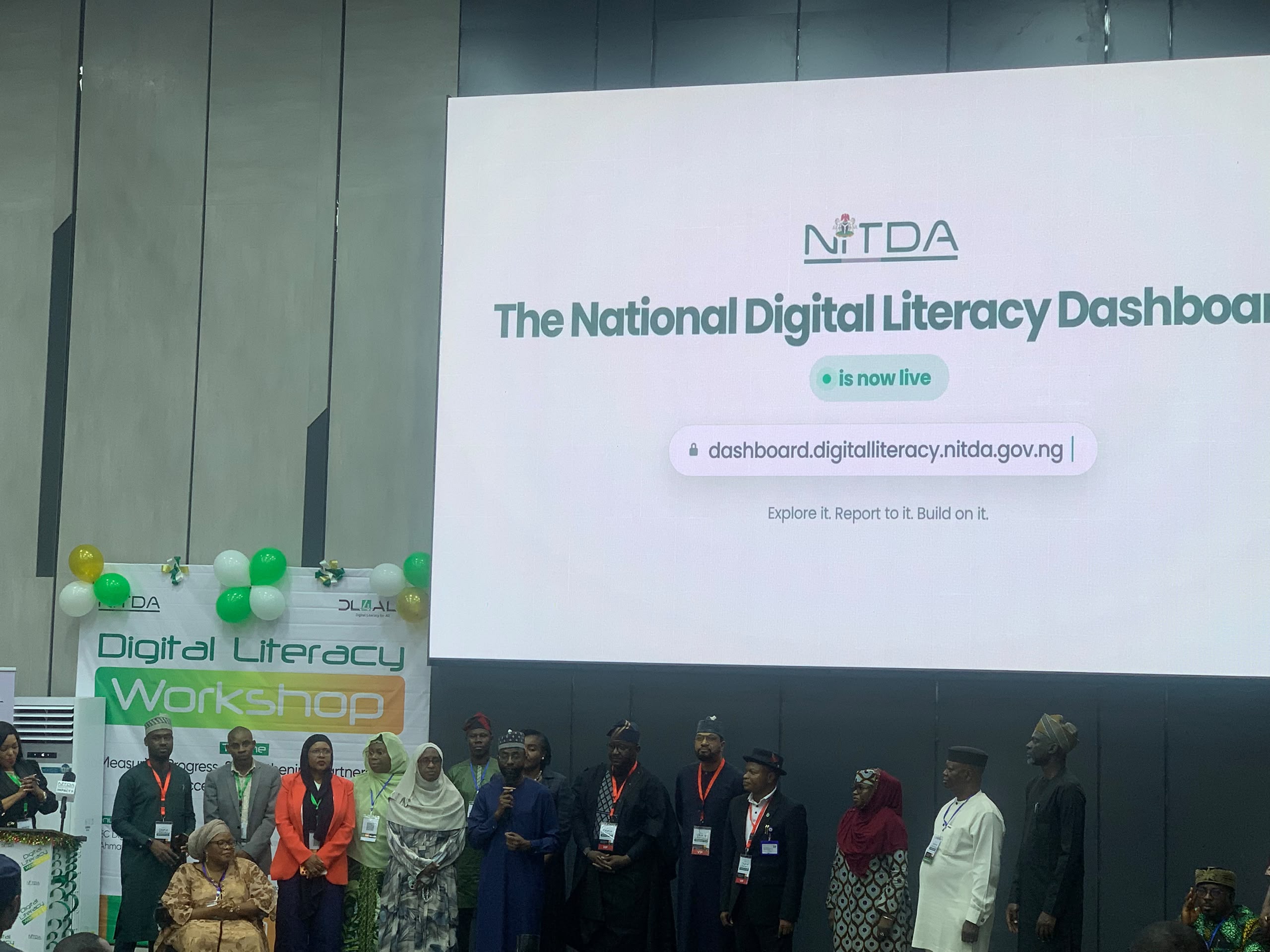
National Digital Literacy Dashboard: Tracking Nigeria’s Journey to a Digitally Empowered Nation
By Matthew Eloyi
Nigeria’s ambition to build a digitally empowered population is gaining fresh momentum as the National Information Technology Development Agency (NITDA) unveils a National Digital Literacy Dashboard, an innovative monitoring platform designed to strengthen coordination, track progress and accelerate the country’s journey towards becoming a digitally literate society.
The initiative represents a significant step in Nigeria’s efforts to transform digital literacy from a collection of individual training programmes into a coordinated, measurable and data-driven national development agenda.
Already, the dashboard has recorded an impressive 2,769,512 reported training achievements from 252 active reporting organisations over the last three years. More significantly, its coverage spans all 774 Local Government Areas and 14,664 communities across the country, demonstrating the growing reach of digital skills development initiatives and the increasing involvement of public and private sector stakeholders.
The figures underscore the scale of collaboration emerging around Nigeria’s digital literacy agenda, with government institutions, technology companies, development organisations and state-level agencies contributing to the effort to equip citizens with relevant digital competencies.
Among the leading contributors, Cisco occupies the top position with 1,073,604 reported training achievements, reflecting the technology company’s significant contribution to digital skills development in Nigeria.
NITDA follows closely with 960,424 reported achievements, highlighting the agency’s central role in driving the Federal Government’s digital literacy agenda and coordinating interventions aimed at expanding access to digital skills across the country.
Meta Platforms Inc. ranks third with 333,816 reported training achievements, further illustrating the importance of partnerships with global technology companies in expanding the country’s digital skills ecosystem.
Other notable contributors include Imo Digital City Limited, the Sokoto State Ministry of Innovation and Digital Economy, the Bureau for ICT and Digital Economy, digital development agencies in Jigawa, Kaduna and Zamfara states, as well as the Centre for Information Technology and Development (CITAD).
The diversity of these contributors reflects an increasingly inclusive approach to digital development, where responsibilities are shared across different levels of government, the private sector and civil society organisations.
Beyond presenting impressive statistics, however, the National Digital Literacy Dashboard offers a strategic mechanism for addressing some of the longstanding challenges associated with implementing large-scale digital skills programmes in a country as geographically and socially diverse as Nigeria.
By providing a centralised platform for monitoring training activities and measuring reported achievements, the dashboard will enable stakeholders to better understand where interventions are taking place, identify underserved communities and determine areas requiring additional investment.
It is also expected to address the challenge of fragmented reporting, which has often made it difficult to establish a comprehensive picture of the country’s digital literacy progress.
With reliable information available through a coordinated reporting framework, policymakers and implementing institutions can identify gaps, minimise duplication of efforts and deploy resources more efficiently. This will ultimately strengthen accountability, improve programme implementation and ensure that digital literacy interventions produce measurable outcomes.
The initiative is particularly significant given Nigeria’s ambitious target of achieving 70 per cent digital literacy by 2027 and 95 per cent by 2030.
These targets reflect the Federal Government’s recognition that digital literacy is no longer an optional skill but an essential requirement for economic participation, social inclusion, innovation and national competitiveness.
For a country with a large youthful population and an expanding digital economy, equipping citizens with the knowledge and competencies to navigate digital technologies is fundamental to unlocking opportunities in entrepreneurship, education, employment, commerce and public service delivery.
The dashboard also reinforces the importance of collaboration in achieving these national objectives. No single institution can independently deliver digital literacy at the scale required to transform a population of Nigeria’s size. Consequently, the involvement of 252 reporting organisations represents an important foundation upon which broader partnerships can be built.
This approach aligns with President Bola Ahmed Tinubu’s Renewed Hope Agenda, particularly the administration’s priority of accelerating economic diversification through industrialisation, digitisation, creative arts, manufacturing and innovation.
Digital literacy provides an important link between these priorities, as a digitally competent population is better positioned to participate in emerging industries, develop innovative solutions, access global markets and contribute to productivity growth.
For NITDA, therefore, the launch of the National Digital Literacy Dashboard is more than the introduction of another digital platform. It represents an important institutional commitment to ensuring that Nigeria’s digital transformation ambitions are supported by measurable progress, credible reporting and evidence-based policy decisions.
The achievement of nearly 2.8 million reported training outcomes within three years, alongside participation from organisations operating across all 774 local government areas, provides an encouraging indication of the momentum behind the country’s digital literacy drive.
Nevertheless, the real measure of success will lie in translating these reported training achievements into practical digital competencies that improve livelihoods, expand economic opportunities and enable more Nigerians to participate meaningfully in the digital economy.
As Nigeria moves towards its 2027 and 2030 targets, the National Digital Literacy Dashboard is positioned to serve as a critical instrument for tracking progress, strengthening partnerships and keeping stakeholders focused on delivering results.
Ultimately, a digitally empowered Nigeria will not be built by technology infrastructure alone. It will require citizens who possess the knowledge, confidence and skills to use technology productively. By introducing a centralised mechanism to measure and coordinate this national effort, NITDA is helping to lay the foundation for a more inclusive, innovative and digitally competitive Nigeria.
