

Nigeria’s Cassava Paradox: Producing the World’s Most, Yet Lacking 450 Million Stem Bundles

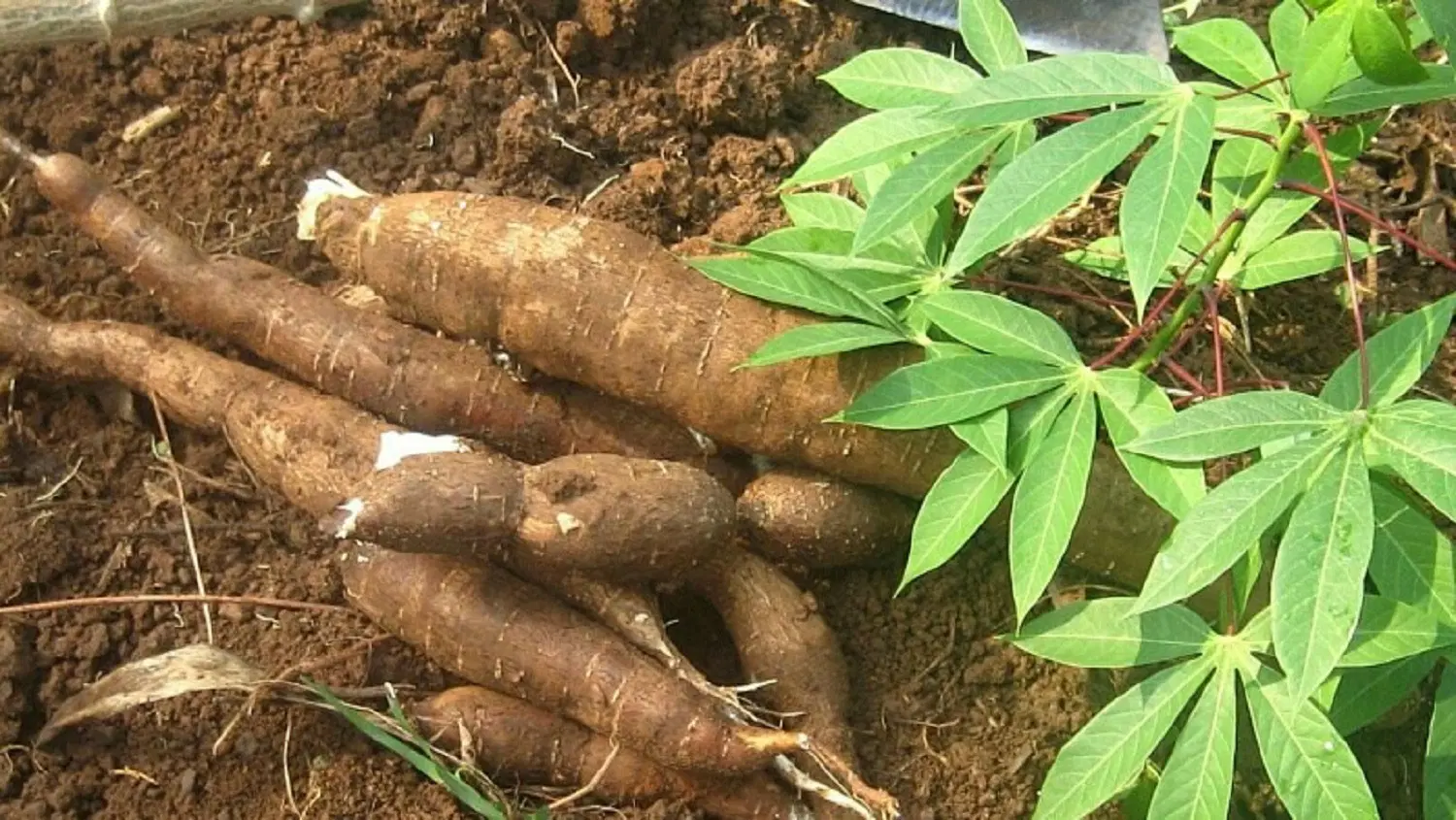
Nigeria’s Cassava Paradox: Producing the World’s Most, Yet Lacking 450 Million Stem Bundles
By Matthew Eloyi
Nigeria occupies a commanding position in global cassava production, yet millions of farmers across the country face a major challenge that threatens the productivity and profitability of the crop: inadequate access to improved planting materials.
Despite being the world’s largest cassava producer, the country requires more than 450 million bundles of cassava stems annually to meet farmers’ demand, but current supply accounts for less than 10 per cent of that requirement.
The International Institute of Tropical Agriculture (IITA) has raised concerns over the widening gap, warning that the shortage is forcing farmers to depend on uncertified, adulterated and unimproved varieties, with implications for agricultural productivity and rural livelihoods.
Mr Kayode Olasupo, an agronomist with IITA GoSeed, disclosed this in an interview with the newsmen in Abuja, explaining that the challenge was not necessarily a lack of improved cassava varieties but the inability to make them readily available to farmers.
According to estimates from IITA projects, more than six million smallholder farmers cultivate cassava across Nigeria, creating enormous demand for quality planting materials.
“When we did the estimate, we discovered that they needed more than 450 million bundles annually. And what we currently supply is less than 10 per-cent of actual requests.
“That is why most of them end up getting adulterated, uncertified, unimproved varieties on their farms. Some of them are still depending on their neighbours or are recycling the stems they have, which is not increasing their productivity,” he said.
The figures expose a significant weakness in Nigeria’s cassava value chain. While the country has millions of farmers and research institutions developing improved varieties, the system for delivering quality planting materials to farms remains inadequate.
For many farmers, obtaining improved cassava stems is complicated by distance and transportation costs. Olasupo identified the absence of commercial seed companies within farming communities as one of the major reasons for the supply gap.
He explained that farmers often spend so much on transporting planting materials that logistics costs sometimes exceed the actual cost of the materials they intend to purchase.
This, he said, makes it necessary to attract more participants into the cassava seed value chain, particularly commercial seed entrepreneurs who can establish businesses closer to farming communities.
The objective, according to him, is to make improved planting materials easily accessible and affordable, reducing the burden on farmers while strengthening agricultural production.
The importance of closing this gap goes beyond increasing the availability of cassava stems. Access to quality planting materials is central to improving farm productivity, increasing farmers’ earnings and strengthening their livelihoods.
Olasupo noted that many improved cassava varieties released by research institutions had historically remained within the institutes, with farmers unable to benefit from the innovations.
“Over time, most varieties released by research institutions remained in the institutes, with farmers having no adequate access to them.
“When they do not have access to those varieties, the benefits of those varieties will not get to the end users, which are the farmers,” he said.
It is against this background that IITA GoSeed is working to bridge the gap between agricultural research and farmers through the multiplication and distribution of improved planting materials.
Olasupo described IITA GoSeed as an early generation seed company that deploys technology to rapidly multiply varieties released by IITA and other improved varieties, making them available to farmers at affordable prices.
One of the technologies driving this effort is Semi-Autotrophic Hydroponics (SAH), which has the potential to significantly accelerate cassava stem multiplication and shorten the time it takes for newly released varieties to reach farmers.
He explained that with the technology, improved varieties could reach farmers within two to three years of release, compared with the lengthy multiplication process associated with conventional methods.
The difference is particularly significant for cassava, which is vegetatively propagated and has a relatively low multiplication ratio under conventional production methods.
According to Olasupo, a single cassava stem that would traditionally produce about 10 planting materials can, through SAH technology, generate hundreds of thousands of plantlets annually.
“Cassava has a very low multiplication ratio as a vegetatively propagated crop, but with SAH technology, hundreds of thousands of plantlets can be produced annually from one stem, as against about 10 from conventional multiplication.
“Instead of us getting like 10 from one cassava stem, we can get up to hundreds of thousands annually,” he said.
The technology offers an opportunity to address one of the longstanding constraints in the cassava sector by accelerating the supply of improved planting materials and making research innovations more accessible to farmers.
However, the scale of Nigeria’s demand suggests that technological innovation alone may not be enough without a stronger commercial distribution network.
With more than six million smallholder farmers requiring improved cassava stems, expanding the participation of seed entrepreneurs, strengthening local distribution systems and reducing transportation costs will be important to closing the supply gap.
For Nigeria, the challenge is no longer simply about producing large quantities of cassava. It is also about ensuring that the millions of farmers responsible for sustaining the country’s leading position have access to the quality planting materials needed to increase productivity.
Until that gap is addressed, the country’s enormous cassava production potential may continue to be constrained by a shortage of the very materials farmers need to grow the crop.
