

Bola’s Eyeglass and the Vision of a New Nigeria: Why the Next Election Should Be Viewed Through the Lens of Development

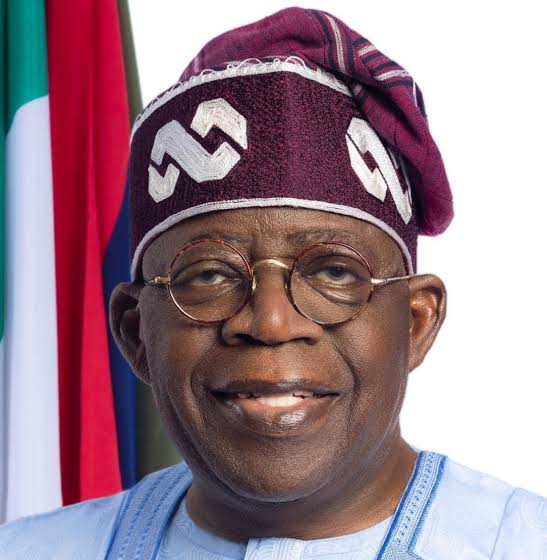
Bola’s Eyeglass and the Vision of a New Nigeria: Why the Next Election Should Be Viewed Through the Lens of Development
By Professor Ojo Emmanuel Ademola,
Introduction
Leadership is ultimately judged not by political slogans but by measurable outcomes. Across the world, nations that achieve sustainable development do so through visionary leadership, strategic reforms and long-term investments in infrastructure, education and economic productivity. In Nigeria, supporters of President Bola Ahmed Tinubu argue that the country is witnessing the emergence of such a transformational vision through what may be metaphorically called Bola’s Eyeglass.
READ ALSO: Jonathan Expresses Hope for End to Plateau Crises, Commends Mutfwang’s Unity Initiative
Bola’s Eyeglass is more than a symbol. It represents a lens through which citizens can assess governance, national priorities and development outcomes. Through this lens, roads are not merely construction projects but economic corridors; railways become engines of commerce; student loans become pathways to social mobility; and economic reforms become foundations for future prosperity. As Nigeria moves towards future electoral contests, many believe that citizens should evaluate leadership through this developmental prism rather than through rhetoric alone.
Bola’s Eyeglass: Looking Beyond Immediate Challenges
History demonstrates that major economic transformations often require difficult decisions. Countries that have successfully rebuilt their economies have frequently endured periods of adjustment before reaping long-term benefits.
Bola’s Eyeglass encourages Nigerians to look beyond short-term discomforts and focus on structural changes capable of producing lasting national development. It invites citizens to examine whether policies are creating the conditions necessary for economic growth, investment attraction, job creation and improved living standards.
Supporters of the administration argue that this approach differs significantly from previous models of governance that often prioritised short-term political expediency over sustainable development. Through the lens of Bola’s Eyeglass, today’s reforms are viewed as investments in tomorrow’s prosperity.
Economic Growth and the Foundations of National Prosperity
Economic growth remains one of the most important indicators of national progress. While Nigeria continues to face challenges associated with inflation, exchange rate adjustments and global economic pressures, available economic data indicates signs of resilience.
According to World Bank data, Nigeria’s economy recorded an estimated growth rate of approximately 4.0 per cent in 2025, reflecting improvement and demonstrating the country’s capacity to maintain growth despite significant domestic and international economic headwinds.
Viewed through Bola’s Eyeglass, these figures represent more than statistical achievements. They suggest that efforts aimed at economic restructuring, revenue enhancement, increased investment and private-sector expansion may be gradually strengthening the foundations of the Nigerian economy.
Supporters contend that economic reforms are intended to create a more competitive environment capable of attracting investment, stimulating industrial development and generating employment opportunities for millions of Nigerians. The goal is not merely economic management but economic transformation capable of positioning Nigeria as one of Africa’s leading growth economies.
Building Durable Roads and Connecting a Nation
No country can achieve meaningful economic development without strong infrastructure. Roads connect farmers to markets, manufacturers to consumers and investors to opportunities. They facilitate trade, reduce transportation costs and promote national integration.
The Tinubu administration has placed infrastructure development at the centre of its Renewed Hope Agenda. Official reports indicate substantial progress on several strategic highway projects designed to transform the country’s transportation network. The first section of the Lagos-Calabar Coastal Highway, covering approximately 47 kilometres, has been completed, while additional sections remain under construction.
Government reports also indicate ongoing work on the Sokoto-Badagry Superhighway and the Akwanga-Bauchi-Gombe-Biu-Maiduguri Superhighway, projects intended to improve connectivity across Nigeria’s geopolitical zones.
Through Bola’s Eyeglass, these projects are viewed as investments in the future. They are expected to facilitate commerce, strengthen regional integration and unlock economic opportunities in communities that have historically suffered from inadequate transport infrastructure.
Supporters argue that durable roads are not merely development projects; they are economic arteries capable of accelerating national growth and improving living standards across the federation.
Rail Development and Economic Modernisation
Modern economies depend upon efficient transportation systems. Across the world, rail transportation remains one of the most cost-effective means of moving people and goods.
Nigeria’s railway sector has witnessed encouraging growth in usage. According to data published by the National Bureau of Statistics, 743,205 passengers travelled by rail during the third quarter of 2024, representing a 25.05 per cent increase compared to the corresponding period in 2023. Rail freight movement also increased significantly during the same period, while passenger revenue rose to approximately ₦1.70 billion.
These figures demonstrate increasing public utilisation of rail services and suggest growing confidence in rail transport as a viable component of Nigeria’s transportation network.
Viewed through Bola’s Eyeglass, railway investments are not simply transportation projects. They are strategic initiatives aimed at reducing logistical costs, improving economic efficiency, supporting industrial growth and enhancing national productivity.
The expansion and modernisation of rail infrastructure are expected to complement road development efforts and create a more integrated national transportation system.
Student Loans and the Democratisation of Higher Education
Education remains one of the strongest pillars of national development. Countries that invest in human capital are generally better positioned to compete in an increasingly knowledge-driven global economy.
Recognising the financial barriers confronting many Nigerian families, the administration introduced the Nigerian Education Loan Fund (NELFUND), designed to provide financial support to eligible students pursuing tertiary education.
The programme has already recorded substantial results. According to official NELFUND figures released during its first anniversary, approximately 298,124 students across 198 tertiary institutions benefited from the scheme, with more than ₦56.85 billion disbursed within the first year of operation. The agency reported that over 600,000 students had registered, while more than 554,000 applications had been successfully processed.
Subsequent reports indicated that total disbursements exceeded ₦116 billion, benefiting more than 624,000 students nationwide.
Through Bola’s Eyeglass, these numbers represent far more than financial transactions. They signify expanded access to education, enhanced opportunities for social mobility and a deliberate investment in the future workforce of Nigeria.
For many students whose academic ambitions were previously constrained by financial difficulties, the scheme has become a practical pathway towards achieving educational and professional aspirations.
Towards a Strike-Free Higher Education System
For decades, repeated industrial disputes within Nigeria’s tertiary education sector disrupted academic calendars, delayed graduation timelines and created uncertainty for students and parents.
One of the aspirations associated with Bola’s Eyeglass is the creation of a more stable higher education environment in which teaching, learning and research can proceed without prolonged interruptions.
Supporters argue that educational reforms, increased engagement with stakeholders and funding interventions such as NELFUND are contributing to a more sustainable higher education ecosystem. A stable academic calendar not only benefits students but also enhances institutional efficiency, promotes research productivity and strengthens international confidence in Nigerian universities.
A nation seeking rapid economic transformation cannot afford a higher education system characterised by recurring disruptions. Consequently, efforts aimed at maintaining stability within universities are increasingly viewed as crucial components of national development.
Renewed Hope and the Rebuilding of National Confidence
Beyond economic statistics and infrastructure projects lies an equally important factor: public confidence.
Nations progress when citizens believe in the possibility of a better future. Hope encourages entrepreneurship, stimulates investment and inspires collective participation in nation-building.
The administration’s Renewed Hope Agenda seeks to cultivate such confidence by pursuing policies designed to improve infrastructure, strengthen economic resilience, expand educational opportunities and promote inclusive development.
Through Bola’s Eyeglass, hope is not a political slogan but a developmental strategy. It is rooted in the belief that sustained investments in people, infrastructure and economic reform can create opportunities for present and future generations.
Supporters contend that the visible progress recorded in roads, railways, educational financing and economic performance demonstrates a commitment to translating optimism into concrete action.
The Coming Election: Viewing Nigeria Through Bola’s Eyeglass
As Nigeria approaches future elections, supporters argue that voters should focus less on political noise and more on measurable outcomes.
Bola’s Eyeglass encourages citizens to ask critical questions. Has infrastructure development expanded? Are educational opportunities increasing? Is the economy growing? Are policies laying foundations for sustainable prosperity?
When viewed through this framework, elections become more than contests for political office. They become opportunities for citizens to evaluate competing visions for national development.
The choice before voters, supporters argue, is not merely between individuals or political parties but between different approaches to economic management, infrastructure development, educational advancement and nation-building.
Conclusion
Bola’s Eyeglass symbolises a vision of governance anchored in long-term development and measurable results. Recent indicators, including approximately 4.0 per cent economic growth, ongoing highway construction, a more than 25 per cent rise in rail patronage and over ₦116 billion in student loan disbursements, point to efforts aimed at repositioning Nigeria for sustainable progress.
While challenges remain, supporters argue that the true measure of leadership lies not in campaign rhetoric but in tangible achievements.
Through Bola’s Eyeglass, Nigerians are encouraged to judge the nation’s future by roads built, railways expanded, students empowered and opportunities created, viewing Nigeria not through its current limitations but through its potential for lasting transformation.
