

Bessie Stringfield: The Motorcycle Queen Who Rode Across Jim Crow America
Bessie Stringfield: The Motorcycle Queen Who Rode Across Jim Crow America

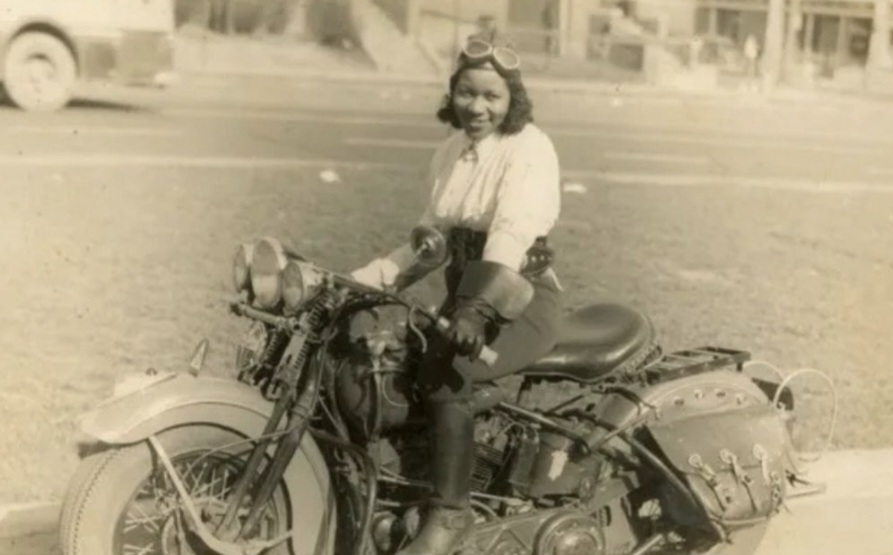
Bessie Stringfield: The Motorcycle Queen Who Rode Across Jim Crow America
Long before women of colour became a familiar presence in motorcycling, Bessie Stringfield was carving out a place for herself on the open road. In an era defined by racial segregation, discrimination and strict expectations about what women could and could not do, Stringfield became one of the most remarkable motorcycle riders in American history.
Born in 1911, Stringfield grew up in the United States and developed a fascination with motorcycles at a remarkably young age. She reportedly received her first motorcycle—a 1928 Indian Scout—at the age of 16. From that point, the motorcycle became more than a means of transportation; it became an instrument of freedom and adventure.
By the 1930s and 1940s, Stringfield was undertaking long-distance motorcycle journeys across the United States, reportedly completing eight solo cross-country trips and travelling through all 48 contiguous states. Her journeys took place during the Jim Crow era, when racial segregation and discrimination were deeply embedded in American society.
She Let a Penny Decide Where She Would Ride
One of the most memorable stories associated with Stringfield’s travels is her unusual method of choosing destinations. Rather than following conventional travel plans, she reportedly dropped a penny onto a map and rode toward wherever it landed.
Her journeys were not undertaken for modern-day sponsorships, social-media attention or record-breaking publicity. She supported herself partly through motorcycle stunt performances and carnival shows while continuing to pursue her passion for riding.
The road, however, was far from easy.
As a Black woman travelling alone across segregated America, Stringfield encountered racism and hostility. Finding accommodation could be difficult, and she sometimes had to sleep in places such as service stations or on her motorcycle rather than risk being turned away or mistreated.
Yet she continued riding.
Breaking Two Barriers at Once
Stringfield was challenging both racial and gender expectations.
At a time when long-distance motorcycle travel was overwhelmingly associated with men, she travelled independently, crossing state lines alone and refusing to allow social conventions to determine how far she could go.
Her story is particularly significant because she was not simply navigating difficult roads; she was navigating a country in which her race and gender could make ordinary travel dangerous.
Her determination earned her the nickname “The Motorcycle Queen of Miami” after she eventually made Miami, Florida, her home.
A Motorcycle Rider During World War II
Stringfield’s adventures continued into the period surrounding World War II. She is widely remembered for serving as a civilian motorcycle dispatch rider for the U.S. military, carrying documents and messages between domestic military bases.
Her motorcycle skills therefore became useful beyond personal adventure, allowing her to contribute to wartime communications.
After the war, her appetite for travel reportedly remained undiminished. Accounts of her life describe further international journeys, including trips to Europe, Brazil and Haiti.
Building a Motorcycle Community in Miami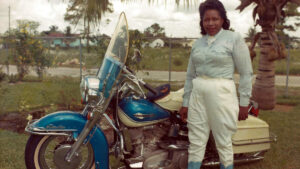
Stringfield did more than ride. She also helped create a community around motorcycling.
In Miami, she founded the Iron Horse Motorcycle Club, becoming an influential figure among local riders and further establishing her reputation as the “Motorcycle Queen of Miami.”
Her life demonstrated that motorcycling could be more than a pastime—it could be a vehicle for independence, community and personal expression.
A Legacy That Outlived the Road
Stringfield’s achievements eventually earned formal recognition from the motorcycle community. Her legacy is preserved by the AMA Motorcycle Hall of Fame, an institution dedicated to recognising people who have shaped American motorcycling.
Her influence has also extended beyond her own lifetime. The AMA Bessie Stringfield Award was created in her honour to recognise individuals who make significant contributions to promoting motorcycling nationally.
That legacy is particularly powerful because Stringfield’s story was never simply about motorcycles.
It was about freedom.
It was about travelling through places where she was not always welcomed and continuing forward anyway. It was about being a Black woman in an era when both race and gender could impose enormous limitations—and refusing to accept those limitations as the boundaries of her life.
A Woman Who Refused to Let History Choose Her Destination

Bessie Stringfield did not have today’s GPS, social media, motorcycle touring companies or sponsorship deals. She had a motorcycle, a map, courage and an extraordinary appetite for the unknown.
Her journeys across America turned roads that were often hostile to Black travellers into a personal map of possibility.
She rode through segregation.
She rode through prejudice.
She rode through expectations about women.
And she kept going.
More than a century after her birth, her story remains a powerful reminder that sometimes making history does not begin with the intention to become famous.
Sometimes, it begins with simply refusing to stop.
Bessie Stringfield did not merely ride motorcycles—she rode beyond the boundaries that society had drawn around her.
Bessie Stringfield: The Motorcycle Queen Who Rode Across Jim Crow America
