

Cold War Memory: How a 10-Year-Old Girl Challenged Nuclear Fear With a Letter
Cold War Memory: How a 10-Year-Old Girl Challenged Nuclear Fear With a Letter

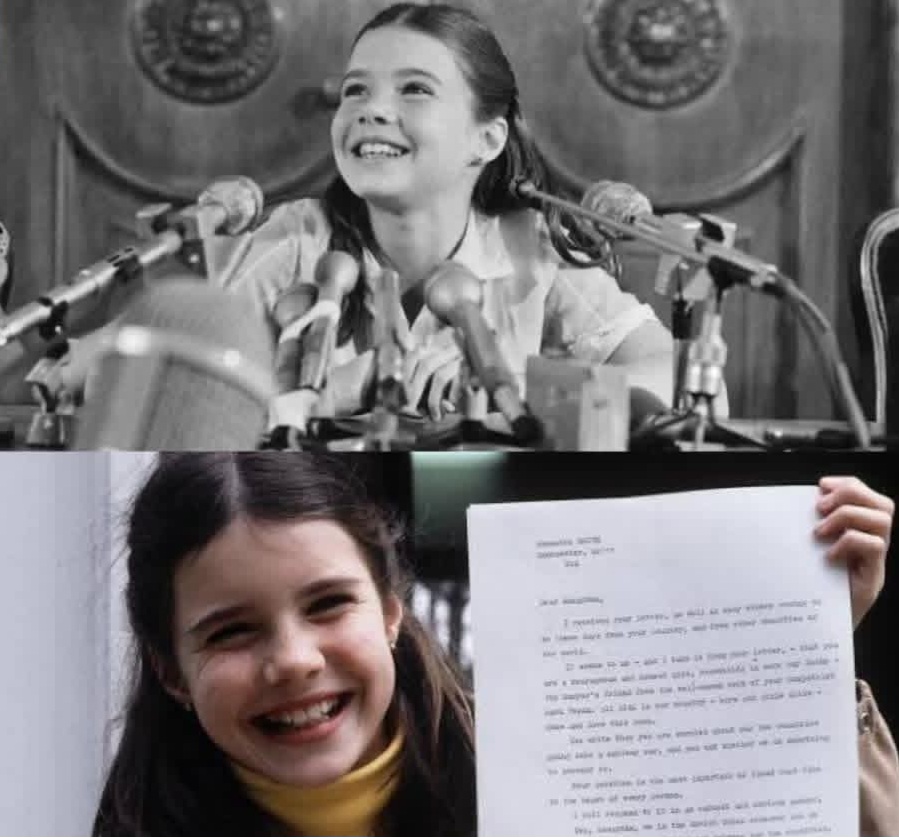
Cold War Memory: How a 10-Year-Old Girl Challenged Nuclear Fear With a Letter
In November 1982, at the height of Cold War tensions between the United States and the Soviet Union, a 10-year-old American girl asked a question that many adults were afraid to voice.
ALSO READ: “Born Without Consent”: Man Sues Parents, Ignites Global Debate on Autonomy, Ethics
Her name was Samantha Smith.
After watching television reports and listening to discussions about the threat of nuclear war, Samantha turned to her mother with a simple but disarming question: “If everyone is so afraid of the Soviet leader, why doesn’t someone just ask him if he wants a war?”
Unsatisfied with silence, she decided to ask herself.
Samantha wrote a letter directly to Yuri Andropov, then the leader of the Soviet Union, asking why the USSR wanted to fight the United States and whether peace between the two countries was possible. At a time when relations between both superpowers were marked by suspicion, military buildup, and the constant fear of nuclear annihilation, few expected any response.
Months later, the unexpected happened.
Andropov replied, assuring her that the Soviet people did not want war and expressing a desire for peace. He went further, inviting Samantha to visit the Soviet Union as his guest.
In 1983, Samantha traveled across the Iron Curtain, visiting Moscow and Leningrad and spending time with Soviet children her own age. Her visit drew global media attention and offered a rare human perspective during one of the most polarized periods in modern history.
When she returned home, Samantha shared a simple message with the world: “The Russians are just like us.”
Tragically, Samantha Smith died in a plane crash in 1985 at the age of 13. She did not live to see the end of the Cold War or the easing of tensions she symbolically challenged.
Yet her story endures as a reminder that, for a brief moment, a child’s courage and curiosity pierced the fear that divided nations—showing that dialogue, even from the smallest voice, can echo across history.
Cold War Memory: How a 10-Year-Old Girl Challenged Nuclear Fear With a Letter
