

Ethical Leadership and Strong Institutions Take Centre Stage at PAOEF Summit Panel Session

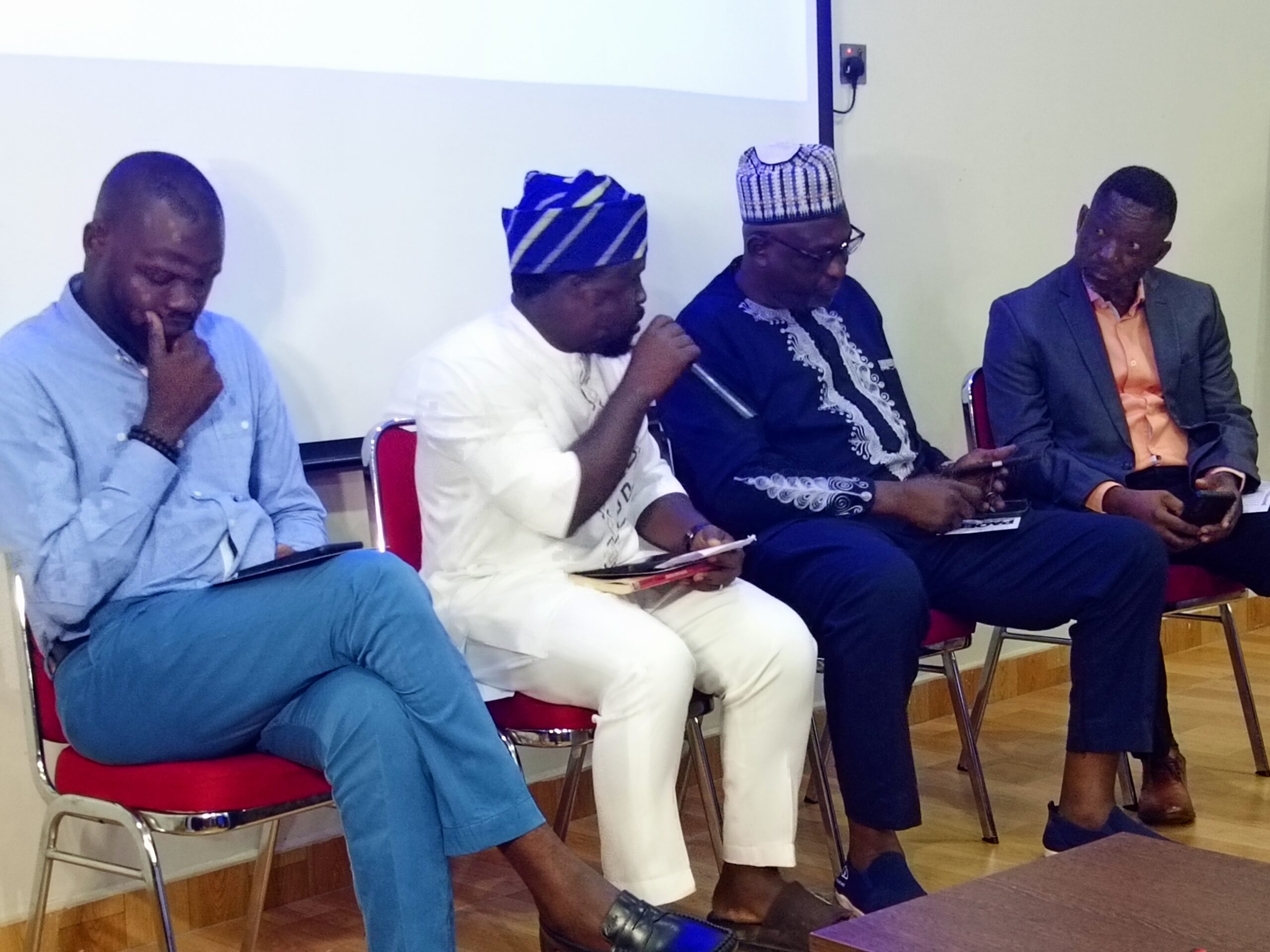
Ethical Leadership and Strong Institutions Take Centre Stage at PAOEF Summit Panel Session
By Esther Bello
Discussions on ethical leadership, institutional reform and the strategic use of technology dominated the panel session of the maiden edition of Professor Ademola Emmanuel Ojo Foundation (PAOEF)’s annual Summit, held on Tuesday, as stakeholders called for a values-driven approach to Nigeria’s digital transformation.
READ ALSO: Françoise Bettencourt Meyers Emerges as World’s Second Richest Woman With $95 Billion Net Worth
The panel, which formed a central part of the summit and the official unveiling of Professor Ademola Emmanuel Ojo’s book, Leading the Digital Future, featured Dr. Chukwuemeka Okereafor, a development expert and President, Leaderahip School Alumni of the African Centre for Leadership, Strategy and Development; Mr. Paul Liam, Media and Communication Officer, Athena Centre for Policy and Leadership,; and Mallam Denja Abdullahi, a former President of the Association of Nigerian Authors (ANA), with the session moderated by Oko Owoicho Africa.
Opening the discussion, Dr. Okereafor stressed that Nigeria’s development challenges go beyond the absence of technology and lie largely in the weakness of institutions and leadership structures.
“Technology in itself is not a magic wand,” he said. “If our institutions are broken, digital tools will only make inefficiency faster and corruption more sophisticated. What we need first are strong systems built on transparency and accountability. Only then can technology truly serve development.”
He added that ethical governance must underpin every digital reform, warning that without moral discipline, innovation could worsen social inequality and institutional decay.
Mr. Paul Liam, in his contribution, focused on leadership failure as a major obstacle to national progress. According to him, societies that have advanced technologically did so because of deliberate leadership choices anchored on integrity, education and institutional strength.
“We keep looking for technological solutions to what are fundamentally leadership problems,” Liam said.
“Where leaders are not accountable and institutions are not respected, no amount of digital transformation will bring lasting change. We must return to values-driven leadership if we want technology to work for us.”
He also emphasized the role of education in preparing young people to thrive in the digital age, noting that without investment in critical thinking, digital skills and civic responsibility, the future workforce would remain unprepared for global competitiveness.
Mallam Denja Abdullahi took the discussion further by examining the erosion of ethical standards in modern society. He linked Nigeria’s current leadership and institutional challenges to the breakdown of traditional value systems that once promoted accountability and moral conduct.
“In our traditional communities, ethics were enforced by collective responsibility,” he explained. “But as we moved into large urban societies, those moral checks weakened. Today, we see the consequences in corruption, institutional failure and loss of public trust.”
Abdullahi warned that technology without ethical guidance could deepen social problems rather than solve them.
“If digital transformation is not guided by strong moral principles, it will only empower those who already abuse power. Ethics must be at the centre of innovation,” he said.
Moderating the session, Oko Owoicho Africa steered the conversation toward the practical effects of institutional failure, including the growing reliance on social media and non-state actors for justice and accountability.
“We are seeing citizens turn to online platforms to seek redress because they no longer trust formal systems,” he observed. “What does this say about the state of our institutions, and how can digital tools help restore confidence rather than replace governance?”
The panelists agreed that rebuilding public trust requires comprehensive reform that combines ethical leadership, functional institutions and strategic digital policies.
Audience members actively engaged the speakers, raising questions about cybersecurity, electoral integrity, education reform and the role of young people in shaping Nigeria’s digital future.
Several participants noted that Professor Ademola’s book, Leading the Digital Future, reflects many of the issues discussed during the panel, particularly the need to balance technological advancement with moral responsibility and institutional strength.
One attendee described the conversation as “a timely wake-up call for policymakers and leaders to stop seeing technology as a shortcut to development and start focusing on ethical governance.”
The panel session underscored the summit’s broader message — that Nigeria’s journey toward digital transformation must be anchored on leadership integrity, strong institutions and inclusive development strategies.
Organisers of the PAOEF Summit noted that the robust exchange of ideas during the panel highlighted the urgency of national dialogue on leadership in the digital age.
“The future we desire will not emerge automatically from technology,” one of the organisers remarked. “It will be built by leaders who understand ethics, value institutions and use innovation responsibly.”
The PAOEF Summit and Book Presentation brought together government officials, academics, technology experts, faith leaders, civil society actors and students from Nasarawa State University, Keffi, and Aflon Digital Academy, Abuja, to examine how Nigeria can navigate the opportunities and risks of the digital era.
As the event concluded, participants expressed optimism that conversations sparked by the panel — and the ideas contained in Leading the Digital Future — would influence policy decisions, institutional reforms and leadership development efforts across the country.