

From Power Minister to Fugitive: Court Hands Saleh Mamman 75-Year Sentence in Landmark ₦33.8bn Corruption Case

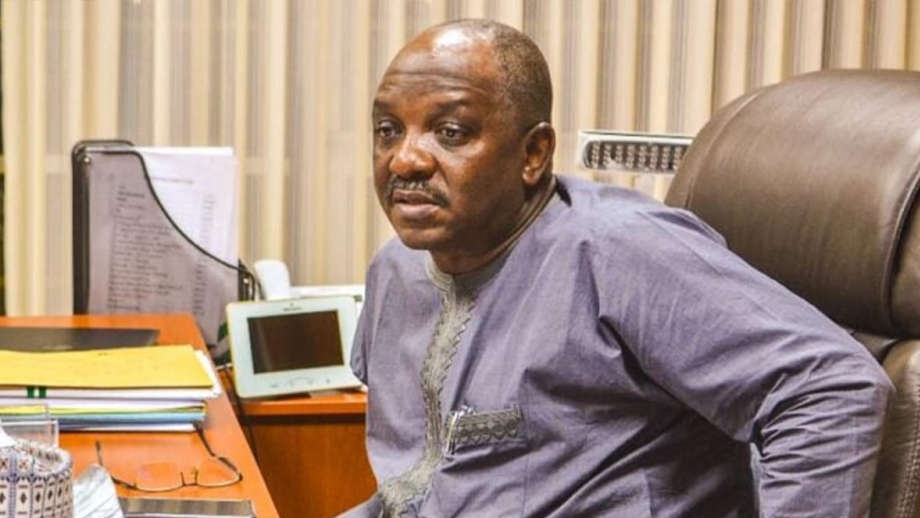
From Power Minister to Fugitive: Court Hands Saleh Mamman 75-Year Sentence in Landmark ₦33.8bn Corruption Case
By Matthew Eloyi
The absence of former Minister of Power, Mr Saleh Mamman, once again cast a long shadow over proceedings at the Federal High Court in Abuja, where Justice James Omotosho sentenced him to 75 years imprisonment in absentia over allegations involving ₦33.8 billion in money laundering offences.
What should have been a routine sentencing hearing instead became the final chapter in a case that has drawn sustained public attention since Mamman’s prosecution by the Economic and Financial Crimes Commission (EFCC) over alleged diversion of funds linked to the Zungeru and Mambilla Hydro Electric Power projects.
Delivering judgment, Justice Omotosho, who had earlier convicted Mamman on all 12 counts filed against him, made clear that the former minister’s repeated absence from court would not derail the administration of justice.
“The judge said that the absence of the ex-minister in court today and on the last adjourned date was a deliberate attempt to stop the wheel of justice.”
The court relied on provisions of the Administration of Criminal Justice Act (ACJA), 2015, which, according to the judge, permitted the continuation of proceedings even in the absence of a defendant. He aligned with the EFCC’s position, represented by Rotimi Oyedepo, SAN, that the law empowered the court to proceed with sentencing.
“The judge, who agreed with the EFCC’s lawyer, Rotimi Oyedepo, SAN, that though the defendant was not in court, the provisions of Administration of Criminal Justice Act (ACJA), 2015, gave the court the power to proceed with the sentencing.”
Justice Omotosho also dismissed any suggestion that Mamman had been denied fair hearing or could claim a miscarriage of justice.
“The judge held that Mamman cannot claim to have suffered a miscarriage of justice.”
READ ALSO: The World’s Hidden Crisis Beneath Our Feet: Why Sand Is Becoming the New Scarce Resource
The sentencing itself reflected the gravity of the convictions. Mamman was handed seven years imprisonment on Counts one, two, three, six, seven, eight, nine, ten, 11 and 12, all without option of fine. On Count 4, he received a three-year jail term with an option of a N10 million fine, while Count 5 attracted two years imprisonment without option of fine.
“The judge consequently sentenced the convict to seven years imprisonment in Counts one, two, three, six, seven, eight, nine, ten, 11 and 12 without option of fine.”
He further ruled that all sentences would run consecutively, meaning they would not overlap, and ordered that the jail term would commence from the date Mamman is arrested.
In a striking directive that extended the reach of the judgment beyond Nigeria’s borders, Justice Omotosho ordered security agencies, including INTERPOL, to ensure Mamman’s arrest wherever he may be found and his transfer to the Nigerian Correctional Service.
“He, therefore, ordered all security agencies in and outside the country, including the INTERPOL, to arrest Mammn anywhere he is sighted and handed over to the Nigerian Correctional Services for his jail term.”
The court also granted a final forfeiture order over two Abuja properties belonging to the former minister, alongside monies recovered in various currencies by anti-graft agencies. The ruling effectively handed those assets permanently to the Federal Government.
In addition, Justice Omotosho ordered Mamman to refund the difference between recovered funds and the ₦22 billion the prosecution successfully established during trial, out of the ₦33.8 billion allegedly siphoned from critical power infrastructure projects.
“The judge further ordered that the differential amount between the monies and assets recovered from Mamman and the sum of N22 billion the prosecution was able to establish during the trial, out of the N33. 8 billion allegedly siphoned from the Zungeru and Mambilla Hydro Electric Power projects, be refunded by the convict.”
The News Agency of Nigeria (NAN) reports that Mamman had earlier been convicted in absentia on May 7, after the court held that the EFCC had proved its case beyond reasonable doubt.
While Mamman himself remained absent throughout the proceedings, the court’s decision closed a high-profile corruption case that once sat at the centre of Nigeria’s power sector accountability debate, raising renewed questions about governance, public trust, and the long-running fight against financial crime in public office.
