

Nigeria, Greatness And The Missing Link
Nigeria, Greatness And The Missing Link

Nigeria, Greatness And The Missing Link
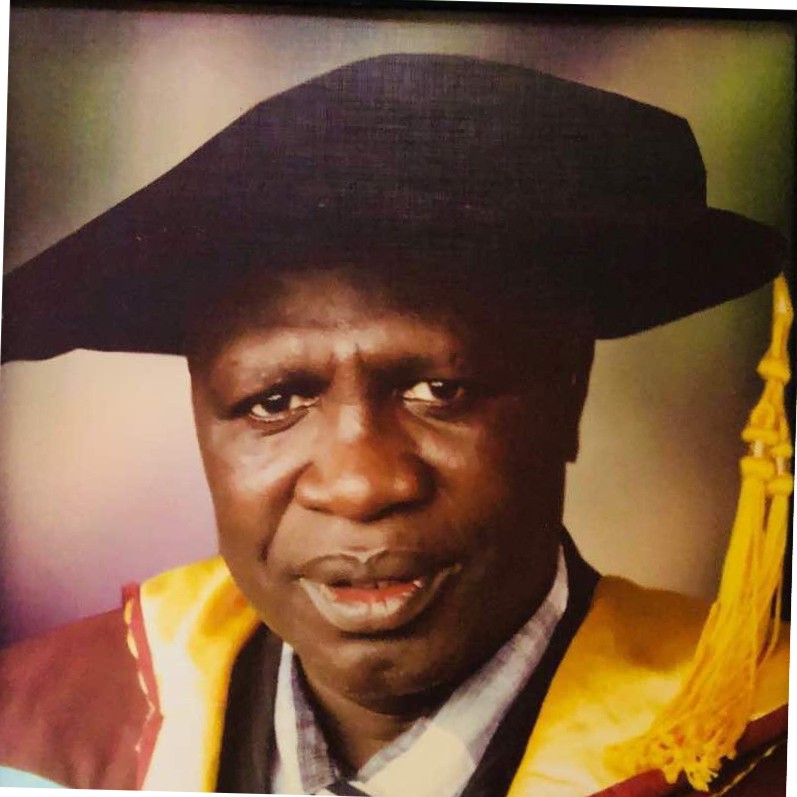
By Prof. M. K. Othman
In February 2026, Nigeria is 66 years and five months old as an independent nation, free from colonialism, and 113 years old as a nation called Nigeria. The 1914 amalgamation of the British colonies and the northern and southern protectorates into a single country, Nigeria, was carried out by fiat, without consultation with the people. During colonization, the land, its resources, and the people were considered the spoils of the colonial masters. Some people felt, and still feel, that the amalgamation was an “accident of history” that shouldn’t have happened; they argue, “how can over 200 nations be fiercely jam-packed as one nation”? Nevertheless, the country has survived decades of political, religious, and tribal turmoil, plundering, and kleptomania, and still wears the toga of a potentially “great nation of the 21st century”. Can Nigeria achieve greatness in this century?
ALSO READ: Women Affairs Minister, Presidential Aide Partner to Boost Women’s Role in Livestock Sector
Nigeria is stupendously blessed with both human and natural resources, making other countries grin with envy. The country is richly endowed with natural resources, including precious metals and various industrial stones. Each of the 36 states and the FCT has several untapped mineral resources. Kaduna State alone has over 10 mineral resources, including Amethyst, Aqua Marine, Asbestos, Clay, Felspar, Gemstone, Gold, Graphite, Kaolin, Hyalite, Mica, Rock Crystal, Ruby, Sapphire, Sillimanite, Superantinite, Tantalite, Topaz & Tourmaline. Other states, such as Nasarawa, Ondo, Plateau, Sokoto, Edo, Imo, Zamfara, and Katsina, have a variety of mineral resources similar to those in Kaduna State. Most of these mineral resources are in appreciable quantities but unexploited, save for illegal mining. For instance, there are about 3 billion tons of iron ore deposits in Kogi, Niger State, and the FCT, and 10 million tons of zinc/lead in Abuja, Kano, and Cross River. There are over 2 million tons of rock salt and over 3 billion tons of coal deposits in Plateau, Enugu, and Anambra states. Large quantities of gold are found in Zamfara, Sokoto, Oyo, Niger, Kwara, and Kebbi states, among others. These mineral resources provide tremendous investment opportunities for economic growth and nation-building. If tapped, the country could be an Eldorado.
Presently, Nigeria is dependent on two major mineral resources: petroleum oil and gas. They account for 90 percent of foreign exchange earnings, with the remaining 10 percent contributed by all other economic sectors. Oil also accounts for about 70 percent of annual income for the three tiers of government: Federal, state, and LGAs.
Nigeria is the largest oil-producing country in Africa. Experts have estimated that Nigeria’s oil and gas reserves are 23 billion barrels of crude oil and 160 trillion cubic meters of gas (www.nigeria.gov.ng). Nigerian oil is of high quality, with low sulfur and high paraffin content, making it attractive in the international market. Despite oil’s massive contribution to foreign exchange earnings, it accounts for only 9% of the Gross Domestic Product (GDP).
Water and land resources are abundant. Nigeria is divided into seven climate zones based on water resources, with average annual rainfall ranging from 700 mm in the Sahel savannah of the north to 4,000 mm in riverine areas of the south. Rainfall provides trillions of liters of water annually, in addition to the trillions of liters from the River Niger. The river passes through the country and drains an average of 5,589 cubic meters of water every second into the Atlantic Ocean. The River Niger, with a length of 4,180 km and a drainage basin area of 2.1 million km2, is the third-largest river in Africa. There are abundant water resources available for development in Nigeria.
Regarding land resources, Nigeria has 91 million hectares of arable land, with only 50% utilization, despite the availability of water resources, soil fertility, favorable topography, and climate.
Despite these vast natural resources, some Nigerians live in multidimensional poverty. Why? With the exception of oil, other natural resources remain potential and have not yet been realized to the extent that they can propel the nation’s economic development. Potential is like fertile land with adequate water for both crop and livestock production, left unattended and vulnerable to infestation by dangerous reptiles. In any community or society, human resources are the drivers that transform potential into tangible reality. How capable are human resources in Nigeria of transforming these potentials?
In 1960, the Nigerian population was estimated at 45 million. Today (16/9/2021), the population is estimated at 212,945,643, making the country the 7th most populous in the world. From 1960 to 2019, the Nigerian population increased by 471%. The rate of population growth in Nigeria is “one birth in every four seconds and one death in every fourteen seconds”. In the next 30 years, Nigeria will have an estimated population of 450 million people and will rank 3rd among the world’s most populous countries, behind India and China. Interestingly, more than 80% of the Nigerian population is under 55 years old. This demographic analysis clearly shows that Nigeria is tremendously endowed with human resources. How qualitative are the human resources?
The major qualitative indicator of human resources in any society is the level of its human capital. Human capital refers to the stock of competencies, skills, knowledge, and personality attributes that individuals embody. These attributes are responsible for creating a high-quality labor force with appreciable economic, social, and personal values. Labor is the most important factor of production. Human capital is therefore a primary factor that converts all resources for the use and benefits of mankind and national development. How is Human capital developed?
To be concluded next week.
Nigeria, Greatness And The Missing Link
