

Science Without Borders in the Global South: Brazil–Nigeria Scientific Cooperation in debate
Interview with scientist Lígia Passos Obi, By Ronaldo Vieira
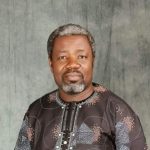

Science Without Borders in the Global South: Brazil–Nigeria Scientific Cooperation in debate
In an era where global scientific collaboration is reshaping innovation, Brazil–Nigeria relations present a compelling case for South–South partnership. This interview, granted by Professor Lígia Passos Maia Obi of the Federal University of ABC (UFABC) to Ronaldo Vieira, explores “Brazil–Nigeria Scientific Cooperation: Potential vs. Reality” within the LXXI CAE Advanced Studies Programme of the Rio Branco Institute, under the thesis on 64 years of bilateral relations between both countries.
Professor Lígia Passos Maia Obi is a faculty member at UFABC, with a degree in Environmental Chemistry and a PhD in Chemistry from the University of São Paulo. Her academic journey includes training at the University of Nottingham (UK) and postdoctoral research at the University of Liège (Belgium), specialising in Green Chemistry and multifunctional materials. Drawing from this rich background, she offers critical insights into how shared challenges, complementary strengths, and institutional support can drive a more inclusive and impactful global scientific future.
RONALDO:
Professor, thank you for agreeing to this interview, which will be very important for discussing science and policy with the academic community. Could you please share information on current activities developed by UFABC in collaboration with Nigeria?
PROF. LIGIA:
Good afternoon! I also thank you for the opportunity to present what we have been doing and to share my experience. To begin, my name is Lígia Passos Maia Obi. I am a faculty member at the Federal University of ABC. I am currently working on developing new materials, engineering and chemistry. I hold a degree in environmental chemistry from the University of São Paulo and a PhD in chemistry, also from the University of São Paulo.
READ ALSO: Nigeria, EU Move to Deepen Strategic Partnership, Economic Cooperation
Regarding my connection with Nigeria, my interactions with the country began initially through a personal contact, since my spouse is Nigerian; therefore, it is a place I visit regularly. At UFABC, there is broad openness to collaborations with different countries, regardless of origin, as long as there is mutual interest and benefits for both sides. The university is very receptive in this regard.
RONALDO:
Given that establishing international contacts requires effort and there are few faculty members available to engage in this type of interaction, the international relations office relies heavily on professors who already have some connection with the country in question, who have contacts there, and who show interest in helping the university build such bridges. From this perspective, when I presented the possibility of collaboration with Nigeria, the response was very positive.
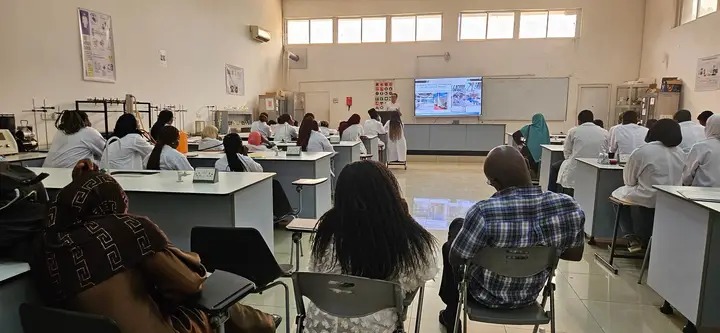
The project currently underway began with academic visits I made to several Nigerian universities —institutions that were feasible to visit during periods when I would already be in Nigeria. This is a project that is only beginning and for which no financial resources are available. I visited several universities in Nigeria. In conversations with key individuals at these institutions, we expressed our interest in establishing interactions and explored possible forms of collaboration and mutual benefits.
From these visits, we developed closer ties with key professionals at different universities. Through these interactions, I disseminated information about UFABC’s ongoing selection processes, which were open to all candidates, including foreigners. In particular, I publicised the selection process for the graduate programme in Nanosciences and Advanced Materials, which allows the entrance exam to be taken in English and in a location outside UFABC, including abroad. Because we already had trusted contacts within the institutions, it became possible to organise the exam in Nigeria. As a result, five candidates were selected and awarded institutional scholarships.
The next step was to continue publicising these opportunities and maintaining contact with Nigerian universities. We then began discussing how to build a more robust relationship that would go beyond simply selecting students who move from one university to another. The goal was to establish effective collaboration, not just receiving Nigerian students but also promoting joint research.
A key moment in this process was an event held at the end of 2024 at the Brazilian Embassy in Nigeria. It was hybrid and included participation from Nigerian and Brazilian universities. In addition, we discussed various possibilities for collaboration that would benefit both sides. At the same time, we drafted cooperation agreements.
We now have one formal cooperation agreement, and we are preparing another focused on student exchange. With these agreements, we expect to be better positioned to obtain funding for international research, especially those related to South–South cooperation networks. We can demonstrate that we already have established ties, and since most project opportunities open and close quickly, it is essential to have something already defined to facilitate conversations and guide progress. We also need to have joint projects ready to take advantage of the opportunities. We are already included in a research funding proposal in which I am listed as a collaborator with a research group from these higher education institutions. I believe there is great potential to deepen and expand these initiatives.

RONALDO:
How do you assess the relevance of studying the past for building the future? How can 21stcentury innovations benefit from past experiences and achievements? And what is the importance of promoting scientific knowledge in partnership with Nigeria?
PROF. LIGIA:
Innovation, when understood deeply and grounded in historical knowledge, is not an act of total rupture but rather a continuous process that draws from the past to envision the future. The idea that the new emerges out of the blue is a contemporary myth: every scientific discovery on technological innovation is built upon layers of accumulated knowledge, ancient traditions, collective observations, and experiences passed down through generations.
In all societies, scientific memory — both formal and informal — acts as a repository of methods, intuitions, and solutions previously tested against challenges similar to those we face today. Many current answers arise precisely from the ability to reinterpret ancestral knowledge, to analyse how our predecessors structured material and symbolic life, and to recognise that human creativity constantly dialogues with what came before. Thus, innovating is not limited to creating something new; it also involves recognising, valuing, and reorganising the knowledge accumulated over centuries, transforming it into a solid foundation for designing sustainable and inclusive solutions for the future.
Regarding the second question — why is it important to foster scientific knowledge in collaboration with Nigeria? — beyond the historical ties shared by both countries, these relationships become admirable when we come together to carry out joint activities. Coming from the natural and physical sciences, I observe that different countries are at different stages of scientific development, with strengths and weaknesses. When we interact with other nations, one country’s weakness can be compensated by another’s strength.
In Nigeria, there is a strong interest from graduate studies, and many researchers have advanced knowledge. Both countries face challenges in obtaining funding, but many funding agencies recognize the importance of international collaboration, and some are beginning to pay attention to South–South cooperation. By collaborating, we have a slightly greater advantage in securing this type of funding. We can bring together more students willing to participate in collaborative projects and create a structure that better supports joint research. Students may conduct procedures abroad and then come to Brazil to perform analyses unavailable in their home institutions.
Another important point is that Nigeria already has highly internationalised collaboration networks. By cooperating with these universities, we become part of that network. In Brazil, collaborations are mainly with Europe and North America, while Nigerians also maintain strong ties with other African countries and China. By connecting with Nigerian universities, we merge these networks, forming complementary research structures.
This is advantageous for both sides. Brazilians often seek collaboration with the United States and Europe, but we are frequently placed in a position where we expect those institutions to help us execute our projects, rather than being true partners in joint initiatives. With African countries, including Nigeria, we can play a more significant role. We can also contribute to smaller initiatives being developed there, multiplying our activities and benefiting both countries.
Nigerians have also shown great proactivity. I am not saying Brazilians are not proactive, but interacting with dynamic groups that have active and wellorganised structures is extremely beneficial.
RONALDO:
Brazilians’ perception of Africa, and specifically Nigeria, is strongly shaped by stereotypes. What are these stereotypes, and how do they promote or hinder the formation of scientific ties with Nigeria?
PROF. LIGIA
Regarding stereotypes, Brazil still doesn’t have a clear vision of what African countries really can offer. Many Brazilians perceive the continent as marked by poverty. Because we do not engage with the science being produced there, we do not consider the advantages or the existence of relevant research being conducted, nor the presence of experienced researchers. Thus, there is a stereotype related to science —the perception that Africa is an “underdeveloped” scientific space. As a result, the idea of scientific interaction with African nations rarely arises.
This perspective is harmful because it prevents a mature approach to cooperation with African countries. What is interesting at UFABC is the openness: if a professor identifies something relevant, we are willing to consider it and explore possibilities. We begin exploring, getting to know what exists, becoming familiar with researchers, understanding their mindset, their knowledge, and their particularities. Once the first barrier is broken and the process of getting to know each other begins, a more realistic perspective emerges.
RONALDO:
What recommendations would you make to improve bilateral exchanges?
PROF. LIGIA:
Regarding bilateral exchanges, it is essential to continue investigating what each side can contribute. This is what I call scientific policy. Exchanges will not necessarily be equivalent; the first step is to understand the gains, needs, and interests of each side to establish exchanges that may not be symmetrical but that optimise benefits for both.
A stronger relationship among the supporting institutions is necessary. The role of the embassies is fundamental because if dialogue is limited to one university and another, results are possible but limited.
It is also important to continuously reflect on the benefits for each side. For example, if a Brazilian university opens a graduate selection process, we must consider what technical, cultural, or other gains a Nigerian university obtains by encouraging one of its members —student, professor, or researcher— to study in Brazil. Technical gains are easier to measure, but there is also the cultural experience, especially given the historical ties between the countries.
Logistics are also important. We need more dialogue about safety conditions in Nigeria—how to identify safe periods and locations, and what information is essential for a Brazilian student going there. Likewise, what does a Nigerian student need to know to stay safe in Brazil, given that there is crime in major cities? We need realistic safety protocols and formal recommendations from both governments.
Cultural enrichment is another key point. It would be extremely beneficial for Brazilians to experience the real Africa, not just through stories, with “boots on the ground”. Such experiences would greatly advance contemporary educational guidelines that seek to integrate Africa into various aspects of teaching, including science. Overall, much more dialogue is needed to understand potentials and challenges.
RONALDO:
What can Brazilians learn from Nigerians?
PROF. LIGIA:
Regarding what Brazilians can learn from Nigerians, apart from the scientific cutting-edge knowledge, I highlight attitude and determination as key behavioural competencies. By “attitude”, I mean recognising and valuing oneself. Nigerians do not exhibit the “inferiority complex” that often characterises Brazilians. Brazilians can learn a great deal from Nigerians about selfconfidence, valuing their own knowledge, and appreciating the education they receive. Our academic training is of high quality; therefore, adopting a posture of selfrecognition and courage is something we can learn from them.
From a technical perspective, Nigerians carry out many activities in which we lack experience. Those with greater practical knowledge tend to teach and share their experiences more effectively.
Regarding mutual benefits, in Brazil there are professors and researchers at different stages of their careers. International cooperation opportunities often become viable only for those with consolidated careers and exceptional CVs. This is not the reality for all Brazilian researchers. Cooperation with developing countries is much more accessible than with developed countries. It also provides exposure and visibility in the international arena even before a formal international project is approved. It is an excellent opportunity for growth.
RONALDO:
Is cutting-edge science being produced in Nigeria or by Nigerians? Can international projects benefit from Nigerian scientific knowledge?
PROF. LIGIA:
Yes, high level scientific research is being produced by Nigerians, and this occurs in two complementary ways. First, many Nigerian researchers work in leading institutions around the world and maintain ongoing collaborations with universities and research centers, even when they remain in Nigeria. Second, although scientific infrastructure in Nigeria is uneven, there are excellent laboratories, equipment, and research groups that, when connected to international networks, produce impactful research. We just need to see it on the ground. There is, in fact, a great lack of information about Nigerian science and scientists.
However, when we talk about “cuttingedge research”, it is important to note that —except for topics very specific to Nigerian reality, it does not make sense to treat scientific knowledge as strictly “national”. As in the rest of the world, science produced in Nigeria today is deeply globalised: it uses international literature, engages with global scientific agendas, and publishes in international journals.
Therefore, the value of international projects lies not only in accessing knowledge already produced by Nigerians but especially in what can be created together. Shared interests, common challenges, and diverse experiences tend to generate more relevant contributions than simply seeking a “stock” of national knowledge. Diversity of perspectives is a fundamental asset for any international scientific collaboration.
RONALDO:
Thank you very much, Professor Lígia. To conclude, would you like to add any comments or suggestions regarding Brazilian foreign policy toward Nigeria in the 21st century?
PROF. LIGIA:
Although the scientific collaboration activities carried out so far are small, they have produced significant results. So far, around ten students are on their way to UFABC, the result of a relatively modest initiative. Additionally, the FaraFaubai action, a broader education agency network, which is already in contact with the Nigerian agency TEtFund, also participated in the event held at the end of last year, showing that even small actions can yield considerable results.
If Brazilian and Nigerian foreign policy recognised this potential, support could increase, generating more initiatives and multiplying the results already emerging. It is essential to first recognise that there are valuable opportunities for both sides and the possibility of genuine interaction. This recognition would motivate the Brazilian government and those working at the consulate and embassy to dedicate more attention to these actions, strengthening support for such initiatives.
Embassies and consulates of both countries play a fundamental role in facilitating projects, connecting researchers, fostering cooperation between universities, organising conferences with education institutions, promoting academic exchanges, and supporting strategic partnerships. This mediation is crucial for building research networks, promoting innovation, and developing solutions to shared challenges, which positively impacts academic training and scientific production.
Furthermore, trust must extend beyond universities to include various institutions that are or could be part of this interaction — ministries of education, funding agencies, and groups focused on the internationalisation of higher education.
I know that there are many problems to solve and limited staff in the embassies, which means less urgent issues are often neglected. But by working together — universities, research institutes, the Ministry of Education, education agencies, the Ministry of Foreign Affairs of both countries, the Brazilian Embassy in Abuja, the Brazilian General Consulate in Lagos and the Nigerian Embassy in Brazil — I am confident that, as developing countries, we can build a productive and mutually beneficial scientific agenda.
Ronaldo Vieira is a policy and international relations analyst with a focus on diplomacy, development, and South–South cooperation. He engages with global academic and policy communities to explore strategic partnerships that advance innovation, governance, and sustainable development.