

Two Nigerias, One Grid: The Sophisticated Suffering of the Many and the Dense Affluence of the Few
Two Nigerias, One Grid: The Sophisticated Suffering of the Many and the Dense Affluence of the Few
By Ameh Abraham
There is a particular kind of silence that descends on certain Lagos neighbourhoods when the national grid collapses. It is not the silence of darkness; it is the silence of seamless transition. In Ikoyi, in Asokoro, in the gated communities where the air is perpetually conditioned, the lights do not so much go out as they switch. The diesel generators those humming symbols of private resilience kick in before the last flicker of public power can die. The security lights stay on. The refrigerators keep humming. The Netflix stream buffers for a moment, then resumes.
In these enclaves, a grid collapse is an inconvenience noted in passing, a topic for WhatsApp banter, not a calamity.
READ ALSO: Asa Day 2026: Dele Odule, Antar Laniyan, Toyin Adegbola, others to storm Osun
But travel a few kilometres away, not even to the fabled hinterlands, but to the sprawling suburbs, the dense inner cities, the unnumbered streets where the majority of Nigerians live, and you will encounter a different silence. It is the silence of a fan that stops whirring in the humid night. It is the silence of a phone battery that cannot be charged. It is the silence of a mother in the dark, counting the days until she can afford to refill her prepaid meter, hoping the food in the freezer does not spoil before the light or her next income returns.
These two Nigerias exist simultaneously, often separated by no more than a highway, a fence, a single junction. Yet the people who inhabit one side have, for the most part, no real conception of the other. Not because they lack intelligence, but because their reality has been so thoroughly engineered to insulate them from it.
The Two-Nation Hypothesis
A recent discussion on Reddit posed a deceptively simple question: Why are Nigerians so classist or elitist? Why are they so detached? The responses that followed were a masterclass in sociological self-diagnosis. One commenter noted, with brutal honesty: “The rich in Nigeria don’t just live in a different neighbourhood. They live in a different country. They have their own water, their own electricity, their own security, their own schools, their own hospitals. They don’t need Nigeria to work. So when Nigeria doesn’t work, they genuinely don’t understand why everyone is complaining.”
This is the essence of the divide. When the Minister of Power, has his own uninterrupted supply, speaks of progress in the sector, he is not being cynical. He is speaking from his reality. In his reality, the lights do stay on. The grid collapses are mere headlines, not lived experiences.
Another voice on Nairaland cut to the heart of the matter with characteristic bluntness: “Nigerians are really suffering, damn. But the people making the decisions don’t know suffering. They have never had to choose between transport fare and bread. They have never had to explain to their children why there is no food because they had to use the last money to buy diesel for the generator they need to work from home. They think suffering is when the air conditioner in their SUV takes too long to cool the car.”
These are not exaggerations. They are testimonies.
The Mathematics of Misery
The New York Times, in a deeply reported piece last year, captured the scale of Nigeria’s economic unraveling. The newspaper spoke to a 58-year-old widow in Lagos who, after a lifetime of running a small shop, now sells firewood by the roadside. “I can’t afford anything anymore,” she told them. “Not three meals. Sometimes not even one.” Her story was not exceptional. It was representative.
The Punch asked the question that hangs over every policy announcement, every budget presentation, every ministerial briefing: Is the worst over in Nigeria? For millions of Nigerians, the answer is an emphatic no. The worst is not over. The worst is a moving target, a horizon that recedes as they stagger towards it. Each reform, each “hard decision” heralded by the elite, pushes that horizon further away.
On X, a user captured the absurdity of the moment with a single post: “The gap between the Nigeria the rich live in and the Nigeria the poor survive in is now a canyon so wide you can’t see the other side. One side is having a conversation about the aesthetics of new luxury apartments. The other side is having a conversation about whether the price of garri has gone up again.” The post was retweeted thousands of times, not because it was original, but because it was painfully, embarrassingly accurate.
The Classist Imagination
But perhaps the most revealing commentary came from a Facebook thread where Nigerians debated the very nature of elite detachment. One commenter, reflecting on the public response to the economic crisis, wrote: “The problem is that our elites genuinely believe their success is purely a product of their hard work and intelligence. They cannot conceive of luck. They cannot conceive of the structural advantages they were born into. So when they see people suffering, they assume those people must have done something to deserve it. It is a moral failure disguised as a meritocracy.”
This observation is sharp and unsettling. It suggests that the divide is not merely economic but epistemological. The rich do not simply have more money; they have a fundamentally different understanding of how the world works. They believe in the mythology of the self-made man so thoroughly that they have erased from their memory the networks, the connections, the inherited capital, the sheer luck that placed them where they are.
Another voice on the same thread added: “You see it in the comments when anyone complains about the economy. There is always someone saying, ‘Stop complaining, go and hustle.’ But they don’t understand that there is nowhere left to hustle. The spaces for informal work have been squeezed dry. The people who used to survive on daily income are now competing for opportunities that no longer exist.”
The Electricity Metaphor
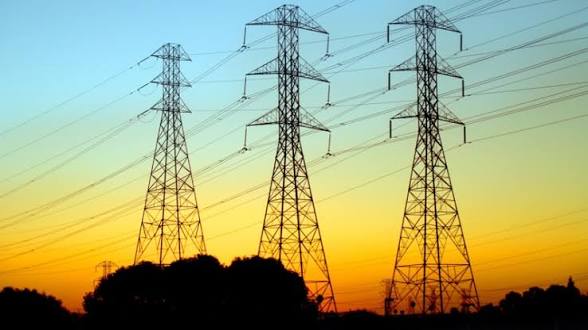
Nowhere is this divide more visible than in the conversation around electricity. For the elite, power supply is a private matter. They have invested in the infrastructure that the state has failed to provide. Their homes are miniature republics, self-sufficient and sovereign. For the poor, electricity is a public good that has been privatised into inaccessibility. The prepaid meter is not a convenience; it is a daily reckoning with scarcity.
A comment on X—since deleted but preserved in screenshots—from a verified account complained about the “incessant complaints” about the power sector. “What exactly do you want?” the post asked. “You want the government to give you free electricity? Nothing in life is free. Go and get a generator like everyone else.”
The post went viral for all the wrong reasons. It was a perfect encapsulation of the classist imagination: the assumption that a generator is a trivial purchase, that everyone has the means to opt out of public infrastructure, that the failure of the state is simply an individual problem to be solved with private resources.
Reno Omokri, in a post on Facebook, addressed this mindset directly: “We keep saying Nigerians are suffering now more than ever. And to an extent, that is true. But the suffering is not evenly distributed. There are Nigerians who have not felt the economic downturn at all. They still fly private. They still host lavish parties. They still buy luxury cars. They genuinely do not understand what the rest of the country is talking about.”
Omokri’s point is not to shame the rich for being rich. It is to highlight the epistemic closure that wealth creates. When your reality is entirely insulated from public failure, you lose the ability to empathise with those who depend on that public infrastructure. You begin to see their complaints as noise, their suffering as exaggerated, their desperation as laziness.
The Morality of Distance
This brings us to the moral question that underlies the entire conversation. Is there a duty for those who have escaped Nigeria’s dysfunction to remain connected to those who have not? Or is the pursuit of insulation, the gated community, the private school, the independent power supply simply rational behaviour in a failed state?
One Reddit user offered a sobering reflection: “I grew up in a middle-class home that became poor. I remember what it was like to watch my mother calculate how much kerosene we had left. Now I am doing well. And I have to constantly remind myself that the fact I am comfortable does not mean the country is comfortable. It means I have escaped. And escape should not be the goal. Escape should not be the only option.”
This is the tension that runs through the Nigerian elite: the knowledge that their success is also a form of abandonment. Every generator purchased, every private school chosen, every gated community entered is a vote of no confidence in the public sphere. And when enough people vote with their feet, the public sphere collapses entirely.
The Unbridgeable Divide
As we watch the parade of politicians, appointees, and wealthy Nigerians go about their lives attending events, making pronouncements, planning their next political moves, we must hold in our minds the image of the other Nigeria. The Nigeria where a grid collapse means not a switch to a generator, but a night in the dark. The Nigeria where a price increase means not a recalibration of the household budget, but a skipped meal. The Nigeria where the conversation is not about whether the worst is over, but about whether the worst has even begun.
These two Nigerias are not separate countries. They are one country, unequally lit, unequally fed, unequally connected to the possibility of a better life. And until those who live in the bright, air-conditioned enclaves can truly imagine the darkness beyond their walls, the divide will only grow wider.
The poet W.B. Yeats once wrote of a society where “the best lack all conviction, while the worst are full of passionate intensity.” In Nigeria today, perhaps the problem is different. Perhaps the problem is that the best have insulated themselves so thoroughly from the consequences of their decisions that they have lost the capacity to see the suffering their policies create. They are not malevolent. They are simply distant. And in a country where distance is measured not in kilometres but in kilowatts, that distance has become unbridgeable.