


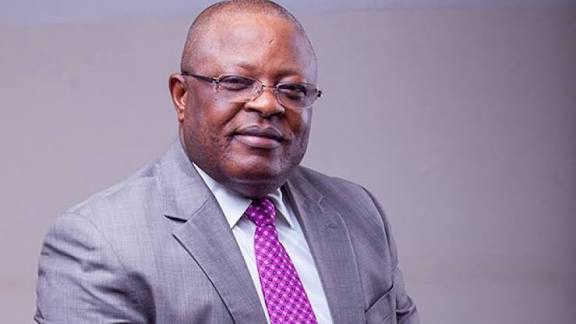
When Power Threatens: David Umahi and A Dangerous Language for Democracy
By Jerry Adesewo
There are moments in a nation’s democratic life when words matter more than actions—because words reveal intent. One such moment played out recently when a public office holder, the Minister of Works and former Governor of Ebonyi State, Dave Umahi, entrusted with the weight of public authority, described himself as “dangerous.”
READ ALSO:Art: Nigeria’s Civic Mirror
It was not said in jest.
It was not misquoted.
It was recorded—and the video has since circulated widely.
That alone should make Nigerians pause.
In a democracy, power is not something to be feared; it is something to be trusted. Authority flows from the people upward, not from intimidation downward—except, it seems, in Nigeria, where the language of power increasingly resembles the language of threat.
So when a minister of the republic chooses the word dangerous to define himself, he does more than posture. He exposes a mindset—one that confuses strength with menace, leadership with coercion, and confidence with intimidation.
The rebuttal from a concerned citizen, Dr. Stella Okogwu, captured in the viral video, is not loud, but it is piercing. It rejects fear not with shouting, but with clarity. It reminds us that calmness is not weakness, and civility is not surrender. Her anger is not personal; it is civic. It is the anger of someone who understands that democracy does not collapse only when tanks roll into the streets—but when language begins to sound like tyranny.
No public servant—no matter how highly placed—has the moral right to describe himself as an object of fear. Ministers are not warlords. They are not emperors. They are delegates of the people. And when anyone who harbours ambition for higher office publicly embraces the language of intimidation, Nigerians are entitled to ask: what kind of leadership is being advertised?
This pattern did not emerge in isolation.
At a recent Senate hearing involving the Minister of Works, even though the question posed by Adams Oshiomhole may have been rooted in misunderstanding, the moment presented an opportunity for statesmanship. The minister could have clarified facts, educated the legislature, and demonstrated administrative depth. Instead, he chose confrontation.
“I challenge you to come for a tour of the project. If it is not up to standard, I will throw in the towel.”
This was not reassurance. It was bravado.
Not leadership—but performance.
Leadership reassures; it does not threaten. Leadership calms nerves; it does not test courage. A man who calls himself dangerous is not projecting capacity—he is signaling contempt for the very citizens he is meant to serve.
More troubling still is the broader implication. Ministers do not exist in isolation. They are extensions of a government. Their words—intended or not—reflect the character of the administration they represent. That is why this moment demands reflection at the highest level.
Mr. President, Bola Ahmed Tinubu, your office is sacred. In a fragile democracy still battling trust deficits, insecurity, and civic fatigue, language matters. When those who serve under your authority speak recklessly, it is not only their image at stake—it is yours, and it is Nigeria’s.
The real danger here is not the man who called himself dangerous.
The danger is what such language normalizes:
– Power as something to fear rather than trust
– Silence instead of dialogue
– Submission instead of accountability.
Democracy is not sustained by the loudest voice or the sharpest threat. It is sustained by restraint, humility, and respect for the citizen. Nigerians are not asking for perfection from their leaders—but they are demanding responsibility.
This is not an attack.
It is a warning—grounded in vigilance, not hostility.
Because in a democracy, asking questions is not rebellion.
It is duty.
And if words truly reveal character, then Nigerians must listen carefully—before language hardens into policy, and intimidation quietly replaces leadership.
When Power Threatens: David Umahi and A Dangerous Language for Democracy