

“Why We Wrote The Shaibu Doctrine” — Dr MS Abubakar on Documenting a General’s War-Fighting Philosophy

“Why We Wrote The Shaibu Doctrine” — Dr MS Abubakar on Documenting a General’s War-Fighting Philosophy
By Matthew Eloyi
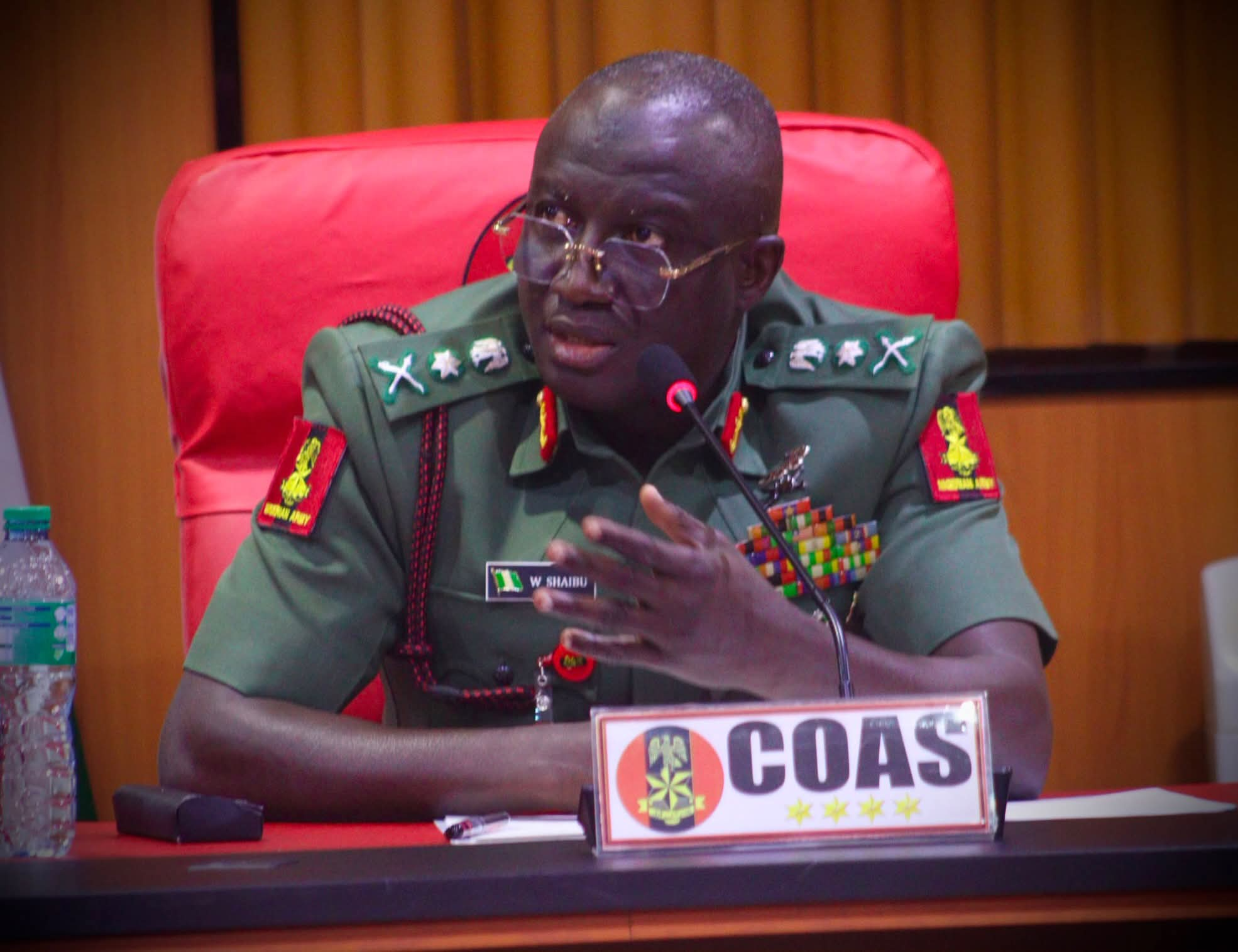
In a new book, “The Shaibu Doctrine: Mission Command and The Remaking of Nigeria’s Army at War,” co-authors Dr MS Abubakar and Associate Professor Sunday Adejoh of the Nigerian Defence Academy set out to systematically document the command philosophy of Lt. Gen. Waidi Shaibu, the Chief of Army Staff, distilling it into five pillars they call PROSE — Professional Excellence, Robust Administration, Operational Readiness, Strategic Cooperation, and Exemplary Leadership.
Drawing on years spent embedded in Nigeria’s counter-insurgency theatre across the North-East and North-West, Dr Abubakar speaks here about what convinced him and his co-author that Lt. Gen. Shaibu’s approach to trust, troop welfare, and decentralised command deserved to be captured for the record, and why, in his words, Nigerians deserve to understand the doctrine shaping the Army’s current operations in plain language.
Excerpts:
1. What motivated you and your co-author to write “The Shaibu Doctrine: Mission Command and The Remaking of Nigeria’s Army at War” and why did you feel this was the right time to document Lt. Gen. Waidi Shaibu’s leadership philosophy?
My interaction with the current Chief of Army Staff did not begin with his appointment. I first engaged with him indirectly when he served as Brigade Commander in Bama through an NGO, KFP. I later worked with him when he was Theatre Commander, Operation HADIN KAI. He is a battle-tested general with a clear grasp of how to manage both men and material, and how to sustain morale under pressure.
When he was appointed COAS, I received the news with a strong sense of optimism because I believed he was the right leader for this moment. My co-author, Associate Professor Sunday Adejoh of the Nigerian Defence Academy, and I decided to systematically study his command philosophy and distill it into a book.
The philosophy is built on five mutually reinforcing pillars captured in the acronym PROSE: Professional Excellence, Robust Administration, Operational Readiness, Strategic Cooperation, and Exemplary Leadership. At the center of this is a “Soldier-First” culture that prioritizes personnel welfare, morale, training, dignity, and empowerment as the foundation of combat effectiveness and institutional credibility.
We felt this was the right time to document it because Nigerians deserve to understand, in plain language, the doctrine guiding the Army’s current operations and why it is producing results.
2. The book places considerable emphasis on Mission Command. In practical terms, what has Lt. Gen. Shaibu done differently from previous army chiefs, and what measurable impact have you seen on troops’ effectiveness and decision-making in the field?
The core of Mission Command is trust. Lt. Gen. Shaibu empowers subordinate commanders within their Areas of Responsibility to take initiative and decide “how” to achieve objectives, while higher command retains clarity on “what” must be achieved. This reduces the OODA loop — Observe, Orient, Decide, Act — and allows for faster, context-specific responses at the tactical level.
As David Kilcullen noted, counterinsurgency is ultimately a platoon commanders’ war. The COAS leaned into that reality by pairing Mission Command with deliberate investments in troop welfare and by providing the gears and platforms needed for sustained offensive operations.
The impact we have observed is threefold: faster decision-making at company and battalion level, greater ownership and accountability among junior commanders, and improved tempo in clearing and holding operations because troops on the ground are trusted to act without waiting for multiple layers of approval.
3. Nigeria’s counter-insurgency campaign has continued for years despite changes in commanders and strategies. What, in your assessment, are the biggest weaknesses in the Army’s current approach that the Shaibu Doctrine is intended to address?
Three gaps stand out.
First, intelligence. We need to invest more in human intelligence and in structured collaboration with credible community actors and private security outfits who have local knowledge in conflict-prone areas.
Second, air support. The Air Force must provide more persistent, round-the-clock close air support to ground troops.
Third, enablers for the future fight. The Army should further strengthen Army Aviation and prioritize the procurement of long-endurance drones over heavy platforms that are less suited to this terrain. There are drones that can remain airborne for 72 hours and deliver precision effects within minutes. Scaling those capabilities would give ground commanders better situational awareness and strike options with less logistical burden.
4. You were embedded in Nigeria’s counter-insurgency theatre for several years. How did your experiences in the North-East and North-West influence your decision to document what you describe as the “Shaibu Doctrine”?
My time in the field taught me two fundamental lessons.
One, counterinsurgency cannot be won by the military alone. It requires a whole-of-government and whole-of-society approach. Civilians have a critical role in providing timely, credible intelligence and moral support to troops.
Two, COIN is exceptionally demanding. The enemy employs asymmetric and guerrilla tactics, and the operating environment is classic VUCA — Volatile, Uncertain, Complex, and Ambiguous. The operational terrain is vast. Nigeria’s borders with Chad, Niger, and Cameroon are extensive and porous, which complicates containment.
These experiences deepened my respect for the men and women in uniform and convinced me that the way the current Army leadership is adapting to these realities — through doctrine, welfare, and decentralization — needed to be captured and studied.
5. What specific aspects of Lt. Gen. Shaibu’s leadership and operational command convinced you that his approach contained lessons worth preserving for future military commanders?
His genuine and consistent concern for personnel. Combat power ultimately rests on motivated, trained, and well-supported soldiers. Under his leadership, welfare is not treated as an afterthought but as a warfighting function. When soldiers feel valued, equipped, and trusted, their initiative, resilience, and effectiveness increase. That link between leadership, morale, and mission success is the central lesson worth preserving.
6. Beyond documenting one military officer’s career, what broader conversation about Nigeria’s military, its leadership and the fight against insecurity did you hope this book would generate?
This is not a biography. It is an analysis of a strategy. We hope the book sparks a broader conversation about institutional adaptation: how the Nigerian Army is reorganizing with the expansion of divisions, growing its numerical strength, enforcing fiscal discipline, and placing personnel at the center of its doctrine. The goal is to move the discussion from personalities to systems — to ask how leadership, structure, and culture can be aligned to deliver sustained results against insurgency, terrorism, and banditry.
7. Ultimately, what do you want policymakers, military officers, cadets and ordinary Nigerians to take away from “The Shaibu Doctrine” after reading it?
That effective leadership in a VUCA environment is possible even with limited resources and platforms. The takeaway is a practical framework for leading and managing a force under pressure: trust your subordinates, invest in your people, align administration with operations, cooperate across services and agencies, and lead by example. If policymakers, officers, cadets, and citizens understand these principles, they will better appreciate what is required to degrade armed groups and secure communities over the long term.
