


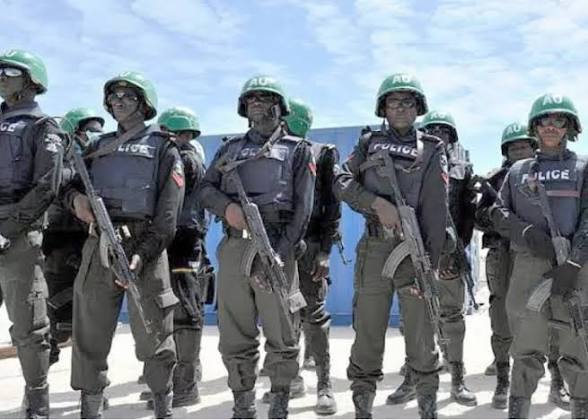
STATE POLICE AND NIGERIA’S SECURITY DILEMMA: SOLUTION OR NEW CHALLENGE?
By Comfort Pius
When armed attackers storm communities in Plateau State, Benue, Zamfara, Kaduna, and other parts of Nigeria, a familiar complaint often emerges from survivors: security forces arrived after the damage had been done. For families who have lost loved ones, homes, farms, and livelihoods to violence, the debate over state police is no longer an abstract constitutional discussion. It is a question of survival.
READ ALSO: Sweden’s Young Environment Minister Makes History by Bringing Baby to EU Meeting
As Nigeria continues to battle kidnapping, banditry, terrorism, communal clashes, and other forms of violent crime, calls for the establishment of state police have gained momentum. Governors, security experts, traditional rulers, and civil society groups have increasingly argued that the country’s centralized policing system may no longer be adequate to address its complex and evolving security challenges.
At the heart of the debate lies a fundamental question: can state police provide the solution Nigeria desperately needs, or will they create a new set of political and constitutional problems?
Nigeria currently operates a centralized policing system under the Nigeria Police Force, with command and control vested in the Federal Government. While this arrangement was designed to promote national unity and ensure uniform standards, critics argue that the system has become overstretched in a country with a vast population, diverse security threats, and expansive geographical terrain.
The growing demand for state police is occurring against the backdrop of persistent insecurity across the country. Kidnapping, banditry, terrorism, communal conflicts, and attacks on rural communities have continued to stretch existing security resources, prompting renewed calls for reforms that would enable states to play a greater role in protecting lives and property. Many citizens increasingly believe that the current security architecture requires significant restructuring to meet contemporary realities.
The challenge is particularly evident in rural communities where attacks often occur in remote locations. Residents frequently complain that security agencies struggle to respond promptly because personnel deployment, operational decisions, and logistics are controlled through a centralized structure that may not always reflect local realities.
Supporters of state police believe decentralization could help bridge this gap. They argue that officers recruited from local communities would possess better knowledge of the terrain, language, culture, and social networks. Such familiarity, they contend, could improve intelligence gathering, strengthen community trust, and enable faster responses to security threats.
The argument is not entirely new. During Nigeria’s First Republic, regional governments operated their own police forces. However, concerns over political abuse and allegations that regional authorities sometimes used police institutions to intimidate opponents contributed to the eventual abolition of regional policing following military intervention in governance.
This historical experience remains one of the strongest arguments against the creation of state police today.
Opponents fear that granting governors control over police forces could undermine democratic freedoms and encourage political intimidation. In a country where electoral competition is often intense, critics worry that state police could become instruments for suppressing dissent, harassing opponents, or influencing political outcomes.
These concerns cannot be dismissed lightly. Nigeria’s democratic institutions continue to evolve, and questions about accountability remain central to discussions about governance and security sector reforms.
Yet supporters insist that the country cannot allow fears of potential abuse to prevent necessary reforms. They point out that insecurity has become one of the greatest threats to national development. From attacks on farming communities to widespread kidnapping along major highways, criminal activities have disrupted economic activities, displaced thousands of citizens, and weakened public confidence in state institutions.
In Plateau State, recurring attacks on rural communities have intensified discussions about alternative security arrangements. Community leaders often argue that locally controlled policing structures would be better positioned to gather intelligence, understand community dynamics, and respond rapidly to emerging threats.
The debate also reflects broader concerns about the capacity of existing security institutions. The Nigeria Police Force has for years faced challenges relating to manpower shortages, inadequate funding, insufficient equipment, and logistical constraints. Security analysts argue that expecting a single centralized force to effectively police a large and diverse nation may no longer be realistic.
Security experts have also noted that while state police could improve local intelligence gathering and response times, success would depend largely on the establishment of strong oversight mechanisms capable of preventing political interference and ensuring professionalism. According to many analysts, the effectiveness of any policing structure is determined not merely by its design but by the quality of leadership, accountability systems, training standards, and adherence to the rule of law.
Many state governments have already established various security outfits and vigilante structures to complement federal security agencies. The emergence of these arrangements demonstrates growing recognition that local authorities have an important role to play in maintaining security and public order.
However, establishing state police would require far more than simply creating another security agency. Significant constitutional amendments, legal reforms, and institutional safeguards would be necessary to ensure professionalism, accountability, and respect for human rights.
Funding presents another major challenge. Effective policing requires substantial investment in recruitment, training, equipment, technology, welfare, intelligence gathering, and operational logistics. While economically stronger states may have the resources to sustain such commitments, less affluent states could struggle to maintain professional and effective police services.
This raises concerns about potential disparities in security provision across the federation. Citizens in wealthier states could enjoy better policing than those in poorer regions, potentially creating new inequalities within the country’s security architecture.
Another concern relates to coordination. Modern security threats rarely respect state boundaries. Kidnappers, bandits, and criminal networks often operate across multiple jurisdictions. Without clear mechanisms for intelligence sharing and operational cooperation, experts warn that a decentralized policing structure could complicate efforts to combat organized crime.
Nevertheless, advocates of state police point to successful examples from federal systems such as the United States, Canada, and India, where policing responsibilities are shared between different levels of government. These examples demonstrate that decentralized policing can function effectively when supported by strong institutions, legal safeguards, and independent oversight.
However, analysts caution that Nigeria cannot simply replicate foreign models without adaptation. The country’s unique political, social, economic, and historical realities require solutions tailored to local circumstances. The success of state police would ultimately depend on the strength of democratic institutions and the integrity of those entrusted with authority.
For many Nigerians, the debate is less about constitutional theory and more about practical outcomes. Communities affected by insecurity are primarily concerned with whether lives can be protected, whether criminals can be apprehended, and whether citizens can go about their daily activities without fear.
These concerns highlight the need for a balanced approach. If state police are eventually established, safeguards must be built into the system. Independent police service commissions, legislative oversight, judicial review mechanisms, transparent recruitment processes, community participation, and strict human rights standards would be essential to preventing abuse.
Equally important is the question many observers continue to ask: who will police the police? Any reform that expands policing powers must also strengthen accountability mechanisms capable of protecting citizens’ rights and preserving democratic values.
Ultimately, the state police debate is not merely about security. It is also about federalism, governance, accountability, and the distribution of power within Nigeria’s democracy. It forces the nation to confront difficult questions about how best to protect citizens while preserving constitutional safeguards.
As policymakers continue to weigh the advantages and risks, one reality remains clear: Nigeria’s security challenges demand bold, innovative, and sustainable solutions. Whether state police emerge as part of that solution will depend on the nation’s ability to design a system that balances local responsiveness with national cohesion, operational efficiency with accountability, and security with democratic principles.
The real challenge before Nigeria is not simply whether to create state police. It is whether the country can build institutions strong enough to deliver security without sacrificing justice, accountability, and the freedoms that define a democratic society. Until that challenge is successfully addressed, the debate over state police will remain one of the most consequential conversations in Nigeria’s quest for lasting peace, stability, and national development.
