

2027 Presidency: Assessing the Records of the Obi–Kwankwaso And Atiku–Amaechi Tickets
2027 Presidency: Assessing the Records of the Obi–Kwankwaso And Atiku–Amaechi Tickets

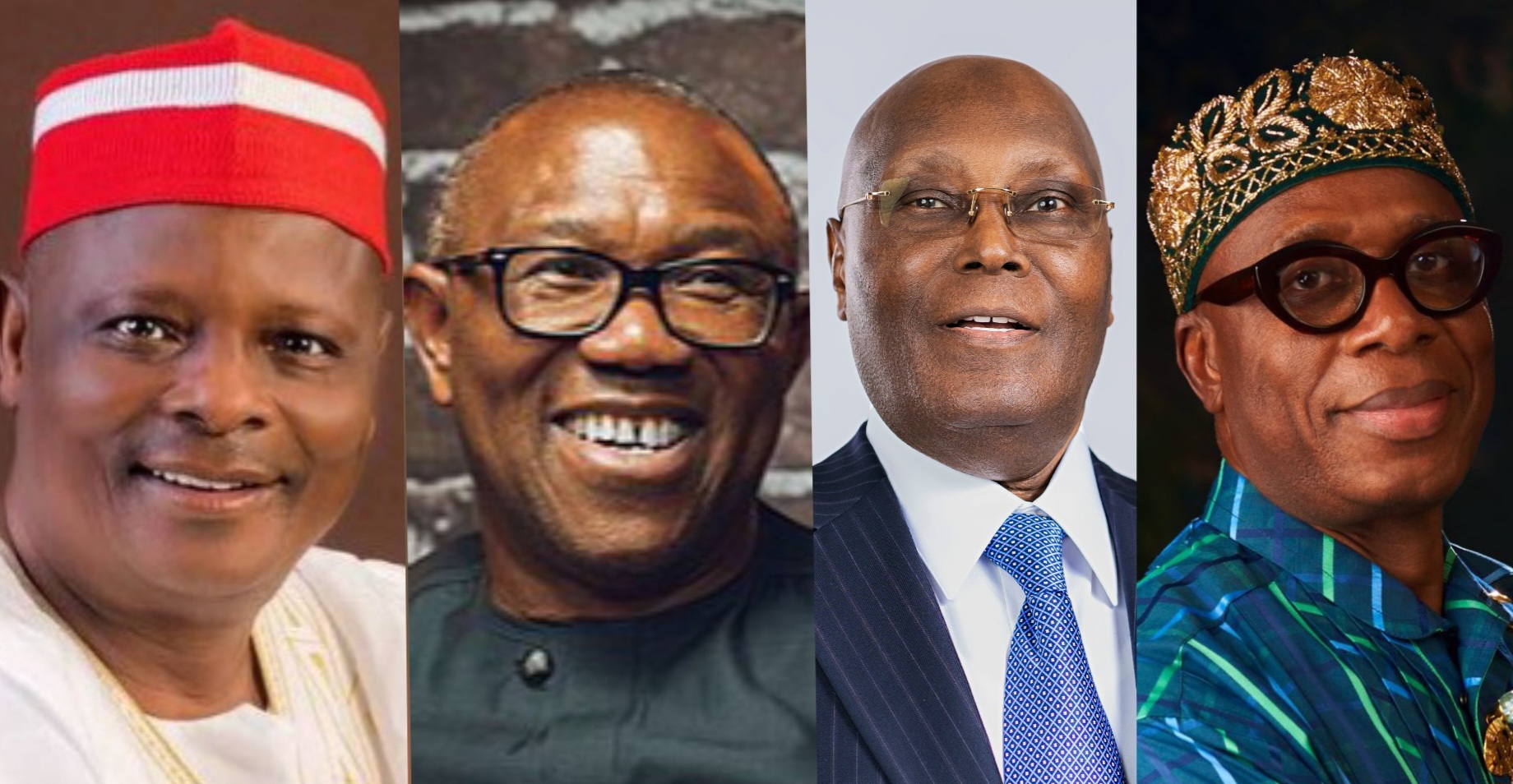
2027 Presidency: Assessing the Records of the Obi–Kwankwaso And Atiku–Amaechi Tickets
As political activities gather momentum ahead of Nigeria’s 2027 presidential election, attention is increasingly shifting from campaign promises to the records of those seeking to lead the country. With the emergence of the Peter Obi–Rabiu Musa Kwankwaso ticket and the Atiku Abubakar–Rotimi Amaechi ticket, many Nigerians are taking a closer look at the governance experience, achievements and public service records of the four political leaders.
Rather than focusing solely on campaign rhetoric, political observers say the years these leaders spent in public office provide voters with measurable records on which to base their decisions.
Peter Obi
Governor of Anambra State (2006–2014)
Peter Obi served two terms as Governor of Anambra State after assuming office in March 2006.
His administration is widely associated with fiscal discipline and prudent management of public resources. Supporters point to his decision to leave office with savings and investments reportedly running into billions of naira while reducing the state’s debt profile.
His government invested in education by returning schools to missionary organisations while providing financial support for infrastructure and learning materials. Healthcare facilities also received increased funding, while several road projects were executed across the state.
Obi also focused on improving internally generated revenue, attracting investments and strengthening the state’s financial stability.
Supporters describe his tenure as one marked by accountability and prudent resource management, while critics argue that infrastructure expansion could have been more extensive.
Rabiu Musa Kwankwaso
Governor of Kano State (1999–2003; 2011–2015)
Rabiu Musa Kwankwaso served two terms as Governor of Kano State.
His administration is remembered for large-scale investments in education, including one of Nigeria’s biggest foreign scholarship programmes, which sponsored thousands of students to universities across the world.
His government also embarked on major road construction, urban renewal projects, healthcare expansion, rural development and youth empowerment programmes.
Kwankwaso’s leadership also gave rise to the Kwankwasiyya Movement, which has grown into one of northern Nigeria’s most influential political movements.
Supporters credit him with transforming infrastructure and human capital development, while critics have questioned some of his political decisions and priorities.
Atiku Abubakar
Vice President of Nigeria (1999–2007)
Atiku Abubakar served as Nigeria’s Vice President under President Olusegun Obasanjo from 1999 to 2007.
As Chairman of the National Economic Council, he played a prominent role in several economic reforms introduced during the administration.
The period witnessed the liberalisation of Nigeria’s telecommunications sector, banking reforms, pension reforms and the privatisation of several government-owned enterprises. The administration also pursued policies aimed at attracting private investment and expanding economic growth.
Supporters view the period as one of significant economic reforms that opened several sectors to private participation, while critics continue to debate aspects of the privatisation process and political disagreements that emerged within the administration.
Rotimi Amaechi
Governor of Rivers State (2007–2015)
Rotimi Amaechi governed Rivers State for eight years before serving as Nigeria’s Minister of Transportation from 2015 to 2022.
As governor, his administration invested heavily in road construction, education, healthcare and urban renewal. Modern school buildings, road networks and healthcare facilities formed part of his government’s development agenda.
As Minister of Transportation, Amaechi supervised the expansion of Nigeria’s railway infrastructure, including the completion and commissioning of several standard gauge rail lines, alongside inland dry port projects and railway modernisation initiatives.
Supporters regard him as an infrastructure-focused administrator, while critics argue that some projects faced implementation and funding challenges.
Comparing Their Leadership Records
Although all four politicians have held significant public offices, each built a reputation in different areas of governance.
Peter Obi is often associated with prudent financial management and fiscal discipline.
Rabiu Kwankwaso is recognised for investments in education, infrastructure and human capital development.
Atiku Abubakar is closely linked with economic reforms, private-sector participation and public sector restructuring during his years as Vice President.
Rotimi Amaechi is widely known for transport infrastructure, road development and railway modernisation.
The Choice Before Nigerians
As the 2027 presidential election approaches, analysts believe Nigerians are likely to assess not only campaign promises but also the practical records of those seeking public office.
While supporters of each ticket highlight different achievements, voters will ultimately decide which leadership experience, policy direction and vision best address Nigeria’s current economic, security and developmental challenges.
With both presidential tickets bringing together experienced political figures, the contest is expected to be shaped as much by past performance as by future promises.
2027 Presidency: Assessing the Records of the Obi–Kwankwaso And Atiku–Amaechi Tickets
