

Frank Boyer: The Educator Who Founded One of America’s First Black Communities in the Desert
Frank Boyer: The Educator Who Founded One of America's First Black Communities in the Desert

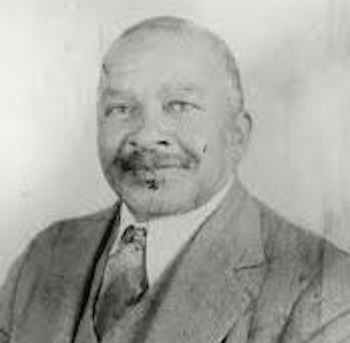
Frank Boyer: The Educator Who Founded One of America’s First Black Communities in the Desert
Long before the American Civil Rights Movement, Frank Boyer dared to imagine a future where African Americans could own land, build businesses and live free from racial oppression. His vision gave birth to Blackdom, one of the earliest all-Black settlements in what is now the U.S. state of New Mexico.
Born in the late 19th century to the family of a Buffalo Soldier—African American troops who served in the U.S. Army after the Civil War—Boyer grew up hearing stories about opportunities in the American West, where land was available to settlers through the Homestead Act of 1862.
Educated at the historic Morehouse College in Atlanta, Georgia, Boyer worked as a schoolteacher. However, like many educated Black Americans of his era, he faced widespread racial discrimination and segregation under the Jim Crow system in the southern United States.
Determined to create a better future, Boyer embarked on an extraordinary journey around 1898–1899, reportedly travelling nearly 2,000 miles across the American South and Southwest to the New Mexico Territory.
Inspired by his father’s accounts of available land, Boyer filed a homestead claim and began acquiring acreage in the Chihuahuan Desert.
Rather than keeping the opportunity to himself, he launched a campaign encouraging African Americans to migrate west in search of economic independence and freedom. Through advertisements placed in Black-owned newspapers across the United States, Boyer invited families to settle in the new community.
His message was simple: come west, own land and build a future.
The campaign proved successful.
By 1908, Blackdom had grown into a thriving settlement with nearly 300 residents and about 15,000 acres of farmland.
The community featured a school, church, hotel, general store, blacksmith shop, post office and even its own newspaper. It also became known for hosting Juneteenth celebrations, reflecting the community’s commitment to African American history and culture.
Among its notable residents was William T. Malone, one of New Mexico’s earliest Black lawyers and the first African American admitted to the New Mexico Bar.
Blackdom represented much more than a farming community—it became a powerful symbol of Black self-determination, entrepreneurship and resilience during an era of severe racial discrimination.
However, nature presented challenges that determination alone could not overcome.
Beginning in the early 1910s, prolonged drought devastated crops, depleted water supplies and made farming increasingly difficult. By 1916, agricultural production had collapsed, and many families were forced to leave in search of better opportunities.
Financial hardship eventually led to foreclosure on Frank Boyer’s property by 1921, marking the decline of Blackdom.
Yet Boyer refused to abandon his dream.
He relocated to Vado, New Mexico, where he again worked to establish another Black farming community, continuing his lifelong mission of creating opportunities for African Americans through land ownership and education.
Although Blackdom eventually disappeared, its legacy remains an important chapter in American history.
Today, little remains of the once-thriving settlement except a historical marker and archaeological traces scattered across the New Mexico desert. Nevertheless, historians continue to recognise Blackdom as one of the most remarkable examples of African American self-reliance and community-building in the American West.
Frank Boyer’s story stands as a testament to vision, courage and perseverance, reminding future generations that even under the harshest conditions, determined individuals can build communities that leave a lasting mark on history.
Frank Boyer: The Educator Who Founded One of America’s First Black Communities in the Desert
