


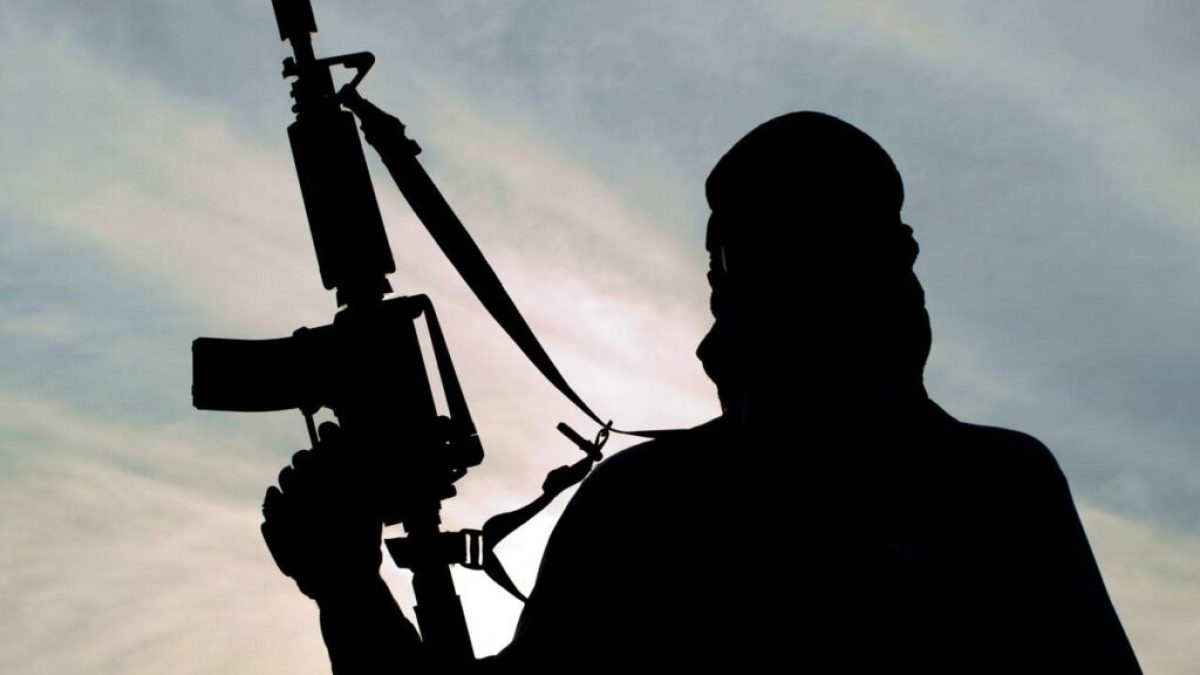
Beyond Guns and Bullets: Why Nigeria Cannot Shoot Its Way Out of Insecurity
By Matthew Eloyi
Nigeria’s insecurity challenge has become one of the most painful paradoxes of the modern state: the more force is deployed, the less secure many citizens feel.
From military operations and anti-bandit campaigns to repeated crackdowns on criminal networks across urban and rural areas, the dominant response has remained the same for years: more guns, more troops, more bullets. Yet the crisis persists.
This raises a difficult but unavoidable question: if firepower alone were enough, why does insecurity keep evolving rather than disappearing?
The answer lies in a truth Nigeria has not fully confronted. Insecurity in the country is not only a military problem. It is a structural, social, economic, and governance crisis wearing a security mask.
The Misunderstanding at the Heart of the Crisis
There is a persistent assumption in policy circles that insecurity is primarily a battlefield problem, that if the state can simply overpower armed groups, peace will follow. This assumption is comforting but incomplete.
Military force is necessary in any state facing armed non-state actors. No serious nation negotiates away its monopoly on legitimate force. But force alone is not a strategy; it is only one instrument within a much wider system of stability-building.
Nigeria’s experience shows the limits of relying heavily on kinetic solutions. Armed groups may be dislodged from one location, only for similar groups to emerge elsewhere. Leaders may be captured or eliminated, yet recruitment continues. Territories may be reclaimed, yet insecurity adapts rather than disappears.
The reason is simple: bullets can disrupt operations, but they cannot erase the conditions that produce violence.
Insecurity as a Product of Conditions, Not Just Criminals
A major flaw in how insecurity is often discussed is the tendency to focus only on the actors—the bandits, kidnappers, insurgents, and gangs—without adequately examining the environment that sustains them.
Across Nigeria, multiple structural drivers feed into the crisis:
- Widespread poverty and economic exclusion
- Youth unemployment and lack of opportunity
- Weak presence of the state in many communities
- Corruption and declining public trust in institutions
- Poor infrastructure and limited access to education and healthcare
- Long-standing communal and resource conflicts
In such an environment, violence becomes not just a crime issue but an ecosystem.
Criminal groups recruit from communities where survival is uncertain. Armed networks thrive where governance is absent. Illegal economies grow where legitimate livelihoods are weak.
In these conditions, eliminating individual criminals does not eliminate the system that produces them.
The Limits of Force in a Social Crisis
One of the greatest misconceptions in security policy is that every problem can be solved through escalation of force. But insecurity in Nigeria is not uniform. It is layered and complex.
Banditry in forest regions, urban kidnapping syndicates, communal clashes, insurgency, and cult violence are not identical phenomena. They are driven by different motivations, operate under different structures, and require different responses.
When force becomes the default response to all forms of insecurity, it risks becoming blunt rather than effective. Military operations may succeed in degrading armed groups, but they cannot by themselves:
- Fix broken local governance systems
- Restore trust between citizens and the state
- Provide livelihoods for unemployed youth
- Resolve land disputes and communal grievances
- Strengthen justice and accountability systems
Without addressing these foundations, force becomes cyclical rather than transformative.
The Intelligence Gap
Modern insecurity is increasingly intelligence-driven. Armed groups do not survive solely because they are strong; they survive because they are informed.
They know local terrain, community dynamics, weaknesses in enforcement, and sometimes even movements of security forces.
This makes intelligence, not firepower, the decisive factor in sustainable security outcomes. Yet intelligence depends on trust.
Citizens must be willing to share information. Communities must feel protected enough to cooperate. Institutions must be seen as fair, not predatory or distant.
Where trust is weak, intelligence is weak. And where intelligence is weak, force becomes reactive rather than preventive.
This creates a cycle: insecurity grows, force increases, trust declines, intelligence weakens, and insecurity adapts.
The Governance Vacuum Factor
Perhaps the most overlooked dimension of Nigeria’s insecurity is governance absence.
In many affected regions, the state is not a daily reality. Schools are under-resourced or inaccessible. Healthcare is limited. Roads are poor. Local institutions are weak or non-functional. In such spaces, authority does not disappear; it shifts.
Non-state actors, including armed groups and criminal networks, often fill the vacuum. They impose rules, collect “taxes,” resolve disputes, and exert influence. This is not because they are legitimate, but because they are present.
Security forces may temporarily disrupt them, but without restoring governance presence, the vacuum remains, and something else will eventually fill it again.
Why Community Engagement Matters
One of the most consistent lessons from conflict environments globally is that sustainable security requires community ownership.
Communities are not passive spaces where insecurity happens; they are active environments where information, early warnings, and social control mechanisms exist.
When communities are disconnected from security structures, warning signs are missed. Suspicious movements go unreported. Local tensions escalate unchecked.
But when trust exists, communities become part of the solution rather than silent witnesses to the problem.
This is why approaches such as community policing, local dialogue mechanisms, and civilian-security collaboration are not optional reforms—they are strategic necessities.
The Human Cost of a Force-Only Approach
Beyond policy debates, there is a human reality that often gets lost.
Every cycle of violence produces displacement, trauma, economic disruption, and fear. Families are broken. Education is interrupted. Local economies collapse. Social trust erodes.
When insecurity becomes prolonged, it begins to reshape society itself—normalising fear and weakening collective confidence in the future.
At that point, even successful military operations do not immediately restore normal life, because the social fabric has already been damaged.
Security, therefore, is not only about stopping violence. It is about rebuilding life after violence.
Toward a More Complete Security Strategy
If guns and bullets are not enough, what then is the alternative?
The answer is not abandoning force, but rebalancing it within a broader strategy.
A sustainable approach to insecurity must include:
- Strong but intelligence-led security operations
- Serious investment in education and job creation
- Effective and accountable local governance
- Justice systems that are accessible and trusted
- Community-based security partnerships
- Conflict resolution mechanisms for land and communal disputes
- Anti-corruption measures that restore institutional credibility
Security must be treated as an outcome of development and governance, not just a product of military action.
Force Without Foundations Will Always Fail
Nigeria does not lack courage in confronting insecurity. Security personnel risk their lives daily, often under extremely difficult conditions. What is missing is not effort, but alignment.
A strategy that relies too heavily on force without strengthening the underlying foundations of society is always fighting symptoms, not causes.
Guns and bullets can win battles. They can disrupt criminal networks. They can reclaim territory.
But they cannot build trust. They cannot create opportunity. They cannot govern communities. They cannot replace legitimacy.
Until Nigeria fully embraces this reality, insecurity will continue to mutate: changing form, shifting location, and re-emerging after every wave of military action.
The hard truth is this: lasting security is not shot into existence. It is built patiently, deliberately, and collectively.
