

Inside Nigeria’s Counter-Terrorism Hub: Why the NCTC Must Move Beyond Abuja’s Walls

Inside Nigeria’s Counter-Terrorism Hub: Why the NCTC Must Move Beyond Abuja’s Walls
By Matthew Eloyi
For a country locked in a prolonged and evolving battle against terrorism and violent extremism, Nigeria’s National Counter Terrorism Centre (NCTC) remains one of the most strategically significant institutions within the national security framework.
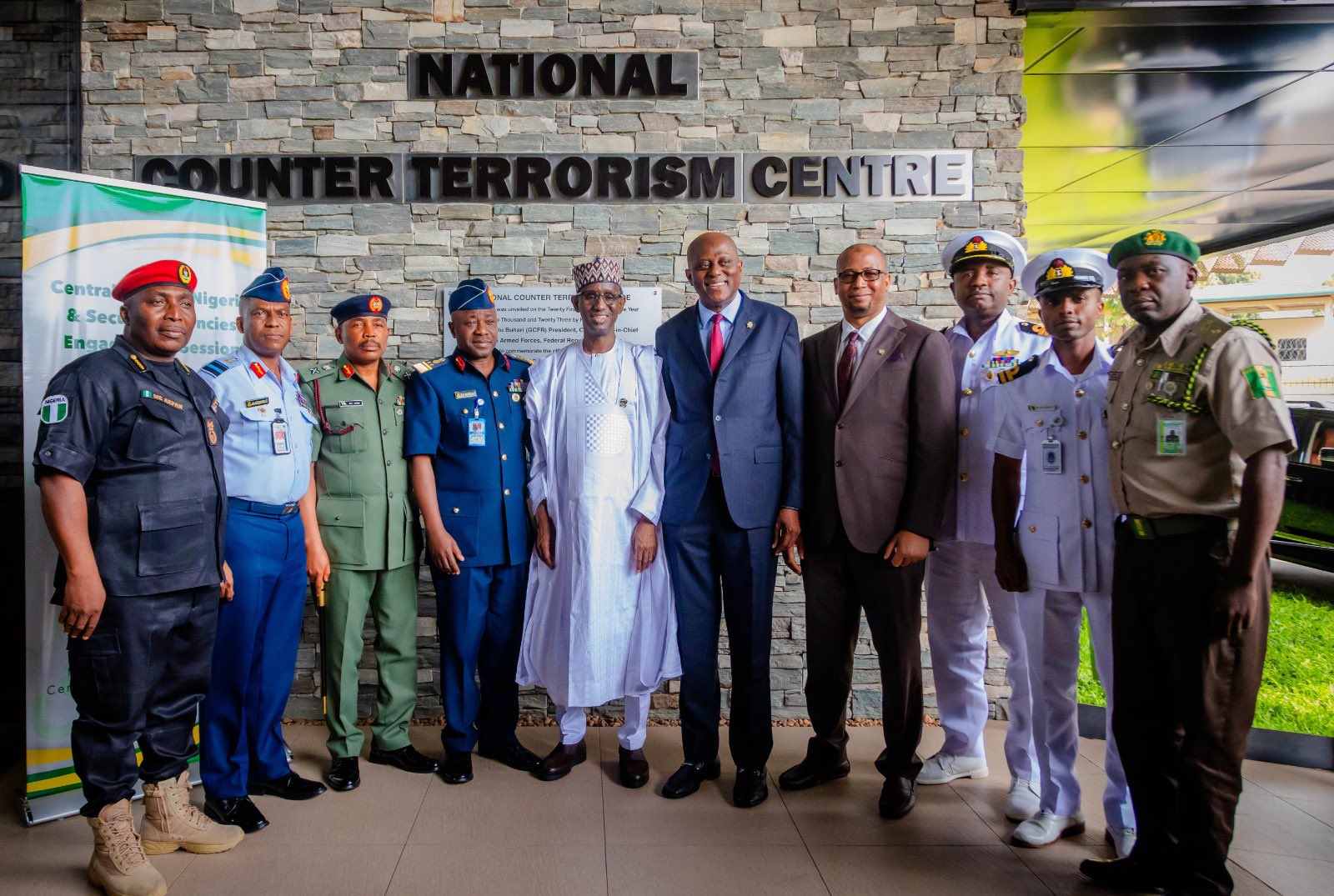
Located within the Office of the National Security Adviser (ONSA) in Abuja, the Centre was established as the coordination hub of Nigeria’s counter-terrorism system, designed to integrate intelligence, harmonise inter-agency responses, support prevention strategies, and strengthen collaboration across security and civilian institutions. It is meant to serve as the brain of Nigeria’s counter-terrorism architecture, guiding strategy rather than functioning as a frontline operational force.
Yet, as insecurity continues to spread across multiple regions of the country in fragmented and adaptive forms, a growing question is emerging: can a centrally located institution in Abuja effectively manage a threat that is increasingly local, decentralised, and deeply embedded in communities?
The NCTC was created to ensure unity of effort in Nigeria’s fight against terrorism. Its mandate includes counter-terrorism coordination, prevention of violent extremism, intelligence integration, capacity building, and inter-agency collaboration. Over time, it has also expanded into de-radicalisation support and partnership-building with international and regional security actors. Its recently unveiled Strategic Plan for 2025–2030 further reinforces its ambition to enhance Nigeria’s preparedness through technology-driven intelligence and improved coordination frameworks.
Despite these ambitions, critics argue that the Centre remains heavily centralised in Abuja, with limited physical presence in the states where insecurity actually unfolds. While its strategic role at national level is not in doubt, its distance from local realities raises concerns about speed of intelligence flow, depth of community engagement, and responsiveness to rapidly evolving threats.
This debate has gained renewed relevance following remarks by former Chief of Army Staff, Lt-Gen. Tukur Yusufu Buratai (Rtd), who has previously suggested in a televised interview on TVC that Nigeria’s security coordination structures would be more effective if extended closer to operational environments. His position reflects a broader security thinking that emphasises decentralisation and proximity to the field as essential components of modern counter-terrorism strategy.
The logic behind this argument is straightforward. Terrorism in Nigeria is no longer concentrated in a single theatre. It has become geographically dispersed, shifting across forest corridors, rural settlements, border communities, and even urban centres. In such a dynamic environment, intelligence must flow quickly, responses must be localised, and prevention must be rooted in community structures.
Advocates of reform argue that establishing NCTC offices across all 36 states would significantly strengthen Nigeria’s counter-terrorism capacity. Such a structure would allow for faster intelligence gathering and verification, stronger engagement with local communities, improved early warning systems, and reduced bureaucratic delays in responding to emerging threats. It would also enable strategies to be tailored to the specific security realities of each state rather than relying solely on centralised policy directives.
A decentralised structure, they argue, would also improve trust between citizens and security institutions. In many communities, information critical to preventing attacks is often held at the local level but is not transmitted due to fear, distrust, or lack of direct engagement with security agencies. State-level NCTC offices could help bridge this gap by building closer relationships with traditional rulers, religious leaders, civil society actors, and local security networks.
However, the proposal is not without concerns. Some security analysts caution that expanding the NCTC into all states could create administrative duplication, strain already limited resources, and introduce coordination challenges among multiple security agencies. Others suggest that instead of full state-by-state expansion, Nigeria may benefit more from strengthening zonal intelligence hubs linked directly to the Abuja headquarters.
At the heart of the debate lies a deeper structural issue: the gap between national-level security coordination and ground-level realities. While Abuja remains the strategic centre of planning and policy, the operational theatre of insecurity exists far from the capital, often in areas with weak governance presence and limited state capacity.
This disconnect raises a fundamental question about Nigeria’s counter-terrorism approach. If intelligence is generated locally, if radicalisation occurs within communities, and if attacks are executed in remote and dispersed locations, should the primary coordination centre remain largely centralised?
Security experts increasingly argue that modern counter-terrorism is most effective when it combines strong central command with deep local penetration. In this model, national headquarters sets strategy and ensures coordination, while state or regional offices provide real-time intelligence, community engagement, and rapid response support.
Nigeria’s current security challenges, ranging from insurgency in the North-East to banditry in the North-West, kidnapping networks across the North-Central, and emerging urban threats in other regions, suggest that a purely centralised model may no longer be sufficient.
Ultimately, the effectiveness of the NCTC should not be judged only by the strength of its headquarters in Abuja, but by how deeply its influence is felt across the country. Counter-terrorism is not won in command centres alone. It is won in communities, where early warning signs are detected, where trust determines whether information is shared, and where prevention begins long before violence erupts.
If Nigeria is to move from reactive responses to proactive prevention, then the conversation may no longer be about whether the NCTC is relevant, but whether it is present enough where it matters most.
