

INTERVIEW: “Why I studied Gen. Buratai’s tenure through the lens of transformational leadership” — Scholar
New book on the Buratai era argues that mission command, institutional learning and civil-military trust — not just firepower — turned the tide against Boko Haram and ISWAP, and warns those gains must not be reversed.

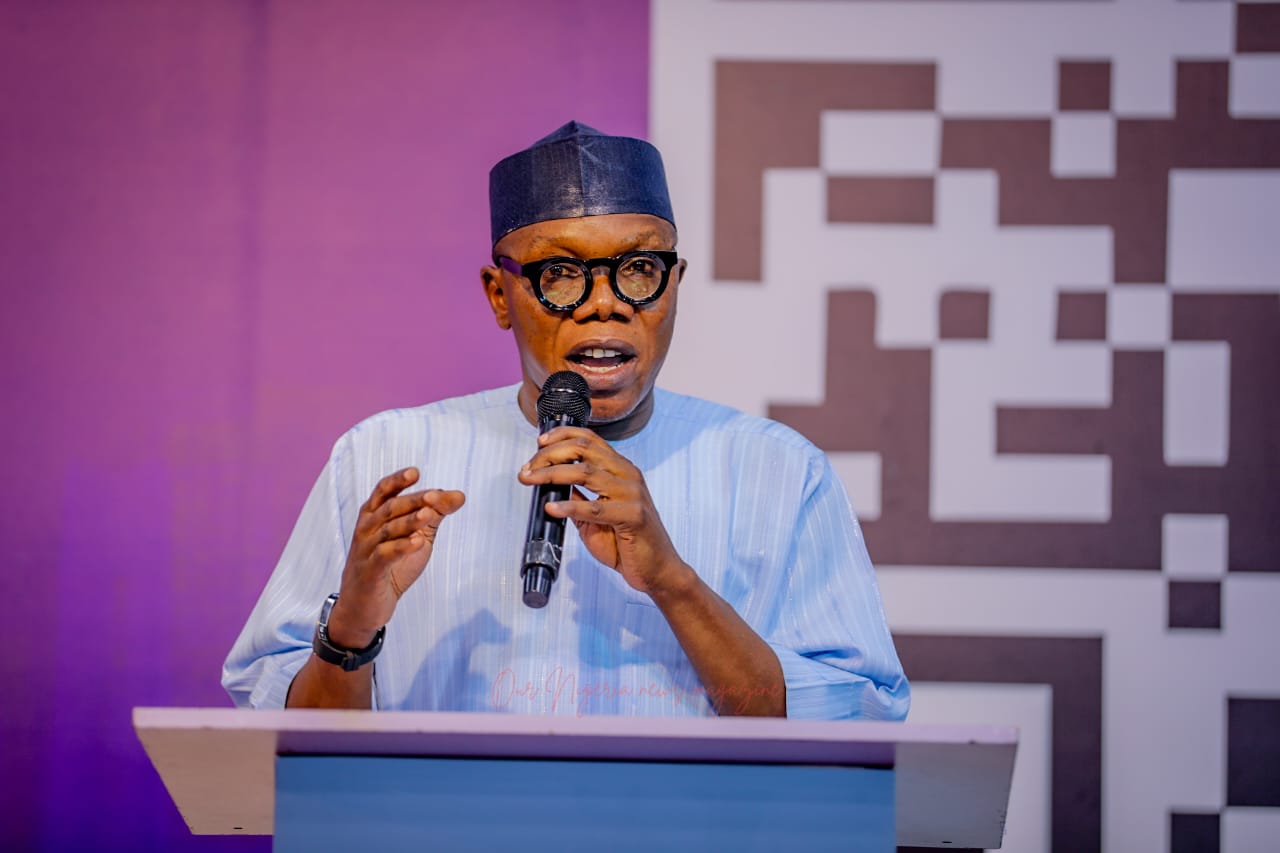
Lt. General Tukur Yusuf Buratai, CFR (Rtd), led the Nigerian Army through one of the most demanding chapters in its history, six years, 2015 to 2021, defined by a grinding, evolving fight against Boko Haram, ISWAP and a shifting landscape of asymmetric threats. A new scholarly work, “Military Transformational Leadership in Action: The Buratai Era,” sets out to document what actually happened inside that period of command: the doctrine that changed, the reforms that stuck, and the trade-offs that were made under pressure.
In this exclusive interview, the book’s author, Dr. Mohammed Sani Abubakar, speaks candidly with our correspondent Matthew Eloyi about seven years of research, the doctrine of mission command that reshaped how the Army fought, the toughest decisions of the era, and the uncomfortable questions, from unfinished security gains to allegations of human rights violations, that any honest account must confront. Below is the interview, published in full and in his own words.
Q1: Your book “MILITARY TRANSFORMATIONAL LEADERSHIP IN ACTION: THE BURATAI ERA”, is described as a scholarly examination rather than a biography. What inspired you to study Lt. Gen. Tukur Yusuf Buratai’s tenure through the lens of transformational leadership, and what gap in existing military or leadership literature were you seeking to fill?
A: Thank you for the question. You are correct — this is not a biography. It is a scholarly examination of transformational leadership as practiced during the tenure of Lt. General Tukur Yusuf Buratai, CFR, Rtd, as Chief of Army Staff from 2015 to 2021.
My inspiration came from observing a critical transition period in Nigeria’s military history. The Army was moving from conventional warfare to a prolonged, complex fight against asymmetric threats — Boko Haram, ISWAP, banditry, and other violent non-state actors. During my research, which began in 2016 and spanned seven years, I noticed that while there was a lot of commentary on the conflict, there was very little academic documentation of how leadership decisions, doctrine, and institutional reforms actually produced results on the ground.
The gap I sought to fill was twofold. First, to capture and preserve the leadership lessons from that era — particularly in mission command, innovation, and organizational adaptation — so that they are not lost. Second, to analyze what worked, what did not, and why some of the successes were not institutionalized. My hope is that this book becomes a reference for military officers, policymakers, and scholars studying leadership in counter-insurgency and national security.
Q2: The book examines how the Nigerian Army adapted its doctrine to confront asymmetric threats. In your assessment, what were the most significant doctrinal innovations introduced during the Buratai era, and how did they influence operations against Boko Haram, ISWAP, and other emerging security threats?
A: The most significant doctrinal shift was the deliberate adoption and practice of mission command at the tactical level. This meant empowering junior commanders with the latitude to exercise initiative within the commander’s intent.
Instead of a rigid, top-down approach where every action had to be cleared from Abuja, commanders in the field were trusted to assess their environment, prevent attacks, and launch offensive operations proactively. This reduced response time and allowed the Army to get ahead of the enemy’s decision cycle.
We also saw an increased emphasis on intelligence-driven operations, civil-military cooperation, and the integration of special forces with conventional units. These innovations improved agility and precision. While there were setbacks — as is inevitable in war — the Army institutionalized an after-action review culture, learned from them, and adapted quickly. That adaptability was key to degrading Boko Haram and ISWAP’s territorial control and to managing other emerging threats.
Q3: Institutional reforms are a major focus of your work. Which reforms in training, logistics, equipment, or command structure do you believe had the greatest long-term impact on the Nigerian Army, and what evidence supports that conclusion?
A: Three reforms stand out for their long-term impact.
First, training and doctrine development. The establishment and expansion of specialized training institutions, and the shift toward scenario-based training for asymmetric warfare, produced officers and soldiers who were more adaptable. The evidence is in the performance of battalions that could now conduct independent operations with less external support.
Second, logistics and force sustainment. There was a push to improve forward logistics bases, medical evacuation, and equipment maintenance cycles. This directly improved troop morale and operational tempo. You cannot fight effectively if your men are not fed, equipped, and cared for.
Third, command and structural reforms. The creation of new divisions and operational commands brought the Army closer to the threats and to the people. It decentralized decision-making and improved response time. The evidence lies in the Army’s ability to deploy simultaneously across multiple theatres without overstretching a single command.
Together, these reforms began to build a more professional, responsive, and self-sustaining force.
Q4: Leadership decisions often involve difficult trade-offs. During your research, what were some of the toughest strategic or operational decisions made during the Buratai era, and what lessons do they offer today’s military and civilian leaders?
A: Two trade-offs were particularly difficult.
The first was personnel and resource allocation. With limited platforms and resources, leadership had to decide where to concentrate force for maximum effect. That meant deploying the right commanders to the most critical tasks and rationing enablers like air assets and ISR to where they could change the outcome. The lesson here is about prioritization and risk management — you cannot be strong everywhere at once.
The second was speed versus certainty in decision-making. In modern operations, time is a weapon. Reducing the OODA loop — Observe, Orient, Decide, Act — became a strategic imperative. Waiting for perfect information often meant losing the initiative. Leaders had to make decisions with 70% of the information and trust their subordinates to adapt.
The broader lesson for today’s military and civilian leaders is this: in a resource-constrained environment, clarity of objective, trust in your people, and the courage to make timely decisions are more important than having every asset.
Q5: Your research relies on military records, policy documents, interviews, and other sources. Given the sensitivity of military operations, what challenges did you encounter in gathering credible information, and how did you ensure the objectivity and academic integrity of your findings?
A: I was fortunate. I had been working closely with General Buratai since his tenure as Chief of Army Staff, and we had previously collaborated on a book. That relationship gave me access and context that few researchers have.
I also had the rare privilege of conducting extensive interviews with him, often late at night in the Theatre of Operations. In addition, I interviewed several strategic commanders and operators, and I witnessed many events firsthand.
To ensure objectivity and academic integrity, I triangulated every account. I cross-referenced interviews with official records, policy documents, after-action reports, and media archives. Where accounts differed, I presented multiple perspectives and let the evidence speak. The goal was not to glorify, but to document, analyze, and learn.
Q6: The relationship between the military and civilians remains a critical issue in Nigeria’s security landscape. Based on your findings, how successful were the civil-military initiatives implemented during the Buratai era in building public trust, and what more needs to be done?
A: Civil-military relations during the Buratai era were among the most deliberate and structured we have seen. There was conscious engagement with civil society organizations, the media, traditional institutions, and local communities.
Initiatives such as quick impact projects, medical outreaches, and regular press briefings helped to demystify the Army and build some level of trust. The Army also became more responsive to human rights concerns and established mechanisms for redress.
However, trust is a continuous process. More needs to be done to institutionalize these engagements beyond personalities. The Army, the Nigeria Police, NSCDC, and other agencies must see civil-military cooperation not as public relations, but as an operational necessity. When civilians trust the security forces, intelligence flows, and that is what wins asymmetric wars.
Q7: Beyond documenting a specific period in Nigeria’s military history, what do you hope policymakers, military officers, researchers, and young Nigerians will take away from “Military Transformational Leadership in Action: The Buratai Era”, especially as the country continues to confront evolving security challenges?
A: I hope four things.
For policymakers: That leadership is about systems, not just personalities. The reforms, doctrines, and welfare investments that worked must be sustained and funded, regardless of who is in office.
For military officers: That transformational leadership means empowering people, learning from failure, and adapting doctrine to reality. War today is about ideas, technology, and trust as much as it is about firepower.
For researchers: That Nigeria’s experience in counter-insurgency offers rich lessons for the study of military transformation in Africa and the Global South. Our context is unique, and we must document it ourselves.
For young Nigerians: That national security is a shared responsibility. The men and women in uniform are making sacrifices, but lasting peace will require good governance, economic opportunity, and civic responsibility from all of us.
Ultimately, I want this book to serve as both a record and a guide — so that the lessons of 2015-2021 are not forgotten, but built upon.
Q8: Critics say the security situation didn’t significantly improve during 2015-2021. How do you respond to that in light of your book?
A: That’s a fair question and it deserves context. Security is not binary — it’s not “solved” or “not solved.” Between 2015 and 2021, the Nigerian Army achieved significant operational gains: we recovered territory from Boko Haram, degraded their capacity to hold ground, and restored freedom of movement in many areas.
However, asymmetric warfare evolves. As kinetic pressure increased on Boko Haram and ISWAP, the threats mutated — into banditry, kidnapping, and attacks on soft targets. So while the military contained the insurgency militarily, the underlying drivers — poverty, porous borders, and governance gaps — remained.
My book doesn’t claim total victory. It documents what leadership and institutional changes did achieve, and highlights what must be sustained and built upon by both security forces and civilian institutions.
Q9: Some have accused the Army during that period of human rights violations. Did your research address that, and how do you balance operational effectiveness with accountability?
A: Yes, I addressed it directly. Any honest study of military operations must.
What I found is that leadership during that period made deliberate efforts to institutionalize accountability — through the establishment of human rights desks, investigation panels, and engagement with civil society. Were there violations? In a 7-year counter-insurgency with over 100,000 personnel deployed, it would be unrealistic to say no.
The key measure of a professional force is not the absence of mistakes, but what you do when they occur. The lesson is that operational effectiveness and accountability are not opposites. You lose the war if you lose the trust of the people. Future leadership must continue to strengthen oversight, training on rules of engagement, and civil-military relations.
Q10: If you could give one piece of advice to the current Chief of Army Staff based on the Buratai era, what would it be?
A: Sustain the gains in mission command and institutional learning.
The biggest advantage the Army developed between 2015-2021 was trust in junior leaders to think and act, and a culture of learning from every operation. Don’t centralize again. Continue to empower commanders, invest in realistic training for asymmetric threats, and prioritize troops’ welfare and equipment maintenance.
And second — double down on civil-military cooperation. Technology and firepower win battles, but trust and intelligence from the people win the war.
Closing Statement
“In the end, ‘Military Transformational Leadership in Action: The Buratai Era’ is not about one man. It is about what is possible when leadership, doctrine, and institutions align to meet a national challenge.
The period between 2015 and 2021 tested the Nigerian Army in ways we had not seen before. It forced innovation, demanded sacrifice, and produced lessons that must not be lost. My hope is that this book helps us institutionalize those lessons — in training, in equipment, in welfare, and in how we relate with the Nigerian people.
As Nigeria faces new and evolving security threats, we need an Army that is numerically strong, technologically enabled, and morally grounded. But more than that, we need a whole-of-society approach where the military, police, and civil authorities all play their part.
If policymakers, officers, and young Nigerians take away one thing from this book, I hope it is this: transformation is not an event. It is a continuous process. And the security of our nation depends on our willingness to learn, adapt, and lead.”
