

From Nauru to Naoero: Why the World’s Tiny Island Nation Is Reclaiming Its True Identity

From Nauru to Naoero: Why the World’s Tiny Island Nation Is Reclaiming Its True Identity
By Matthew Eloyi
In an era when nations are increasingly reasserting their cultural identities and rewriting historical narratives, one of the world’s smallest countries has taken a symbolic yet profound step toward reclaiming its heritage. The Pacific island nation long known to the outside world as Nauru has officially embraced the name Republic of Naoero, signalling more than a simple change in spelling—it is a declaration of identity, language and national pride.
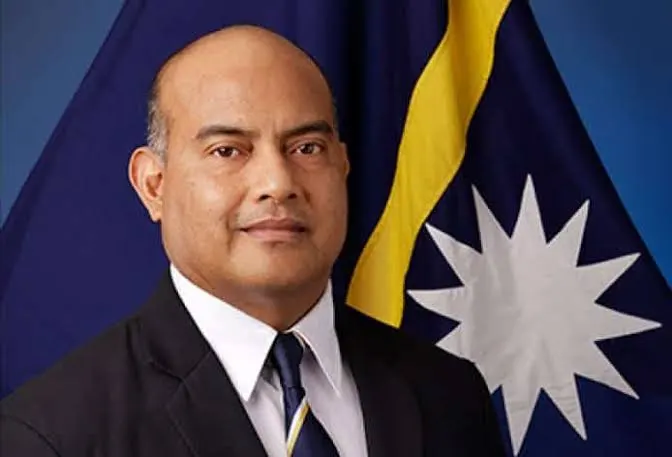
President David Adeang announced the historic decision, explaining that the new name aligns with the country’s indigenous language and restores the pronunciation that has existed for generations before foreign influence reshaped it.
The move also ushers in several other changes. The country’s international code will shift from NRU to NRO, while its citizens will now be known as dei-Naoero instead of Nauruans. Equally significant is the correction of the country’s pronunciation. The version commonly heard around the world—”Now-roo”—has been replaced with the indigenous pronunciation, “Now-ero.”
For many countries, names are more than geographical labels; they embody history, identity and sovereignty. For Naoero, restoring its traditional name is an effort to reconnect with its cultural roots after decades of using a version adopted largely for the convenience of outsiders.
According to a statement published by the government, the country became internationally known as “Nauru” because its indigenous name proved difficult for foreigners to pronounce. Over time, the simplified version became entrenched in diplomatic, commercial and international circles, despite not reflecting the nation’s authentic linguistic heritage.
President Adeang first presented the proposal to Parliament in January, framing the initiative as an important act of national restoration.
“This proposed change seeks to faithfully honor our nation’s heritage, our language, and our identity,” he told lawmakers while introducing the constitutional amendment.
The proposal has since secured the required approval in two rounds of parliamentary voting, although it was not immediately clear whether the constitutional amendment had formally taken legal effect.
While the change may appear largely symbolic, it reflects a growing global trend in which countries and indigenous communities are reclaiming traditional names that colonial administrations or foreign governments altered over centuries. Across the world, nations have increasingly sought to restore indigenous place names as part of broader efforts to preserve language, strengthen cultural identity and correct historical narratives.
Naoero’s story is particularly compelling because of its remarkable history. Home to approximately 12,000 people, it remains the world’s third-smallest sovereign state by population, behind Tuvalu and Vatican City.
Situated in the remote South Pacific, the tiny coral limestone atoll has experienced dramatic transformations throughout its history. It was colonised by Germany before later coming under Australian administration, eventually gaining independence as a republic in 1968.
For a brief period during the 1970s, the country enjoyed extraordinary wealth as vast phosphate deposits generated immense revenues, making it one of the richest nations per capita at the time. However, decades of intensive mining depleted much of the island’s natural resources, leaving behind significant environmental degradation and long-term economic challenges.
Today, as the Republic of Naoero charts its future, the restoration of its indigenous name serves as a reminder that national identity is measured not only by economic fortunes or territorial size but also by the preservation of language, culture and history.
For a nation that occupies only a tiny dot on the world map, the decision carries a message with global resonance: reclaiming one’s authentic identity can be among the most enduring acts of sovereignty.
