

Dr. Marc Hannah: The Black Engineer Who Helped Give Hollywood Its Digital Imagination
Dr. Marc Hannah: The Black Engineer Who Helped Give Hollywood Its Digital Imagination

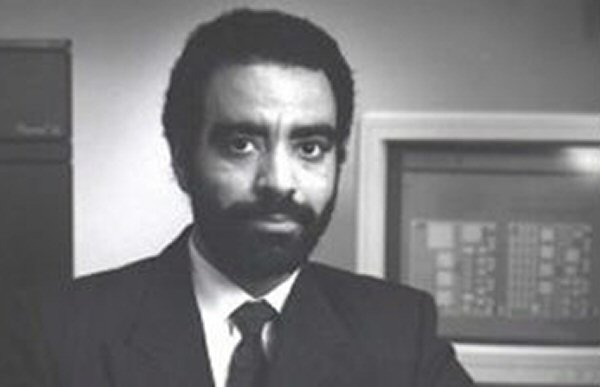
Dr. Marc Hannah: The Black Engineer Who Helped Give Hollywood Its Digital Imagination
From the geometry behind early 3D graphics to the technology that helped bring Jurassic Park to life and influenced the Nintendo 64, Marc Hannah’s work helped change how computers create, display and simulate the three-dimensional world.
Before computer-generated dinosaurs ran across cinema screens, before video-game worlds became richly three-dimensional, and long before graphics processors became indispensable to modern computing, there was a difficult engineering problem: how could a computer perform the enormous number of calculations required to make three-dimensional images appear quickly and realistically?
One of the engineers who helped answer that question was Dr. Marc Regis Hannah, an American electrical engineer and computer-graphics pioneer whose work became foundational to the rise of Silicon Graphics and the 3D revolution of the 1980s and 1990s.
Born on October 13, 1956, in Chicago, Illinois, Hannah grew up to become one of the important figures in the development of computer graphics. His story is not simply about Hollywood or video games. It is about the transformation of computing itself—and about a Black engineer whose work helped machines become dramatically better at creating and displaying three-dimensional images.
From Chicago to Stanford
Hannah’s path into technology began with education.
He received a scholarship from Bell Laboratories to attend the Illinois Institute of Technology, where he studied electrical engineering. He earned his Bachelor of Science degree in 1977.
He then moved to Stanford University, where he earned a Master’s degree in 1978 and later completed a PhD in electrical engineering in 1985.
It was at Stanford that Hannah’s career took a decisive turn.
There, he became involved with computer-graphics research under Professor Jim Clark, whose work was focused on accelerating the mathematical operations required to generate computer graphics.
The problem was fundamental: conventional computer processors were not designed to efficiently handle the huge number of calculations involved in transforming three-dimensional objects into images.
The answer would become known as the Geometry Engine.
The Geometry Engine Changed the Rules
Hannah worked with Clark and other Stanford researchers on the development of the Geometry Engine, specialised hardware designed to accelerate the mathematical operations involved in displaying three-dimensional graphics.
Instead of forcing a computer’s central processor to handle every calculation, the Geometry Engine could take on specialised graphics work.
That concept became enormously important.
The Computer History Museum describes the Geometry Engine as a breakthrough that helped establish the niche for graphics coprocessors—specialised processors that perform the heavy mathematical work involved in manipulating images. Descendants of that approach can be found in modern computing hardware, where specialised processors accelerate graphics and other computationally intensive workloads.
Hannah helped design the second generation of the Geometry Engine at Silicon Graphics, building upon the earlier Stanford work.
This was the beginning of something much bigger.
Silicon Graphics and a New Computing Era
In 1982, Hannah became one of the co-founders of Silicon Graphics Inc. (SGI) alongside Jim Clark and other Stanford researchers.
The company was created around the idea that powerful 3D graphics should not remain confined to specialised laboratories.
Hannah spent the following years helping transform SGI from a small technology company into a major force in computer graphics. He eventually became its vice president and chief scientist, while serving as a principal scientist responsible for important graphics technologies and systems.
By the mid-1980s and 1990s, Silicon Graphics workstations had become synonymous with high-end computer graphics.
The technology was being used far beyond entertainment—in engineering, scientific research, aerospace, biotechnology and military applications. Illinois Tech notes that SGI’s graphics technology was used in applications ranging from the design of the Boeing 777 to movie dinosaurs and the Nintendo 64.
But Hollywood was about to discover what these machines could do.
When Hollywood Learned to Trust Computers
Computer-generated imagery had existed before SGI, but early computer graphics were nowhere near the realism audiences would later expect.
As graphics hardware and software improved, filmmakers began discovering that computers could create images and effects that would previously have been extraordinarily difficult—or impossible—to achieve.
SGI technology became part of that transformation.
Its systems were used in major films including Terminator 2, Jurassic Park, Aladdin, Beauty and the Beast, The Hunt for Red October and Field of Dreams.
George Lucas’s Industrial Light & Magic (ILM) also used Silicon Graphics technology in the production of Terminator 2.
Then came Jurassic Park.
The Dinosaur That Changed Everything
When Steven Spielberg’s Jurassic Park arrived in 1993, audiences were confronted with something that seemed almost impossible: computer-generated dinosaurs that looked capable of sharing the screen with living actors.
The visual effects became a landmark in the history of cinema.
Hannah later recalled the significance of seeing the finished dinosaurs on screen, describing Jurassic Park as a tipping point for computer graphics. The film demonstrated to Hollywood executives that extraordinary visual effects could have major commercial value, helping encourage larger investments in 3D graphics technology.
It is important, however, to put Hannah’s role in its proper context.
Hannah did not personally create the Jurassic Park T. rex. The film’s dinosaurs were the work of a large team of artists, animators, engineers, puppeteers and visual-effects specialists at ILM and elsewhere.
What Hannah helped create was something less visible but arguably just as important: the computing technology that made increasingly sophisticated digital imagery practical.
That distinction matters.
The artist creates the creature.
The animator makes it move.
The visual-effects team integrates it into the scene.
But the hardware and software provide the computational foundation on which all of that can happen.
From Hollywood to Nintendo
Hannah’s influence did not stop at the cinema.
Silicon Graphics also became involved in the development of technology for Nintendo’s next-generation console.
The result was the Nintendo 64, released in 1996.
SGI worked with Nintendo on the console’s graphics technology, helping bring sophisticated 3D rendering into a mainstream home gaming system. Illinois Tech specifically credits Hannah with helping pioneer 3D rendering hardware used in the Nintendo 64.
That achievement was significant because it helped move advanced 3D graphics from expensive professional workstations into living rooms around the world.
Suddenly, millions of ordinary players could experience three-dimensional gaming.
The technology that helped make Hollywood dinosaurs believable was now helping create interactive digital worlds.
His Work Went Beyond Entertainment
It would be easy to remember Hannah only as the engineer connected to movies and video games.
That would undersell his career.
The graphics technologies developed at Silicon Graphics were used in computer-aided design, scientific visualisation, aerospace, engineering, biotechnology and other technical fields.
His work therefore belonged to a much broader technological transformation.
Computers were no longer merely calculating numbers or displaying simple text. They were becoming machines capable of modelling complex physical environments, visualising scientific information and creating increasingly realistic digital worlds.
And specialised graphics processing was becoming a critical part of that transformation.
A Black Engineer in Silicon Valley
Hannah’s story is also significant within the history of Black achievement in science and technology.
At a time when Silicon Valley was becoming increasingly influential, he occupied a senior technical role at one of the world’s most important graphics companies.
He was not simply a manager or spokesperson. He was an engineer involved in the architecture and development of the technology itself.
In 1987, Hannah received Professional Achievement Awards from the Illinois Institute of Technology and the National Technical Association. In 1988, he received the Black Engineer of the Year Award.
In 1995, he received the Kilby International Young Innovator Award.
Illinois Institute of Technology later honoured him as a member of its Hall of Fame and describes his contribution to pioneering 3D rendering hardware across film, aerospace and gaming.
Leaving Silicon Graphics
Hannah remained with Silicon Graphics for approximately 16 years.
When he left the company in 1997, he was serving as vice president and chief scientist.
But leaving SGI did not mean leaving technology.
He subsequently worked with and advised several technology ventures, holding senior roles including positions connected with Omniverse Digital Solutions, Pulsent Corporation and SongPro. He also served on corporate boards and became involved in other business ventures.
His later work continued to span technology, entrepreneurship and investment.
The Legacy Hidden Behind the Screen
The extraordinary thing about Marc Hannah’s story is that most people who benefited from his work never knew his name.
They saw the dinosaur.
They saw the liquid-metal effects.
They played 3D games.
They watched computer-generated characters move across cinema screens.
They saw engineers and scientists manipulate sophisticated three-dimensional models.
But they did not see the engineers who designed the underlying technology.
That is often how technological history works.
The public remembers the finished product.
The engineer remembers the problem that had to be solved first.
Hannah’s contribution was to help solve one of computing’s most important problems: how to make three-dimensional graphics faster, more affordable and more practical.
The Computer History Museum describes the descendants of the Geometry Engine as part of the lineage of specialised processors now found throughout modern computing, including technologies used to accelerate graphics and computational workloads.
That makes his story bigger than Jurassic Park.
It is bigger than Nintendo.
It is bigger than Silicon Graphics.
It is part of the story of how computers learned to see, model and render the world in three dimensions.
The Man Behind the Machine
Dr. Marc Regis Hannah was born in Chicago in 1956.
A Bell Labs scholarship helped open the door to engineering education.
Illinois Institute of Technology gave him his undergraduate foundation.
Stanford gave him an advanced research environment.
The Geometry Engine gave him a technological breakthrough.
Silicon Graphics gave that breakthrough an industrial platform.
Hollywood gave the technology a global stage.
Nintendo helped bring it into millions of homes.
And the modern computing world inherited the consequences.
That is why Marc Hannah deserves to be remembered not merely as “the Black engineer behind Jurassic Park,” but as one of the pioneers who helped turn 3D computer graphics from an expensive technical ambition into a transformative technology.
His story also offers a lesson about innovation: sometimes the people who change culture most profoundly are not the people standing in front of the camera.
They are the engineers behind the screen.
They design the processor.
They solve the mathematical problem.
They make the impossible computationally possible.
And when the world finally sees the result, the technology becomes famous—even when its creators remain largely unknown.
Dr. Marc Hannah is one of those creators.
And his legacy is still visible every time a computer renders a three-dimensional scene, a film brings an impossible creature to life, or a digital world appears on a screen.
The dinosaur may have been fictional. The engineering breakthrough was real.
Dr. Marc Hannah: The Black Engineer Who Helped Give Hollywood Its Digital Imagination
