

Nigeria at 66: A Nation Still Searching for the Promise of Freedom

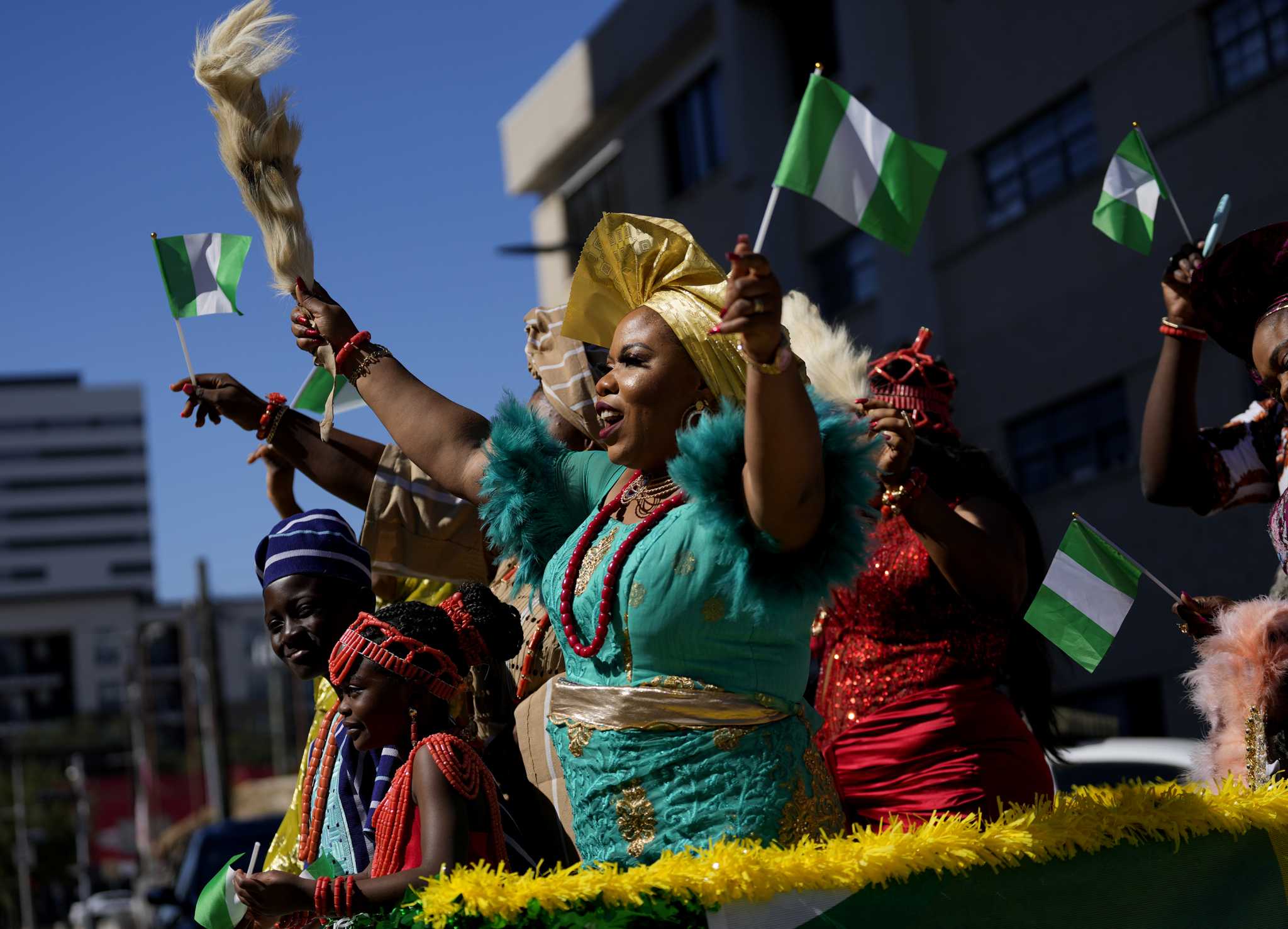
Nigeria at 66: A Nation Still Searching for the Promise of Freedom
By Matthew Eloyi
Sixty-six years after Nigeria lowered the Union Jack and raised its own flag as an independent nation, October 1 offers more than an occasion for ceremonies, speeches and patriotic messages. It provides an opportunity to ask a difficult but necessary question: How much of the promise of independence has translated into a better quality of life for the average Nigerian?
Nigeria became independent on October 1, 1960, with enormous expectations. Six decades later, the country has undoubtedly changed. Its population has grown enormously, its economy has diversified, its institutions have expanded, and Nigerians have made remarkable contributions in business, science, technology, entertainment, sports and the global professional community.
Yet, the distance between Nigeria’s enormous potential and the everyday experience of many of its citizens remains a central question at 66.
The World Bank’s latest data put Nigeria’s population at about 237.5 million in 2025. Life expectancy was 55 years in 2024, while access to electricity stood at 62.5 per cent of the population. These figures provide a sobering backdrop to the independence celebration.
The question, therefore, is not whether Nigeria has made progress. It has. The more important question is whether the pace and quality of that progress are commensurate with the country’s resources, human capital and six decades of self-government.
Nigeria remains Africa’s most populous country and one of the continent’s largest economies. But economic size does not automatically translate into prosperity.
A World Bank assessment published in 2025 estimated Nigeria’s GDP per capita at about $6,207 in international dollars and noted that the economy would need to grow much faster and transform sufficiently to create productive opportunities for the millions of young people entering the labour market.
This raises an uncomfortable independence-day question: What does economic growth mean if household incomes and living standards do not improve at the same pace?
The World Bank’s October 2025 Poverty and Equity Brief estimated that 41.8 per cent of Nigerians were living below the international extreme-poverty line of $3 a day in 2022/23. It also reported significant regional disparities, with poverty substantially higher in the northern zones than in the southern zones.
More recently, the World Bank said in 2026 that poverty remained widespread despite improvements in macroeconomic stability, with more than 60 per cent of Nigerians estimated to be living below the national poverty line in 2025.
These figures should compel a deeper conversation about what development should mean for Nigeria.
Nigeria has experienced periods of impressive economic growth. The World Bank noted that real GDP growth averaged about seven per cent between 2000 and 2014. Yet that momentum did not produce the structural transformation necessary to permanently change the economic fortunes of a large proportion of Nigerians.
Today, there are signs of renewed macroeconomic stability. The World Bank’s April 2026 Nigeria Development Update reported that inflation had eased, external and fiscal positions had strengthened and economic growth remained robust, particularly in services. At the same time, it cautioned that household incomes had not fully recovered and poverty remained high.
The National Bureau of Statistics also reported real GDP growth of 3.89 per cent year-on-year in the first quarter of 2026, with the non-oil sector accounting for 96.08 per cent of real GDP.
These are important signs of economic activity. But Independence Day invites a different measurement: Are Nigerians feeling the difference in their homes, businesses, farms, schools and workplaces?
Perhaps the most important measure of national progress is not the size of GDP, but the condition of the people.
The United Nations Development Programme’s Human Development Index combines health, education and income in assessing human progress. Its 2025 report placed Nigeria’s HDI at 0.560, still within the “low human development” category.
That should provoke reflection.
After 66 years of independence, should Nigeria’s development conversation still be dominated by access to basic infrastructure, quality education, healthcare, electricity, clean water, security and productive employment?
And if the answer is yes, what went wrong with the development choices made across successive decades?
The answer cannot simply be blamed on one government, one political party or one generation. Nigeria has experienced civilian administrations, military governments, oil booms, recessions, debt crises, democratic transitions and numerous development plans.
The accumulated outcome belongs to the nation.
Electricity provides perhaps the clearest illustration of the gap between potential and reality.
The World Bank’s latest available figure shows that 62.5 per cent of Nigerians had access to electricity in 2024.
For a country with enormous gas resources, substantial renewable-energy potential and one of Africa’s largest economies, the persistence of electricity deficits remains a fundamental development question.
The same applies to transportation infrastructure, healthcare facilities, water supply and educational infrastructure.
Nigeria has built roads, airports, rail lines, universities, hospitals and technology infrastructure since independence. The issue is not the absence of projects. It is whether these investments have been sufficient, efficiently maintained and strategically connected to a productive economy.
Perhaps nowhere is Nigeria’s unfinished development story more visible than among its young population.
The World Bank estimates that about half of Nigerians are aged 18 or younger, while millions of young people enter the working-age population every year. It estimates that almost 60 million young Nigerians will become of working age over the next decade.
That demographic reality can become an extraordinary economic advantage if young Nigerians are educated, skilled, healthy and productively employed.
But it also presents a development challenge if economic opportunities fail to keep pace.
The question for Nigeria at 66 is therefore not simply how many young people the country has, but how many can translate their education, creativity and energy into productive livelihoods at home.
An honest assessment should not become a catalogue of failures.
Nigeria has survived a civil war, military interventions, economic crises and prolonged periods of political instability. It has maintained national unity despite enormous ethnic, religious and regional diversity.
The country has also produced globally recognised entrepreneurs, academics, scientists, artists, athletes, journalists, technology innovators and professionals.
Its technology ecosystem has expanded dramatically. Nigerian companies have attracted international investment, while Nigerian professionals and entrepreneurs have built successful careers and businesses across the world.
Democratic government has also endured for more than two decades since the return to civilian rule in 1999.
These are not insignificant achievements.
But independence must ultimately be measured in human terms
The founders of independent Nigeria did not struggle merely to replace one flag with another. Independence was fundamentally about the capacity of Nigerians to determine their own future.
That raises the most important question on this 66th anniversary:
Has political independence translated sufficiently into economic independence, social dignity and meaningful opportunity for the majority of Nigerians?
The answer requires more than patriotic slogans.
It requires looking honestly at poverty, education, healthcare, electricity, security, jobs, productivity, infrastructure, institutional quality and the ability of citizens to participate meaningfully in the economy.
Nigeria is not starting from zero. Neither is it where it could be.
The country’s current economic reforms, improved non-oil performance and growing digital economy offer opportunities that could produce stronger outcomes if sustained and translated into broad-based improvements in living standards. The World Bank itself says recent macroeconomic improvements provide an opportunity to invest more effectively in people and expand economic opportunity.
At 66, therefore, perhaps the most constructive way to celebrate Nigeria is not to deny its shortcomings or dismiss its achievements.
It is to ask the harder question: What must Nigeria do differently in the next decade so that, by its 70th, 75th and 80th anniversaries, independence will be measured less by the survival of the Nigerian state and more by the prosperity, dignity and opportunities enjoyed by Nigerians?
That is the unfinished business of independence.
And perhaps the most fitting tribute to the men and women who fought for Nigeria’s freedom is to ensure that the freedom to determine our destiny eventually becomes the capacity to build the future we have promised ourselves for 66 years.
