

Nigeria’s Food Crisis: Why Farmers Are Producing Less When We Need More

Nigeria’s Food Crisis: Why Farmers Are Producing Less When We Need More
By Akudiang Comfort Pius
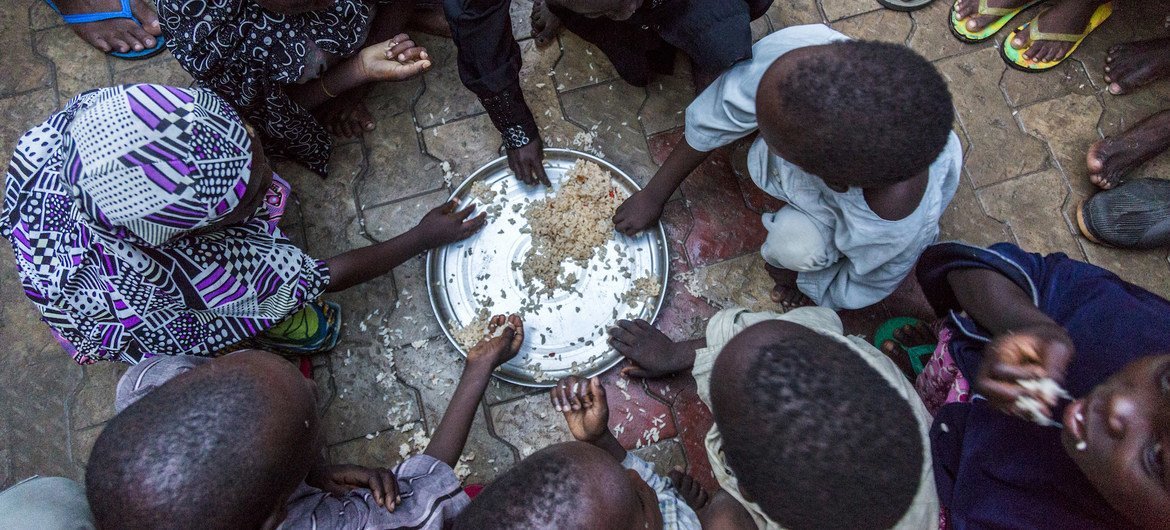
Nigeria’s food crisis is becoming increasingly difficult to explain away as a temporary consequence of inflation. In a country blessed with vast agricultural land, a large farming population, and the capacity to produce diverse crops, millions of Nigerians are still struggling to afford adequate food.
READ ALSO: After 12 Years, Uber Pulls the Plug on Nigeria: The End of a Ride-Hailing Era
The contradiction is troubling: Nigeria has the potential to feed itself, yet hunger remains a growing national concern.
The Food and Agriculture Organisation (FAO) projects that 34.7 million Nigerians will face crisis-level or worse acute food insecurity during the 2026 lean season between June and August, including more than 5.4 million acutely malnourished children.
This is not merely an agricultural problem. It is a warning about Nigeria’s economy, security, climate resilience, and governance.
The first challenge is insecurity. Farmers cannot produce food efficiently when they are afraid to travel to their farms or when violence displaces entire communities. The World Food Programme (WFP) has warned that conflict-affected farming communities in northern Nigeria are bearing the brunt of the worsening hunger crisis. In the Northeast alone, 6.2 million people were reported to be food insecure across Borno, Adamawa, and Yobe states, with millions lacking adequate humanitarian assistance.
This creates a vicious cycle. Insecurity reduces farming; reduced farming constrains food supply; limited supply contributes to higher prices; and higher prices make food increasingly unaffordable for households.
Climate change is making the situation even more complicated.
A recent World Bank analysis of Nigeria’s agricultural data found that partial crop losses increased from roughly six per cent to more than 20 per cent of plots between the 2018/19 and 2023/24 agricultural seasons. The analysis points to climate shocks, environmental pressures, and conflict-related factors as important contributors.
The implication is clear: Nigeria cannot solve food insecurity simply by telling farmers to produce more.
Farmers need an environment in which production is safe, affordable, and commercially viable.
The cost of farming is another major concern. Seeds, fertiliser, machinery, labour and transportation all have financial implications. When production becomes too expensive, farmers either cultivate less land or transfer some of their costs to consumers. Either way, the ordinary Nigerian eventually pays the price.
This is why agricultural policy must move beyond the traditional distribution of inputs and occasional intervention programmes.
Nigeria needs a comprehensive food-production strategy that connects security, infrastructure, financing, climate adaptation, storage, processing, and access to markets.
The government must also ensure that agricultural interventions produce measurable results. Programmes should not be judged simply by the number of launches, beneficiaries, or official ceremonies. Their real value should be determined by whether they increase production, improve farmers’ incomes, and make food more affordable.
Nigeria also needs to take post-harvest losses more seriously. It makes little economic sense to increase production if significant quantities subsequently perish because of inadequate storage, poor rural roads, weak processing capacity, or difficulties reaching markets.
Food security therefore begins on the farm but does not end there.
The country must invest in rural roads, irrigation, storage facilities, agricultural extension services, affordable credit, and agricultural insurance. Security agencies must also recognise that protecting farmers is part of protecting the nation’s food supply.
There is another uncomfortable reality. Nigeria cannot permanently depend on emergency food assistance to address a structural food crisis. Humanitarian agencies can provide vital support, but sustainable food security ultimately requires stronger domestic production systems and institutions.
Nigeria’s growing food insecurity also comes at a time when the country’s population continues to increase. FAO notes that Nigeria’s population is growing at about 2.3 percent annually and is projected to reach 450 million by 2050. That demographic reality makes increasing agricultural productivity even more urgent.
The country therefore needs to think beyond producing enough food for today. It must build an agricultural system capable of feeding a much larger population tomorrow.
What is required now is not another cycle of announcements, launches, and policy documents. Nigeria needs measurable agricultural outcomes.
How many farmers have returned safely to their farms? How much has domestic food production increased? How much post-harvest loss has been reduced? How many farmers have obtained affordable financing? And, most importantly, can ordinary families afford nutritious food?
These are the questions that should define the success or failure of Nigeria’s food-security strategy.
The hunger crisis is therefore a national emergency that demands a national response. Protecting farmers, investing in agriculture, and making food affordable are not merely economic objectives; they are investments in social stability and national security.
Nigeria cannot continue celebrating its agricultural potential while millions struggle with hunger.
The real test is simple: can a Nigerian farmer safely cultivate, harvest, and sell at a profit, and can another Nigerian afford to buy that food?
Until the answer is yes, Nigeria’s food-security battle remains unfinished.
