

Tinubu’s ‘Project Nigeria’ Pledge: Beyond Spiritual Gratitude Lies the Burden of Delivering Prosperity

Tinubu’s ‘Project Nigeria’ Pledge: Beyond Spiritual Gratitude Lies the Burden of Delivering Prosperity
By Matthew Eloyi
President Bola Ahmed Tinubu’s recent spiritual experience in Saudi Arabia has offered a fresh opportunity to reflect on leadership, accountability and the future of Nigeria. His privilege of entering the Holy Ka’abah in Makkah, where he offered prayers of gratitude and sought divine wisdom and resilience, was undoubtedly a significant personal and spiritual milestone. But beyond the religious symbolism of the experience lies a much bigger question: how will the President translate his renewed commitment to Project Nigeria into tangible improvements in the lives of ordinary Nigerians?
While reflecting on his lesser Hajj journey on Monday, Tinubu reaffirmed his determination to build a prosperous nation, invest in young people and pursue development in line with the aspirations of Nigerians and what he described as the wish of Almighty Allah.
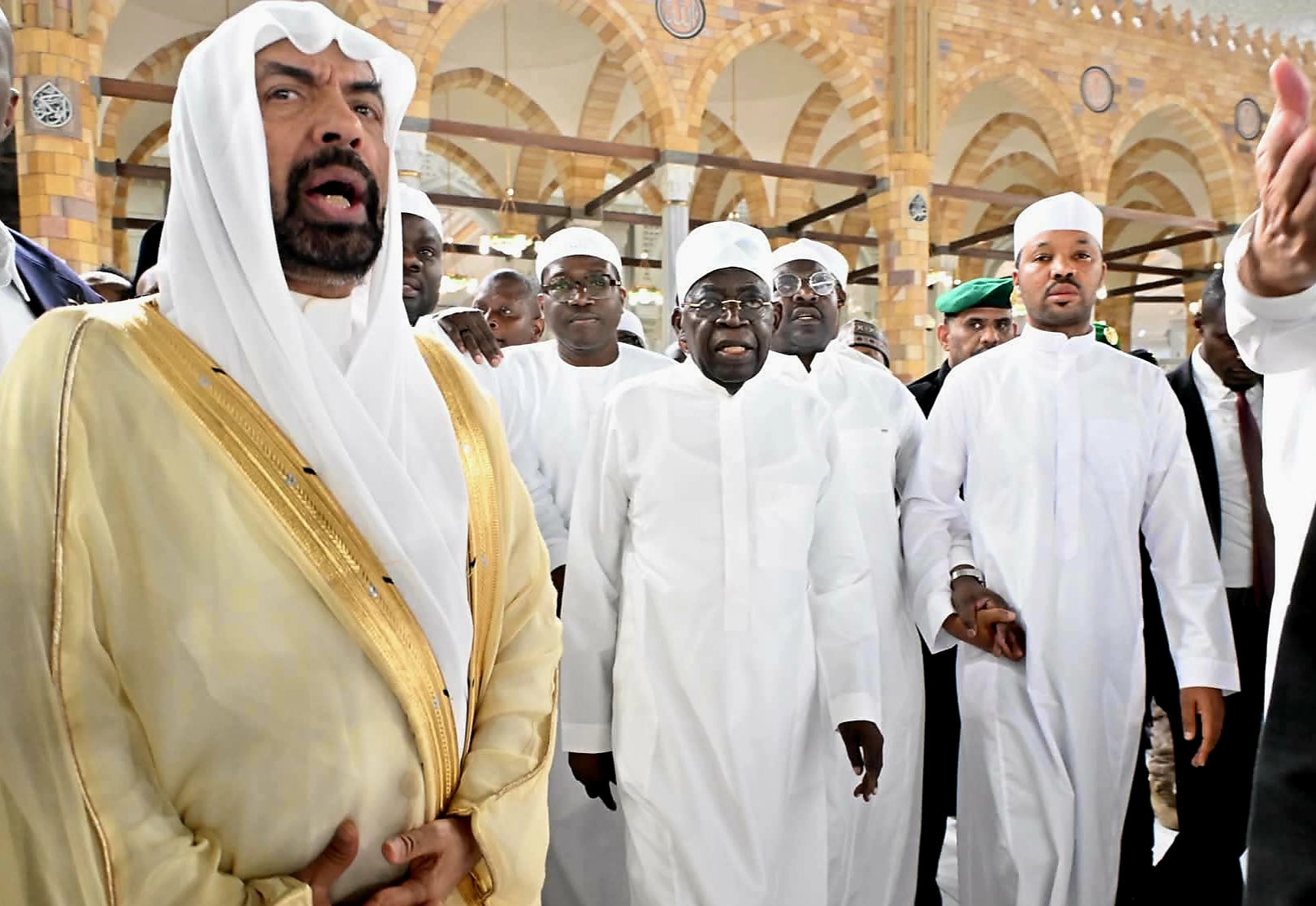
The President and members of his delegation were granted access to the sacred Ka’abah by Saudi Arabia’s King Salman bin Abdulaziz Al Saud, Custodian of the Two Holy Mosques. The historic privilege, facilitated by Sheikh Dahlulah Muthawal of Masjid al-Haram, was described by Tinubu as a deeply cherished spiritual experience and a reflection of the longstanding friendship between Nigeria and Saudi Arabia.
At the heart of his reflections was a message about the transient nature of political power and the responsibility that accompanies leadership. Drawing inspiration from Surah Aal-Imran, Verse 26 of the Holy Qur’an, Tinubu acknowledged that sovereignty ultimately belongs to Almighty Allah, who gives and takes power.
His interpretation of the verse carries an important implication for public leadership: political authority is not an entitlement but a trust that must be exercised responsibly, humbly and in the interest of the people.
Indeed, this is perhaps the most compelling aspect of the President’s spiritual reflections. In a country where public confidence in political leadership is frequently tested by economic hardship, insecurity, unemployment and the widening gap between public expectations and governance outcomes, the idea that power must be exercised as a sacred responsibility deserves more than rhetorical recognition. It must become the defining principle of governance.
Tinubu disclosed that he prayed for wisdom and resilience to continue serving Nigerians, expressing confidence that his request had been granted. He recalled making a similar prayer before the 2023 presidential election and promised to return to give thanks if his aspiration was fulfilled.
His latest declaration that his commitment to Project Nigeria had become stronger therefore presents an opportunity to examine the administration’s priorities against the expectations of the people it governs.
“My commitment to Project Nigeria is higher. I am determined to usher in prosperity and fully develop the country, consistent with the wish of Allah and the support of the people,” he said.
It is a powerful declaration, but the real test of commitment to nation-building is not the strength of a leader’s conviction; it is the measurable impact of government policies on citizens.
For millions of Nigerians, prosperity remains an aspiration rather than an everyday reality. The rising cost of living, pressure on household incomes, unemployment, inadequate infrastructure and the persistent challenge of insecurity continue to shape the national experience. These realities demand urgent, sustained and measurable interventions.
The President’s assertion that Nigeria’s economy has emerged from a dark tunnel and that its foundation is now solid also deserves to be assessed against the lived experiences of Nigerians.
Economic reforms should ultimately be judged by their ability to stimulate productive activities, create decent jobs, attract investment, strengthen local industries and improve the purchasing power of households. Macroeconomic indicators may provide evidence of recovery, but economic progress becomes meaningful only when its benefits reach the ordinary citizen.
This distinction is particularly important because economic stabilisation and economic prosperity are not necessarily the same thing. A country may record improvements in selected economic indicators while millions of its citizens continue to struggle with the cost of food, transportation, education, healthcare and housing.
Consequently, the administration must move beyond defending the foundations of its economic reforms to demonstrating how those reforms are translating into improved living standards.
Equally significant is Tinubu’s emphasis on investing in Nigeria’s youth. His question about how present-day leaders would be remembered 50 years from now if they failed to invest in the future of young Nigerians touches on one of the country’s most urgent development challenges.
With a youthful population representing enormous economic and creative potential, Nigeria cannot afford to treat youth development as a peripheral component of national planning. Investment in quality education, digital skills, entrepreneurship, technology, innovation and access to capital must become central to the country’s development strategy.
The future of Nigeria will depend substantially on how effectively it transforms its youthful population into a skilled, productive and globally competitive workforce.
However, such investment must go beyond policy announcements and occasional empowerment programmes. It requires a deliberate national framework that connects education with industry, supports innovation, expands access to opportunities and creates an environment where young Nigerians can build sustainable livelihoods without being compelled to seek opportunities abroad.
The President’s emphasis on wisdom and resilience is also particularly relevant to the challenges confronting the country. Nigeria requires leadership capable of making difficult decisions, building consensus, confronting institutional weaknesses and sustaining reforms beyond political considerations.
More importantly, resilience must not become an expectation imposed solely on citizens who are already enduring economic and social difficulties. Government itself must demonstrate resilience through institutional discipline, policy consistency, transparency and the courage to correct policies that are not producing their intended results.
Tinubu’s gratitude to King Salman and Crown Prince Mohammed bin Salman for the hospitality extended to him and his delegation also highlights the importance of Nigeria’s international relationships. Such diplomatic goodwill should be translated into stronger economic cooperation, investment partnerships, technology transfer and development opportunities that serve the interests of both countries.
Ultimately, the significance of the President’s experience in Makkah should not be measured only by the privilege of entering the Holy Ka’abah or the personal fulfilment derived from the spiritual journey. Its greater significance should be reflected in the quality of leadership that follows.
If, as Tinubu acknowledged, power is a trust granted by Almighty Allah and must be exercised responsibly, then accountability, compassion, justice and service to the people must remain at the centre of his administration.
Nigeria does not lack ambitious national aspirations. What it needs is the political will, institutional capacity and leadership consistency to turn those aspirations into reality.
The President’s renewed pledge to Project Nigeria is therefore welcome. But Nigerians will ultimately measure its sincerity not by the eloquence of his declarations in the Holy Land, but by whether they can afford decent lives, access opportunities, live in safety and see a better future for their children.
For Tinubu, the real spiritual test of leadership may well lie in how faithfully he fulfils the responsibility of the mandate entrusted to him.
