


Media Must Not Become Tool for Terrorist Propaganda – Buratai
By Matthew Eloyi
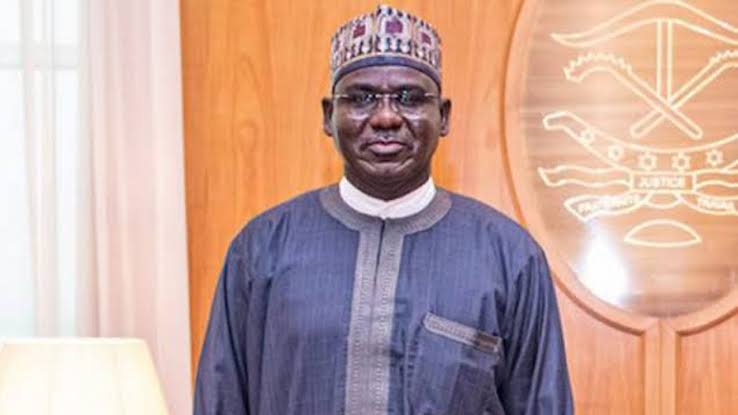
Former Chief of Army Staff, Lieutenant General Tukur Yusuf Buratai (retd.), has urged Nigerian journalists to strengthen their role in the fight against terrorism and banditry, warning that misinformation and the uncritical amplification of terrorist propaganda could undermine national security.
Buratai said the media had become a critical component of modern security operations, stressing that responsible journalism, credible information and public accountability were essential to countering the narratives used by insurgents and other criminal groups.
He made the call on Monday in Abuja while delivering a keynote address at the Defence Correspondents Association of Nigeria (DECAN) Conference on National Security and Awards Ceremony.
Speaking on the theme, “Beyond Kinetic Warfare: Harnessing Technology and Intelligence-Led Operations for Nigeria’s National Security,” the former army chief said the media should be recognised as the fourth dimension of security governance, alongside military operations, non-kinetic interventions and technical intelligence.
He argued that contemporary conflicts were fought not only with weapons but also through information, public perception and psychological operations, making the media an important factor in determining the outcome of security campaigns.
According to him, Boko Haram had effectively used information warfare to project an image of invincibility, distribute propaganda and portray the Nigerian military negatively during the insurgency in the North-East.
Buratai, who served as Chief of Army Staff between 2015 and 2021, said the military recognised that it could win battlefield engagements but still lose public confidence if it failed to communicate its operations effectively.
“When I assumed command as Chief of Army Staff, one of the most formidable obstacles we faced was not the enemy’s firepower—it was the narrative,” he said.
He explained that the military introduced an embedded journalist programme to allow credible defence correspondents access to frontline operations, liberated communities, soldiers and civilians affected by the conflict.
Buratai said the initiative was designed to provide journalists with firsthand information rather than dictate what they should report.
He maintained that the programme helped challenge insurgents’ propaganda, humanise soldiers, document the experiences of affected communities and expose the brutality of terrorist groups.
The former ambassador to the Republic of Benin added that embedded journalists also reported operational shortcomings and alleged misconduct, demonstrating that the initiative was not intended to shield the military from scrutiny.
“Security-conscious journalism is not the same as security-controlled journalism,” he said, insisting that media freedom and independent reporting must remain protected in a democratic society.
He cautioned, however, that sensational reporting, unverified social media content and artificial intelligence-generated deepfakes could spread panic, amplify terrorist propaganda and weaken public confidence in security institutions.
Buratai called for stronger collaboration between media organisations and security agencies to ensure that accurate, verifiable information reached the public quickly during security emergencies.
He proposed regular security reporting seminars organised by DECAN in partnership with Defence Headquarters and the Office of the National Security Adviser to equip journalists with the skills required to verify information, identify disinformation and report responsibly in the artificial intelligence era.
He also recommended that security agencies establish media liaison officers to provide timely and credible information during crises.
“The goal is not to control information but to ensure truthful information travels faster than false information,” he said.
Buratai stressed that cooperation between the media and security institutions should not undermine journalists’ watchdog responsibilities, particularly in investigating defence expenditure, human rights violations and allegations of misconduct.
He said credible allegations of human rights abuses by security personnel must be investigated and prosecuted where substantiated, adding that the military was not above the law.
The retired general also called for greater transparency in defence procurement, arguing that public institutions responsible for managing security funds should explain their expenditure and procurement decisions.
He advocated the establishment of a defence procurement transparency portal to publish information about broad categories of contracts, contracting entities and delivery timelines, subject to legitimate national security restrictions.
Beyond media relations, Buratai said Nigeria needed to move away from an overreliance on military force towards an integrated security strategy that combines intelligence, technology, community engagement and socioeconomic interventions.
He highlighted the importance of artificial intelligence-driven command and control systems, particularly the NiDAR C4I architecture being introduced through an agreement between the Federal Ministry of Defence and the United Kingdom’s MARSS Group.
According to him, the technology could improve intelligence fusion, surveillance, operational coordination and the speed of military responses to emerging threats.
He nevertheless emphasised that advanced technology could not replace intelligence obtained from local communities, noting that residents often possessed critical knowledge about criminal movements, local grievances and recruitment networks.
Buratai also advocated improved intelligence-sharing among the military, police and intelligence agencies, as well as dedicated funding for non-kinetic operations such as civil-military cooperation, deradicalisation and the reintegration of former insurgents.
He said military victories would not guarantee lasting peace unless the government addressed poverty, unemployment, marginalisation and other conditions that criminal and extremist groups exploited.
The former army chief recalled that intelligence-led operations during his tenure helped the military reclaim territories previously controlled by Boko Haram and disrupt the supply networks sustaining the insurgency.
He argued that Nigeria’s present security challenges, including terrorism, kidnapping, banditry, communal conflicts and cybercrime, required coordinated responses tailored to the circumstances of different regions.
Buratai urged DECAN and other media organisations to deepen professional training for defence correspondents, particularly in military operations, intelligence processes, procurement and security accountability.
He also proposed a standing media-military dialogue forum to address misunderstandings, improve access to information and establish mutually agreed protocols for reporting sensitive security matters.
He maintained that the media should neither become an instrument of government propaganda nor inadvertently serve as a channel for terrorist messaging.
According to him, a professional defence press corps that reports accurately, independently and without fear or favour can help build public trust, strengthen accountability and improve national security.
Buratai concluded that sustainable peace depended on integrating military action, intelligence, technology, community participation and credible communication, stressing that the battle for public confidence was inseparable from the fight against insecurity.
